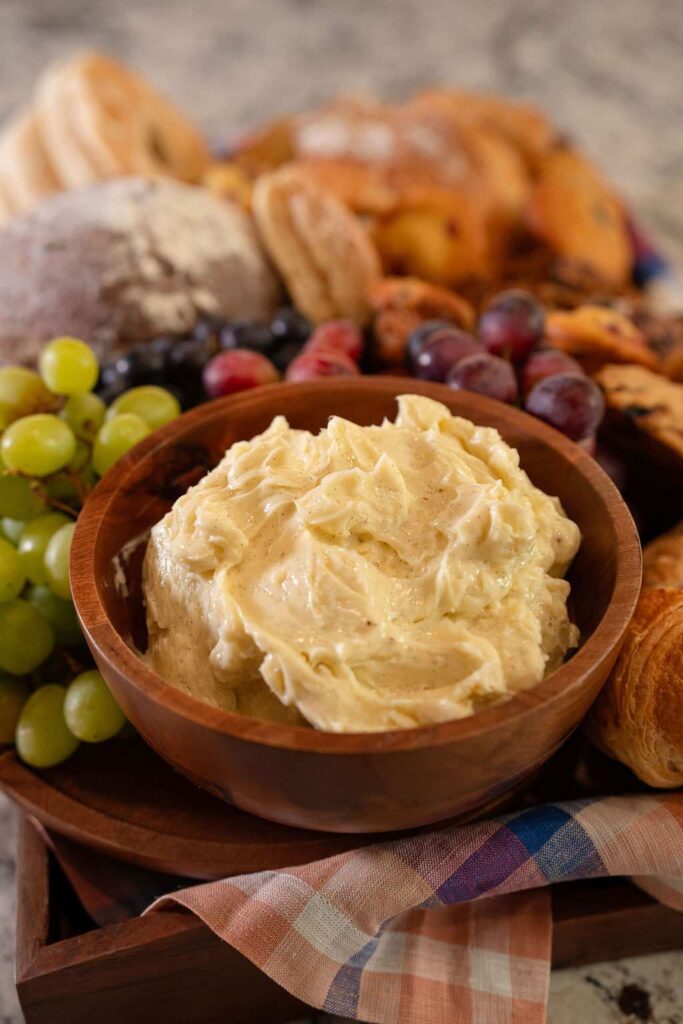

There’s a moment, about eight minutes into shaking a jar of heavy cream, when it stops sounding like liquid and starts sounding like something is happening in there. That thud-thud-thud is the sound of butterfat separating from buttermilk — the same transformation dairy farmers have been coaxing out of cream for roughly 4,000 years, according to archaeological evidence of butter churns found in the Sahara.
Most home cooks who try homemade butter from heavy cream stop there: a jar, a shake, and a lump of sweet cream butter. It’s satisfying, and it’s a genuinely great kitchen project. But sweet cream butter is only half the story. Add one extra step — a 12- to 24-hour rest with a live culture — and you get cultured butter, the tangy, complex, restaurant-worthy version that costs $8 to $12 a stick at speciality grocers.
This guide covers both how to make basic homemade butter, how to turn that same base into true cultured butter, and how to fold the finished product into a spring compound butter that will outshine anything you can buy pre-made. Along the way, I’ll flag the mistakes that trip up most first-timers, because I’ve made every one of them myself.
Why Make Butter at Home in the First Place?
It’s a fair question. Butter is inexpensive and available on every grocery shelf. But homemade butter from heavy cream offers three things store-bought can’t:
- Freshness and flavour control. You choose the cream, the salt level, and the finish. Fresh-churned butter tastes noticeably sweeter and cleaner than anything that’s been sitting in a supply chain for weeks.
- A genuinely fun, low-skill kitchen project. No candy thermometer, no yeast, no timing anxiety. If you can shake a jar or run a stand mixer, you can make butter.
- A gateway to cultured butter, which is where the real payoff is. Cultured butter — the European style used in classic French pastry — relies on fermentation to develop a nutty, slightly tangy depth that plain sweet cream butter simply doesn’t have.
The Science, Briefly
Heavy cream is an emulsion: fat droplets suspended in water. Agitation (shaking, whipping, or churning) breaks that emulsion. The fat globules collide, clump together, and separate from the liquid buttermilk. Dairy scientists refer to this mechanical stage as “churning”, and it typically takes 8 to 15 minutes by hand, or 5 to 8 minutes with a stand mixer. Cultured butter simply adds a fermentation stage before churning, where beneficial bacteria convert some of the milk sugars into lactic acid and flavour compounds like diacetyl — the same compound responsible for the buttery aroma in popcorn seasoning.
How to Make Homemade Butter from Heavy Cream
What You’ll Need
- 2 cups heavy cream (avoid ultra-pasteurized if you can find it — it churns more reliably)
- A stand mixer with a whisk attachment, food processor, or a wide-mouth jar with a tight lid
- Ice water
- Cheesecloth or a fine mesh strainer
- Fine sea salt (optional)
Step-by-Step
- Bring the cream to room temperature. Cold cream takes longer to churn and can seize unevenly.
- Whip or shake. In a stand mixer on medium-high, the cream will move through whipped cream, then a grainy “broken” stage, then suddenly separate into solid butter and liquid buttermilk – usually within 5 to 8 minutes. In a jar, this takes closer to 10 to 15 minutes of vigorous shaking.
- Strain. Pour off the buttermilk (save it — it’s excellent in pancakes or biscuits) and transfer the solids to a strainer lined with cheesecloth.
- Wash the butter. This is the step most people skip, and it’s the reason store-bought butter lasts longer than homemade. Knead the butter under ice-cold water, changing the water two or three times, until it runs clear. Any leftover buttermilk will spoil quickly at room temperature.
- Salt, if desired, at roughly ¼ teaspoon per cup of cream used, then shape and chill.
From two cups of heavy cream, expect around 8 ounces of finished butter — a yield of roughly 25%, since the rest is buttermilk and wash water.
How to Make Cultured Butter (The European Method)
Cultured butter is what French bakers mean when a recipe calls for “beurre”. It’s the reason European-style butter tastes different from the standard American stick, and it’s simpler to make at home than most people expect.
Step-by-Step
- Culture the cream first. Stir 2 to 3 tablespoons of live-culture buttermilk, kefir, or a few tablespoons of plain yoghurt with active cultures into 2 cups of heavy cream.
- Ferment at room temperature. Cover loosely and let it sit for 12 to 24 hours, until it thickens slightly and smells pleasantly tangy, almost like sour cream. The longer it ferments, the more pronounced the flavour.
- Chill briefly, then churn exactly as you would for sweet cream butter (steps 2–5 above).
- Taste as you go. Cultured butter’s flavour deepens with fermentation time, so a 24-hour ferment will taste noticeably tangier than a 12-hour one. There’s no wrong answer here — it’s a matter of preference.
The difference is immediately obvious on the tongue: cultured butter carries a subtle sourness and nuttiness that plays beautifully against both sweet and savoury applications, which is exactly why it’s the preferred base for a good compound butter.
Turning Cultured Butter into a Spring Compound Butter
Compound butter is simply softened butter blended with other ingredients — herbs, citrus, spices, and aromatics — then re-chilled into a log or ramekin. It’s one of the highest-return, lowest-effort techniques in home cooking: five minutes of mixing turns a plain protein, vegetable, or slice of bread into something that tastes composed.
Spring is the best season to make a compound butter, full stop. The produce available in March through May — chives, tarragon, ramps, radishes, citrus, and fresh peas — pairs naturally with the tang of cultured butter, and none of it requires cooking.
A Simple Spring Compound Butter Formula
Soften 8 ounces of cultured butter to room temperature, then fold in the following:
- 2 tablespoons finely chopped fresh chives
- 1 tablespoon chopped fresh tarragon or dill
- 1 teaspoon lemon zest
- ½ teaspoon flaky salt
- A small pinch of cracked black pepper
Mix until evenly combined, then roll the butter into a log using parchment paper, twist the ends, and chill for at least an hour before slicing into rounds. It will keep in the refrigerator for about a week or in the freezer for up to three months.
Ways to Use It
- Melted over roasted asparagus or grilled spring onions
- Finishing a seared piece of salmon or chicken
- Spread on a warm baguette for a spring cheese board
- Stirred into risotto just off the heat for extra richness
A Few Pro Tips Worth Remembering
- Room-temperature cream churns faster and more evenly than cold cream, whether you’re making sweet cream or cultured butter.
- Don’t skip the wash. Residual buttermilk is the single biggest reason homemade butter goes off within a few days.
- Cultured butter needs a genuinely active culture. Ultra-pasteurised buttermilk with no live cultures listed on the label won’t ferment properly — check the ingredient list for “live active cultures”.
- Compound butter freezes beautifully. Make a double batch, slice, and freeze individual rounds so a restaurant-quality finishing touch is always five minutes away.
The Bottom Line
Homemade butter from heavy cream is one of the most rewarding beginner projects in the kitchen — equal parts science experiment and genuinely useful pantry staple. Take it one step further into cultured butter, and you’re working with the same base that underpins classic French cooking. Fold that into a spring compound butter with whatever herbs are at the farmers’ market this week, and you’ve got a technique that will make every simple dish for the next three months taste a little more intentional.
Once you’ve made butter from scratch, it’s hard to go back to the foil-wrapped block. Give it a try this weekend — your bread, your vegetables, and your dinner guests will notice the difference.