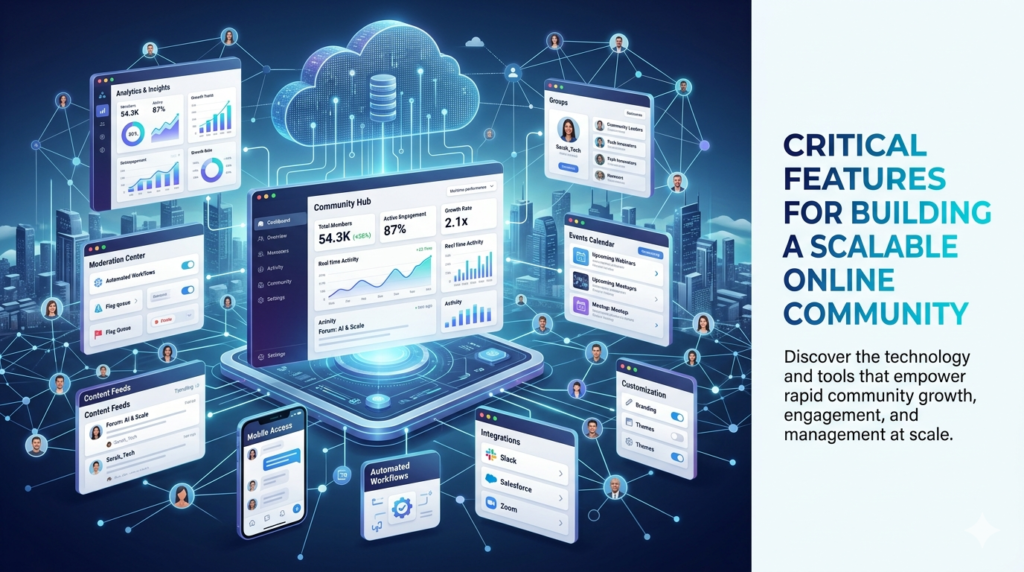

Building an online community is exciting. In the beginning, it might be a small group of passionate people discussing a shared interest. But as your community grows, managing conversations, content, members, and engagement becomes much more challenging.
This is where many community owners run into problems. A platform that works for 100 members may struggle when you have 10,000 members. Features that seem unnecessary today can become critical later.
If your goal is long-term growth, you need a scalable online community that can support increasing member activity without sacrificing user experience.
In this guide, you’ll learn the most important features every scalable online community should have, why they matter, and how they help communities grow successfully.
What Is a Scalable Online Community?
A scalable online community is a community that can continue growing without major performance issues, management headaches, or declining member experiences.
Think of it like building a house. A small house may work for a family of two, but it becomes crowded when ten people move in. Similarly, community software must be designed to handle future growth from the start.
A scalable community platform can support:
- More members
- More content
- More discussions
- More moderators
- More revenue opportunities
without slowing down or becoming difficult to manage.
Why Scalability Matters
Many community owners focus only on launching their platform. Few think about what happens six months or two years later.
From experience, communities often face challenges such as:
- Slow page loading
- Content organization issues
- Member retention problems
- Moderation overload
- Limited monetization options
These challenges become much easier to handle when the platform is built with scalability in mind. Choosing the right online community platform from the beginning can save countless hours and expenses later.
Critical Features for Building a Scalable Online Community
1. Flexible Member Management
As communities grow, member management becomes more complex.
You need the ability to:
- Create member profiles
- Assign roles
- Manage permissions
- Organize member groups
- Track activity
Without proper member management tools, administrators spend too much time handling routine tasks manually.
A scalable platform should make member organization simple, even as thousands of users join.
2. Powerful Content Organization
Content grows rapidly inside successful communities. Discussions, videos, events, courses, documents, and announcements can quickly become difficult to find.
Look for platforms that support:
- Categories
- Groups
- Tags
- Search functionality
- Content filtering
Good organization improves member experience and helps people find valuable information faster.
3. Advanced Search Capabilities
Search is often overlooked until communities become large. When members cannot find relevant content, they may leave or repeatedly ask the same questions.
A scalable online community should offer:
- Keyword search
- Member search
- Group search
- Content filtering
- Advanced sorting options
The easier it is to discover content, the more valuable your community becomes.
4. Mobile Accessibility
Today’s users expect instant access from their smartphones. If members struggle to participate on mobile devices, engagement often suffers.
This is why many growing communities invest in a white label mobile app that provides:
- Push notifications
- Easy navigation
- Mobile-friendly discussions
- Faster engagement
Communities with strong mobile experiences generally see higher participation rates and better retention.
5. Built-In Community Moderation Tools
Growth brings more conversations—and more moderation needs. Without proper moderation systems, communities can become overwhelmed by:
- Spam
- Fake accounts
- Toxic behavior
- Irrelevant content
Modern community management tools help automate moderation while maintaining a healthy environment.
Look for features such as:
- Content reporting
- Moderator permissions
- Automated content review
- User warnings
- Community guidelines enforcement
Strong moderation protects both members and your brand.
6. Group and Subcommunity Features
Large communities often contain multiple interests.
For example:
A fitness community may include:
- Weight loss groups
- Strength training groups
- Nutrition discussions
- Running clubs
A creator community may include:
- Beginners
- Advanced creators
- Coaching groups
- Collaboration spaces
Group functionality helps organize members while maintaining community growth.
7. Customization and Branding
One major limitation of social media is lack of ownership. Your community should reflect your brand—not someone else’s platform.
A scalable white label community platform allows you to customize:
- Logos
- Colors
- Navigation
- User experience
- Community structure
Brand consistency builds trust and creates a more professional experience.
8. Reliable Analytics and Reporting
You cannot improve what you don’t measure.
Analytics help community owners understand:
- Member growth
- Engagement trends
- Active users
- Popular content
- Retention rates
From experience, many assumptions about community behavior turn out to be incorrect when real data is examined.
Analytics provide clarity for smarter decisions.
9. Monetization Features
Many communities eventually become business assets. Whether you’re running a creator community, coaching group, membership site, or niche network, monetization opportunities matter.
Look for features such as:
- Membership subscriptions
- Paid groups
- Premium content
- Digital product sales
- Event ticketing
Communities that plan for revenue early have more flexibility as they grow. Understanding how to monetize a community can help transform engagement into sustainable income.
10. Scalability of Infrastructure
The most important feature isn’t always visible. Behind every successful community is reliable infrastructure.
Your platform should be able to handle:
- Traffic spikes
- Large member databases
- High content volumes
- Concurrent users
Without strong infrastructure, growth can create performance issues that frustrate members. An experienced online community builder should provide the technical foundation needed for long-term success.
11. Member Engagement Features
Growth means very little if members stop participating. Successful communities include tools that encourage ongoing interaction.
Important engagement features include:
- Reactions and likes
- Polls
- Events
- Challenges
- Gamification
- Badges and rewards
Communities that actively encourage participation typically perform better over time. You can further improve activity levels by implementing proven member engagement strategies that motivate members to contribute regularly.
12. Retention and Re-Engagement Tools
Acquiring members is expensive. Keeping them is often more valuable.
Look for features such as:
- Push notifications
- Email updates
- Activity reminders
- Personalized recommendations
- Automated onboarding
Many community owners focus heavily on growth while neglecting retention. Learning how to increase user retention can dramatically improve long-term community health.
Examples of Scalable Communities
Scalability matters across many industries.
Creator Communities
A growing creator business needs discussion spaces, memberships, events, and monetization tools.
Fitness Communities
Online fitness brands require challenge tracking, coaching groups, and progress-sharing features.
Educational Communities
Course creators often need content libraries, discussion forums, and member support areas. No matter the niche, scalability becomes essential once member numbers start increasing.
How to Evaluate Community Platforms
Before selecting a platform, ask these questions:
- Can it handle future growth?
- Does it support mobile engagement?
- Are moderation tools included?
- Can I customize branding?
- Does it offer monetization options?
- Is member management flexible?
- Are analytics available?
- Does it support multiple groups and subcommunities?
The answers will help you identify platforms that can support your long-term vision. If you’re still planning your launch, learning how to build an online community can help you create a stronger foundation from day one.
Pro Tip
Always choose a platform based on where your community will be in two years not where it is today. Many community owners select software that fits their current size, only to discover expensive limitations later. Planning ahead saves both time and money.
Common Mistakes to Avoid
Choosing Based Only on Price
Cheap platforms often lack important scalability features.
Ignoring Mobile Users
Most members engage through mobile devices.
Overlooking Moderation
Moderation challenges grow alongside community growth.
Focusing Only on Member Numbers
Engagement matters more than raw membership size.
Waiting Too Long to Monetize
It’s easier to introduce monetization gradually than to add it suddenly after years of growth.
Quick Summary
A scalable online community should include:
- Flexible member management
- Content organization tools
- Advanced search
- Mobile accessibility
- Community moderation features
- Group functionality
- Branding customization
- Analytics and reporting
- Monetization options
- Reliable infrastructure
- Engagement tools
- Retention systems
These features create a strong foundation for sustainable community growth.
Conclusion
Building a successful community isn’t just about attracting members. It’s about creating an environment that can support growth for years to come.
The most successful communities invest in the right technology early, ensuring they can scale without sacrificing member experience. Features such as member management, mobile access, moderation, analytics, and monetization all play important roles in creating a truly scalable online community.
As you evaluate community platforms, focus on long-term flexibility rather than short-term convenience. With the right foundation in place, your community can grow from a small group of passionate members into a thriving ecosystem that delivers value for both members and your business.