
Utility-scale solar farms are transforming the global energy landscape by delivering clean, reliable, and cost-effective electricity at scale. Behind every successful solar project lies detailed planning, advanced design practices, and precise execution. This is where solar farm engineering plays a critical role, ensuring that large-scale solar installations operate efficiently, safely, and sustainably over their lifetime.
In this guide, we explore the essential aspects of engineering utility-scale solar farms, from site selection to grid integration.
Site Selection and Feasibility Analysis
The foundation of any successful solar farm begins with selecting the right site. Engineers evaluate multiple factors to determine feasibility, including solar irradiance, land availability, terrain conditions, and environmental impact. Regions with high sunlight exposure and minimal shading are ideal for maximizing energy production.
Topographical surveys help assess land grading requirements, while geotechnical investigations ensure soil stability for mounting structures. Accessibility to transmission infrastructure is another key factor, as proximity to substations reduces interconnection costs. A well-executed feasibility study ensures that the project is both technically viable and economically sustainable.
System Design and Layout Optimization
Once a site is selected, engineers focus on designing the solar farm layout to maximize energy yield. This involves determining the optimal arrangement of photovoltaic (PV) modules, inverter placement, and spacing between rows to avoid shading losses.
Advanced simulation tools are used to analyze solar angles, weather patterns, and seasonal variations. Engineers also consider tilt angles and orientation to capture maximum sunlight throughout the year. Efficient layout design not only increases power generation but also reduces land usage and installation costs.
Electrical design is another critical aspect, involving DC and AC system configuration, cable sizing, and protection schemes. Proper system design ensures minimal energy losses and long-term reliability.
Structural and Civil Engineering Considerations
Utility-scale solar farms require robust structural and civil engineering solutions to withstand environmental stresses such as wind loads, temperature variations, and seismic activity. Mounting structures must be designed for durability and ease of installation.
Engineers select between fixed-tilt systems and tracking systems depending on project goals and budget. While tracking systems increase energy output by following the sun’s movement, they also require more complex design and maintenance.
Civil engineering work includes land grading, drainage design, access roads, and foundation construction. Proper drainage systems are essential to prevent water accumulation, which can damage equipment and reduce system performance.
Grid Integration and Power System Studies
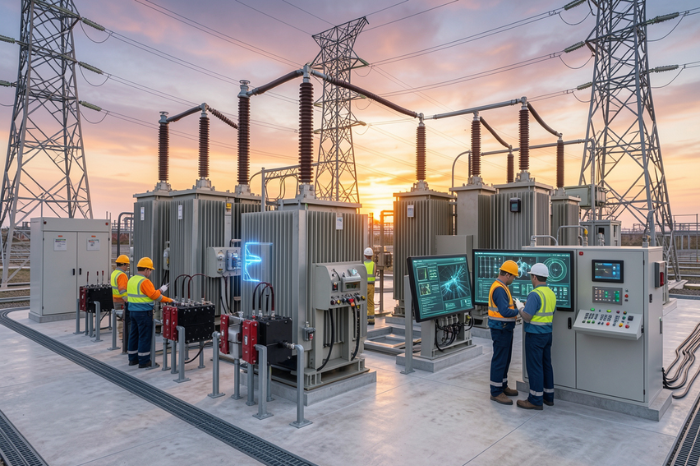
A critical component of solar farm engineering is integrating the generated power into the electrical grid. Engineers perform detailed power system studies to ensure stable and reliable operation. These studies include load flow analysis, short circuit analysis, and protection coordination.
Grid codes and compliance requirements must be carefully followed to ensure that the solar farm operates within acceptable voltage and frequency limits. Engineers also design substations and transmission connections to deliver power efficiently to the grid.
Energy storage systems are increasingly being incorporated into solar farms to address intermittency issues. These systems help stabilize output and improve grid reliability, especially during peak demand periods.
Performance Optimization and Monitoring
After installation, continuous monitoring and performance optimization are essential to maintain high efficiency. Engineers implement advanced monitoring systems that track energy production, detect faults, and provide real-time insights into system performance.
Data analytics plays a significant role in identifying underperforming components and optimizing maintenance schedules. Preventive maintenance strategies help reduce downtime and extend the lifespan of the solar farm.
Weather conditions, dust accumulation, and equipment degradation can impact performance over time. Regular cleaning and system inspections ensure consistent energy output and operational efficiency.
Sustainability and Long-Term Reliability
Utility-scale solar farms are designed for long-term operation, typically spanning 25 to 30 years. Engineers must consider sustainability at every stage, from material selection to decommissioning plans.
Environmental impact assessments ensure that the project minimizes disruption to local ecosystems. Sustainable design practices, such as using recyclable materials and reducing land disturbance, contribute to eco-friendly development.
Reliability is achieved through high-quality components, robust design standards, and adherence to international engineering practices. Proper documentation and maintenance planning further ensure that the solar farm continues to perform efficiently throughout its lifecycle.
Conclusion
Utility-scale solar farms are complex engineering projects that require a multidisciplinary approach. From site selection and system design to grid integration and performance optimization, every stage demands precision and expertise. Effective solar farm engineering ensures that these large-scale installations deliver maximum energy output while maintaining safety, reliability, and sustainability.
As the demand for renewable energy continues to grow, well-engineered solar farms will play a crucial role in meeting global energy needs. With the right expertise and planning, utility-scale solar projects can provide long-term value for investors, communities, and the environment alike.