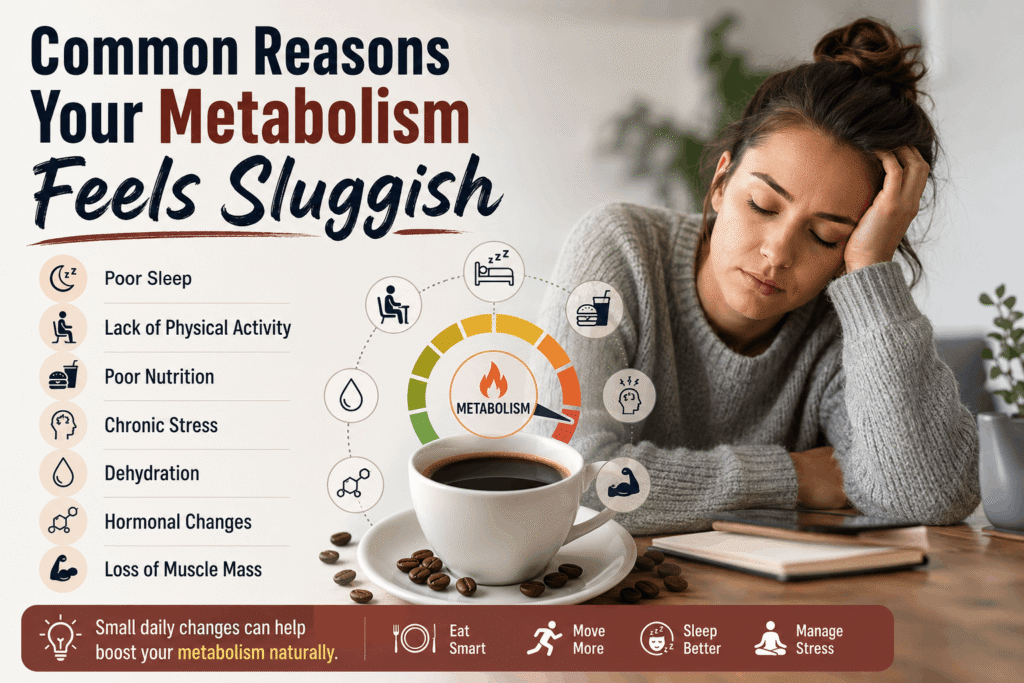

Many people assume that a slow metabolism is simply part of getting older. While age can influence how efficiently your body uses energy, it’s far from the only factor. Your metabolism is a complex system that converts the food you eat into energy needed for everything from breathing and digestion to movement and cell repair.
If you’ve noticed lower energy levels, difficulty maintaining a healthy weight, or feeling less active despite eating well, your metabolism could be affected by several everyday habits. The good news is that metabolism isn’t fixed. Small lifestyle changes can often support healthier metabolic function over time.
Let’s explore the most common reasons your metabolism may feel sluggish and practical ways to support it naturally.
What Is Metabolism?
Metabolism refers to the collection of chemical processes that keep your body functioning. These processes determine how efficiently your body converts calories into usable energy.
Your metabolic rate is influenced by several factors, including:
- Age
- Genetics
- Muscle mass
- Hormonal balance
- Physical activity
- Sleep quality
- Nutrition
Although some of these factors are beyond your control, many daily habits have a significant impact on how efficiently your metabolism works.
1. Not Getting Enough Protein
Protein is one of the most important nutrients for metabolic health. Your body uses more energy digesting protein compared to carbohydrates or fats, a process known as the thermic effect of food.
Adequate protein intake also helps maintain lean muscle mass. Since muscle tissue burns more calories than fat tissue—even while you’re resting—preserving muscle supports a healthier metabolism.
Good protein sources include:
- Eggs
- Fish
- Chicken
- Greek yogurt
- Lentils
- Beans
- Tofu
2. Sitting for Most of the Day
Modern lifestyles often involve long hours at desks, in cars, or on the couch. Even regular exercise can’t completely offset the effects of prolonged inactivity.
Daily movement helps maintain energy expenditure and supports healthy circulation.
Simple ways to move more include:
- Walking during breaks
- Taking the stairs
- Stretching every hour
- Standing while working occasionally
- Going for evening walks
These small habits can make a noticeable difference over time.
3. Poor Sleep Habits
Sleep plays a major role in regulating hormones involved in appetite, energy, and metabolism.
Consistently sleeping fewer than seven hours may affect hormones that influence hunger and fullness while reducing your overall energy levels.
To improve sleep quality:
- Maintain a consistent bedtime
- Reduce screen exposure before bed
- Limit caffeine late in the day
- Keep your bedroom cool and dark
Quality sleep allows your body to recover and maintain healthy metabolic processes.
4. Chronic Stress
Stress affects much more than your mood.
When stress becomes ongoing, your body produces higher levels of cortisol. Elevated cortisol may influence appetite, encourage cravings for calorie-dense foods, and affect how your body stores energy.
Managing stress can include:
- Deep breathing exercises
- Walking outdoors
- Meditation
- Reading
- Spending time with family
- Practicing hobbies
Even 10 to 15 minutes of relaxation daily can positively support overall wellness.
5. Losing Muscle Mass
Muscle naturally declines with age if it isn’t maintained.
Since muscle burns more calories than fat, losing lean tissue often reduces your resting metabolic rate.
Strength training is one of the most effective ways to preserve muscle.
Helpful exercises include:
- Resistance bands
- Bodyweight workouts
- Weight lifting
- Squats
- Push-ups
- Lunges
Aim for strength-focused activities at least two or three times per week.
6. Eating Too Little
Many people drastically reduce calories hoping for faster weight loss.
Ironically, eating too little for extended periods may encourage the body to conserve energy, making weight management more difficult.
Instead of restrictive dieting:
- Eat balanced meals
- Include healthy fats
- Consume enough protein
- Prioritize nutrient-rich foods
- Avoid skipping meals regularly
A sustainable eating pattern supports healthier metabolic balance.
7. Dehydration
Water supports countless metabolic reactions inside the body.
Even mild dehydration may contribute to reduced physical performance and feelings of fatigue.
Simple hydration tips:
- Carry a reusable water bottle
- Drink water before meals
- Eat water-rich fruits and vegetables
- Increase fluids after exercise
Proper hydration supports digestion, circulation, and normal metabolic activity.
8. Hormonal Changes
Hormones help regulate many aspects of metabolism.
Changes related to aging, thyroid function, insulin sensitivity, or life stages such as menopause can influence how efficiently your body uses energy.
If you experience persistent fatigue, unexpected weight changes, or other ongoing symptoms, consulting a healthcare professional may help identify underlying causes.
9. Lack of Daily Physical Activity
Exercise provides benefits beyond burning calories.
Regular activity helps:
- Improve insulin sensitivity
- Preserve muscle mass
- Support cardiovascular health
- Boost daily energy
- Encourage healthier metabolic function
A balanced weekly routine might include:
- Walking
- Cycling
- Swimming
- Strength training
- Flexibility exercises
Consistency matters far more than intensity.
10. Relying on Processed Foods
Highly processed foods often contain added sugars, refined carbohydrates, and unhealthy fats while providing fewer nutrients.
Building meals around whole foods may support better energy regulation.
Examples include:
- Vegetables
- Fruits
- Whole grains
- Lean proteins
- Nuts
- Seeds
- Healthy oils
Balanced nutrition gives your body the resources it needs for efficient metabolic function.
Everyday Habits That Support a Healthy Metabolism
Improving metabolism doesn’t require extreme diets or complicated routines.
Instead, focus on consistent habits:
- Eat enough protein daily
- Stay hydrated
- Sleep 7–9 hours
- Walk regularly
- Strength train weekly
- Manage stress
- Choose whole foods
- Limit sugary beverages
- Stay physically active throughout the day
- Maintain realistic long-term goals
Small improvements practiced consistently often produce better results than dramatic short-term changes.
Can Coffee Play a Role?
Coffee naturally contains compounds that may temporarily support alertness and metabolic activity when consumed in moderation.
Many people already enjoy coffee as part of their morning routine, making it a convenient foundation for other healthy habits. Pairing balanced nutrition, regular activity, and adequate hydration with your daily cup can create a sustainable wellness routine.
A Convenient Addition to Your Routine
For people who already drink coffee every morning, adding a simple nutritional supplement may fit naturally into their lifestyle.
One option is Metabo Drops, a tasteless liquid formula designed to blend seamlessly into hot or iced coffee without changing its flavor. Rather than relying on stimulants or complicated routines, it is formulated with plant-based ingredients that support metabolism, balanced energy, and fat utilization alongside your existing coffee habit.
Unlike capsules or powders, its liquid format absorbs quickly and requires only a single drop each day, making it easy to incorporate into a busy schedule.
It’s important to remember that no supplement replaces healthy habits. Products like Metabo Drops work best when combined with nutritious eating, regular movement, sufficient sleep, and overall lifestyle improvements.
Why Consistency Matters More Than Quick Fixes
Many people search for dramatic solutions to improve metabolism, but lasting results usually come from small, repeatable actions.
Healthy metabolism is built through:
- Better food choices
- Regular physical activity
- Adequate rest
- Stress management
- Long-term consistency
Supporting your body’s natural processes every day often leads to more sustainable progress than relying on short-term approaches.
Conclusion
A sluggish metabolism isn’t always caused by age alone. Daily habits such as poor sleep, limited movement, inadequate protein intake, chronic stress, dehydration, and loss of muscle mass can all influence how efficiently your body produces and uses energy.
Fortunately, these are areas where small improvements can make a meaningful difference over time. By focusing on balanced nutrition, regular exercise, hydration, and quality sleep, you can create an environment that supports healthier metabolic function.
If you’re looking for an easy addition to your morning routine, a coffee-compatible supplement like Metabo Drops may complement your healthy lifestyle by providing additional nutritional support for metabolism and balanced daily energy. Combined with consistent healthy habits, it can become part of a practical long-term wellness routine rather than a quick fix.