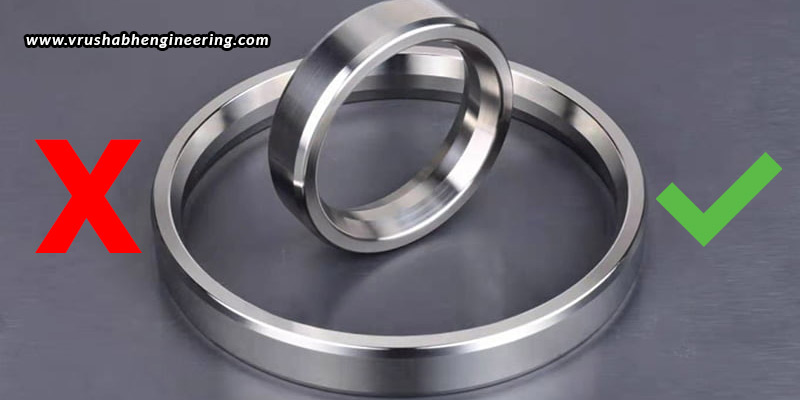

Ring joint gaskets are engineered to ensure reliable sealing in some of the most challenging industrial settings. Nevertheless, their performance is greatly influenced by the correct selection, adherence to proper installation methods, and thorough inspection practices. Errors such as incorrect sizing, improper torque application, reusing gaskets, or insufficient flange preparation can jeopardize sealing integrity and result in expensive system failures. By recognizing these frequent mistakes and adhering to established best practices, engineers and maintenance teams can greatly enhance the reliability and safety of their high-pressure systems. When paired with high-quality manufacturing and meticulous handling, RTJ gaskets remain one of the most reliable sealing solutions for essential industrial operations.
Mistake #1: Selecting the wrong gasket size or profile
One of the most frequent errors made during the selection of RTJ gaskets is opting for an unsuitable size or profile for the flange. Ring Type Joint gaskets are specifically engineered to fit snugly into designated flange grooves, and even minor dimensional discrepancies can undermine sealing efficiency. RTJ gaskets are generally offered in profiles such as R, RX, and BX, each tailored for specific flange types and pressure ratings. Utilizing the incorrect profile can hinder the gasket from seating correctly, resulting in uneven load distribution and possible leakage. Misinterpretation of flange standards like ASME, API, or EN often leads to incorrect sizing. If the gasket dimensions do not align with the flange specifications, it may either fit loosely or fail to seat properly in the groove. Engineers and procurement teams must always confirm flange dimensions, pressure ratings, and relevant standards prior to selecting the correct gasket profile.
Mistake #2: Selecting an unsuitable gasket material
Choosing the wrong material for an RTJ gasket can greatly impact its performance and longevity. These gaskets function in challenging environments characterized by high pressure, extreme temperatures, and exposure to corrosive substances. If the gasket material is incompatible with these conditions, it may lead to premature failure. For instance, soft iron gaskets can deteriorate rapidly in corrosive settings, while materials that are harder than the flange surface can cause damage to the flange groove during installation. Commonly used materials include stainless steel, duplex stainless steel, and nickel alloys, as they offer exceptional strength and resistance to corrosion. The chosen material must also be suitable for the process media and operating temperature. Furthermore, the gasket should typically be slightly softer than the flange material to ensure it can deform adequately and establish a secure metal-to-metal seal without harming the flange surface.
Mistake #3: Reusing ring joint gaskets
Reusing RTJ gaskets is a common error that can jeopardize the integrity of high-pressure sealing systems. These gaskets operate through plastic deformation, which means their shape permanently alters when compressed during installation. Once taken out, the gasket cannot revert to its original shape or deliver the same sealing efficiency. Trying to reinstall a used gasket often leads to uneven contact within the flange groove, increasing the risk of leakage. Although reusing gaskets may seem to lower maintenance expenses, the potential repercussions can be significantly more costly. Leakage in high-pressure systems can result in equipment damage, environmental risks, and unanticipated operational downtime. Therefore, industry best practices strongly advise the installation of a new RTJ gasket each time the flange connection is opened. Utilizing a new gasket guarantees proper deformation, consistent sealing pressure, and reliable performance in critical industrial applications.
Mistake #4: Improper bolt torque application
Incorrect bolt torque application during installation is one of the primary reasons for RTJ gasket sealing failures. Proper bolt tightening ensures that the gasket receives the uniform compressive force necessary to create a dependable metal-to-metal seal. If bolts are not tightened enough, the gasket may not deform adequately, allowing process fluids or gases to escape under pressure. Conversely, excessive torque can also lead to issues by distorting the gasket, damaging the flange groove, or causing uneven load distribution across the flange. Uneven tightening can result in misalignment that hinders the gasket from sealing effectively. To prevent these problems, installation teams should adhere to the recommended torque values and tightening sequences outlined by flange standards or equipment manufacturers. Employing calibrated torque tools and tightening bolts gradually in a controlled sequence helps ensure uniform compression and reliable sealing performance.
Mistake #5: Inadequate flange surface preparation
Effective sealing with RTJ gaskets relies heavily on proper flange preparation. A high-quality gasket will not function correctly if the flange groove or sealing surface is compromised or contaminated. Prior to installation, it is crucial to thoroughly clean flange grooves to eliminate debris, oil, corrosion, or metal particles that could hinder gasket seating. Any form of contamination can obstruct proper contact between the gasket and the flange, leading to possible leakage paths. Surface damage is also a significant issue. Scratches, pitting, or scoring within the groove can disrupt the metal-to-metal sealing mechanism, resulting in localized leakage. Technicians must meticulously inspect flange surfaces before fitting a new gasket. If any damage is detected, the flange may need repair, resurfacing, or replacement to restore optimal sealing conditions and ensure long-term reliability of the system.
Mistake #6: Overlooking inspection and quality checks
Another critical error that can result in sealing issues is the failure to conduct inspections and quality checks prior to installation. While RTJ gaskets are produced to exact tolerances, they can sustain damage during transportation, handling, or storage. Technicians should examine each gasket for visible defects such as dents, scratches, corrosion, or deformation that could compromise sealing performance before installation. It is also vital to verify that the gasket’s size, profile, and material specifications align with the flange and operating conditions. Proper storage practices are equally essential. RTJ gaskets should be stored in clean, dry environments to avoid contamination or corrosion before use. Regular inspections enable maintenance teams to detect potential problems early, ensuring that only properly manufactured and undamaged gaskets are utilized in critical industrial systems.
In addition to proper selection and installation practices, the quality of the gasket itself plays a crucial role in achieving reliable sealing performance. Working with experienced manufacturers helps ensure that the gaskets meet strict dimensional tolerances and material standards. Companies like Vrushabh Engineering, known for manufacturing precision ring joint gaskets, support industries by providing high-integrity sealing solutions designed for demanding high-pressure and high-temperature applications.
Ring joint gaskets are designed to provide reliable sealing in some of the most demanding industrial environments. However, their effectiveness depends heavily on correct selection, proper installation procedures, and careful inspection practices. Mistakes like incorrect sizing, improper torque application, reuse of gaskets, or inadequate flange preparation can compromise sealing integrity and lead to costly system failures. By understanding these common pitfalls and following established best practices, engineers and maintenance teams can significantly improve the reliability and safety of their high-pressure systems. When combined with high-quality manufacturing and careful handling, RTJ gaskets continue to serve as one of the most dependable sealing solutions for critical industrial operations.