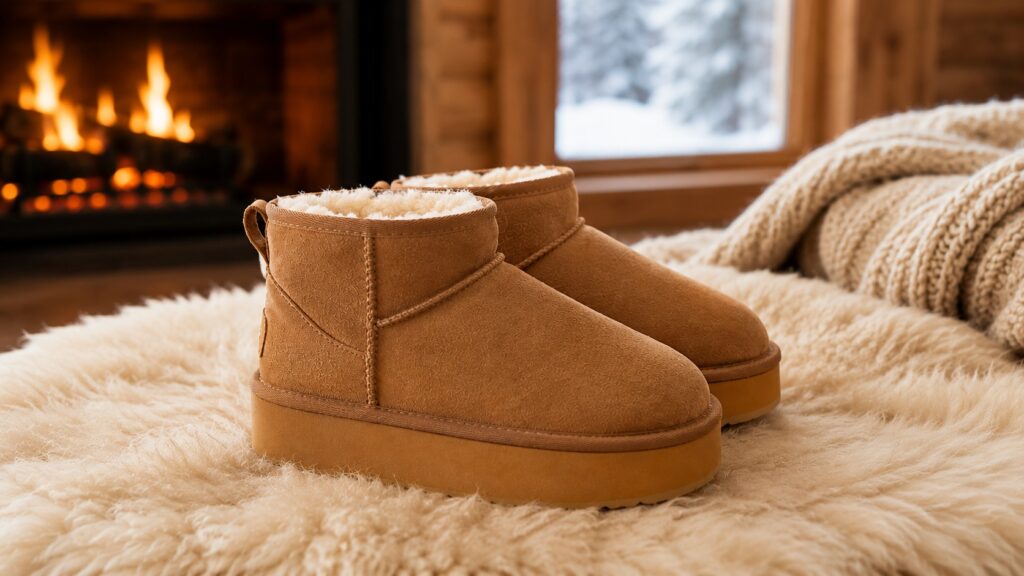

Your feet do a lot of work. By the time you kick off your shoes at the end of the day, they’ve earned something better than cold tiles or thin cotton socks. That’s exactly where sheepskin footwear earns its reputation — and why slippers made from genuine Australian sheepskin have been a household staple for generations.
Whether you’re dealing with chilly winter mornings in Melbourne, cool evenings in the Blue Mountains, or just want something genuinely comfortable underfoot year-round, sheepskin slippers deliver in ways synthetic alternatives rarely match.
What Makes Sheepskin Footwear Different?
The short answer: the fibre itself.
Sheepskin is a natural, breathable material with a unique wool structure that traps warm air close to your foot. Each wool fibre contains microscopic air pockets that act as insulation — keeping you warm on cold mornings without making your feet sweat when temperatures climb. Research from the Woolmark Company — headquartered right here in Australia — confirms that wool’s natural crimp creates this insulating air layer, which synthetic fibres simply can’t replicate.
The result is a slipper that genuinely regulates temperature rather than just adding bulk.
Key Benefits of Wearing Sheepskin Slippers
Natural Temperature Regulation
Wool fibres are hygroscopic — they absorb and release moisture as conditions change. Australia’s climate varies dramatically by region and season, and sheepskin handles that variation well. It wicks moisture away from the skin during warmer days while keeping your feet insulated on cold nights. That two-way regulation makes sheepskin slippers practical year-round, not just a winter purchase.
Cushioning and Joint Support
The dense wool pile inside a quality sheepskin slipper creates a natural cushioning layer that conforms to the shape of your foot over time. This isn’t just comfort — it actively reduces pressure on the heel and ball of the foot. For people who spend long hours standing on hard tiles or timber floors (a reality in most Australian homes), this added cushioning makes a genuine daily difference.
Hypoallergenic Properties
Genuine sheepskin is naturally resistant to dust mites and mould when properly cared for. Asthma Australia highlights dust mites as one of the most common indoor triggers for allergy and asthma sufferers — making hypoallergenic materials a practical consideration, not just a marketing term. Sheepskin slippers are a smart choice for allergy-sensitive households.
Durability That Justifies the Price
A well-made pair of sheepskin slippers outlasts most synthetic options by years. The natural wool lining and sturdy sole hold their shape with basic care. The upfront cost is higher, but the cost-per-wear comes out lower over time — and that’s a calculation Australians tend to appreciate.
Sheepskin vs. Common Slipper Materials
| Feature | Sheepskin | Faux Sherpa | Memory Foam | Cotton |
|---|---|---|---|---|
| Temperature regulation | Natural | Traps heat | Heat retention | Minimal |
| Moisture wicking | Yes | No | No | Limited |
| Durability | High | Moderate | Moderate | Low |
| Hypoallergenic | Natural | Synthetic | Synthetic | Varies |
| Eco credentials | Biodegradable | Plastic-based | Foam/plastic | Natural |
The comparison makes one thing clear: sheepskin isn’t a premium option for luxury’s sake — it performs better across nearly every practical category.
How to Care for Sheepskin Slippers
Sheepskin responds well to gentle care and poorly to neglect. A few straightforward habits extend the life of your slippers considerably:
- Air them out daily — let moisture escape rather than trapping it inside
- Spot-clean with cold water and a sheepskin-specific cleaner for surface marks
- Avoid machine washing unless the manufacturer explicitly states it’s safe
- Store in a cool, dry place away from direct sunlight, which degrades natural fibres over time
Australia’s Wool Education Trust offers further guidance on caring for natural wool products if you want to go deeper on maintenance.
Who Benefits Most from Sheepskin Footwear?
Sheepskin slippers suit a wide range of people, but they stand out for a few groups in particular.
Those with circulation issues or cold extremities benefit from consistent warmth without tight compression. People managing foot conditions such as plantar fasciitis often find the cushioned sole supportive during low-activity time at home. And for anyone spending long hours on the hard floors common in Australian homes — tiles in Queensland, polished timber in Victoria — the wool pile provides real underfoot relief across a full day.
If you fall into any of these categories, sheepskin isn’t a treat — it’s a practical tool.
The Environmental Case for Australian Sheepskin
Synthetic slipper materials — polyester, faux fur, memory foam — are petroleum-based and don’t biodegrade. Australian sheepskin, by contrast, is a natural by-product of one of the country’s longest-standing agricultural industries and fully biodegradable at end of life. Australia produces approximately 25% of the world’s wool supply, making locally sourced sheepskin one of the more sustainable footwear choices available to Australian consumers.
Finding the Right Fit
Sheepskin slippers tend to fit generously, and the wool lining compresses slightly with wear. Most manufacturers recommend sizing down by half a size for a snug fit that still allows natural foot movement. A heel strap or back support is worth considering if you plan to wear them actively around the house — open-back styles suit quiet lounging better than busy mornings.
The right pair of sheepskin slippers isn’t a small purchase, but it’s one that rewards you every single morning.
Ready to find your perfect pair? At Mudge’s Shoes, we carry a carefully selected range of genuine sheepskin footwear built for everyday comfort and long-term wear.