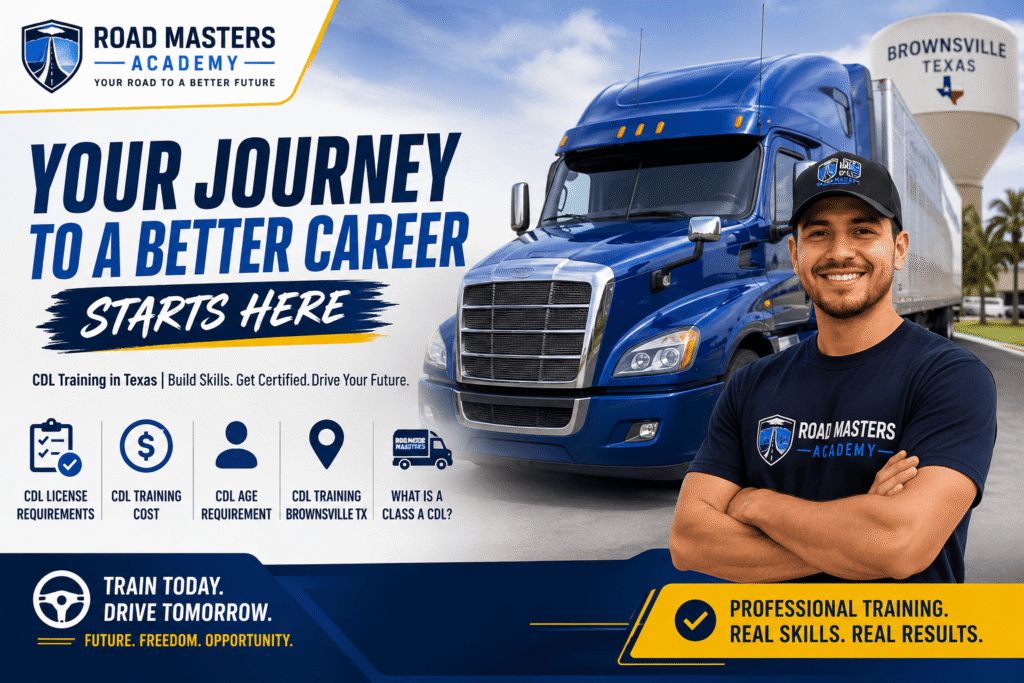

The trucking industry keeps America moving. From delivering food and medical supplies to transporting construction materials and retail products, commercial drivers play a critical role in everyday life.
If you are considering a career behind the wheel, you probably have questions about CDL license requirements, training costs, age restrictions, and the different types of commercial licenses available. Understanding these fundamentals can help you make informed decisions and start your journey with confidence.
Whether you are researching CDL training Brownsville TX programs or simply exploring career options, this guide covers everything you need to know.
Why Earning a CDL Is Worth Considering
A Commercial Driver’s License, commonly known as a CDL, allows drivers to operate large commercial vehicles legally. Without a CDL, you cannot drive most heavy trucks used in transportation, logistics, construction, and other industries.
The demand for qualified commercial drivers continues because businesses rely on trucking to move goods across cities, states, and the country. As experienced drivers retire and freight demand remains steady, new opportunities continue to emerge for individuals entering the field.
For many people, earning a CDL is more than obtaining a license. It is the beginning of a long term career with growth potential and job stability.
Understanding CDL License Requirements
Before starting training, every applicant must meet certain CDL license requirements. These requirements are designed to ensure that drivers can safely operate commercial vehicles on public roads.
Most applicants must:
- Hold a valid driver’s license
- Meet state and federal age requirements
- Pass a Department of Transportation medical examination
- Obtain a Commercial Learner’s Permit
- Complete Entry Level Driver Training
- Pass the CDL skills test
Meeting these requirements is the first step toward becoming a professional commercial driver.
What Is a Class A CDL?
One of the most common questions among future drivers is, what is a Class A CDL?
A Class A CDL allows drivers to operate combination vehicles with a Gross Combination Weight Rating of 26,001 pounds or more when the towed vehicle exceeds 10,000 pounds.
This license typically qualifies drivers to operate:
- Tractor trailers
- Flatbed trucks
- Tanker vehicles
- Livestock carriers
- Refrigerated freight trucks
Because of its versatility, a Class A CDL opens the door to a wide range of trucking opportunities. Many employers prefer Class A drivers because they can operate some of the largest commercial vehicles on the road.
For individuals seeking maximum career flexibility, a Class A CDL is often the preferred option.
CDL Age Requirement: How Old Do You Need to Be?
Another important factor to understand is the CDL age requirement.
Age requirements vary depending on where you plan to drive.
Drivers who intend to operate commercial vehicles only within Texas may qualify for a CDL at age 18.
However, federal regulations require drivers to be at least 21 years old for interstate commerce. This means crossing state lines, transporting hazardous materials, or operating certain commercial vehicles in interstate operations.
Many students begin training before age 21 so they can gain experience and prepare for broader opportunities once they meet federal age requirements.
The Basic Steps to Earning a CDL
The process of becoming a commercial driver follows a clear path.
Meet Eligibility Requirements
Applicants must satisfy age, residency, identification, and medical requirements before moving forward.
Obtain a Commercial Learner’s Permit
A Commercial Learner’s Permit allows students to practice driving commercial vehicles under qualified supervision.
To obtain a permit, applicants typically complete written examinations covering commercial driving knowledge and safety regulations.
Complete Entry Level Driver Training
Federal regulations require most first time CDL applicants to complete Entry Level Driver Training through an approved training provider.
This training combines classroom education with practical instruction to prepare students for licensing exams and real world driving situations.
Attend CDL Training
Professional CDL training provides valuable experience that goes beyond simply preparing for a test.
Students learn how to:
- Inspect commercial vehicles
- Perform backing maneuvers
- Navigate traffic safely
- Follow federal regulations
- Handle real driving scenarios
Pass the CDL Skills Test
The final step involves demonstrating driving knowledge and practical skills during the CDL examination process.
Successful completion leads to earning a Commercial Driver’s License and entering the workforce.
Understanding CDL Training Cost
One of the first questions future drivers ask is about CDL training cost.
Training costs vary based on several factors, including program length, equipment, driving hours, and the type of license being pursued.
While cost is an important consideration, it should not be the only factor when selecting a training program.
A quality program provides the knowledge, skills, and practical experience needed to build confidence and prepare for employment opportunities.
Choosing training based solely on the lowest price may not provide the same level of instruction or hands on experience.
What Affects CDL Training Cost?
Several factors influence the overall investment required for CDL training.
Program Length
Programs with more instruction hours often require higher tuition because students receive additional training and support.
Driving Time
Hands on driving experience is one of the most valuable parts of any CDL program. More driving hours generally mean more opportunities to develop essential skills.
Equipment Quality
Training on modern commercial vehicles helps students become familiar with the equipment commonly used throughout the industry.
Instructor Experience
Experienced instructors provide practical insights gained from years of commercial driving experience.
Regulatory Compliance
Schools that meet federal Entry Level Driver Training standards invest in curriculum development and structured instruction that supports student success.
Why Professional CDL Training Matters
Operating a commercial vehicle requires more than simply knowing how to drive.
Professional training teaches students how to handle large vehicles safely while developing habits that support long term success.
Students learn critical skills such as:
- Vehicle inspections
- Defensive driving techniques
- Backing procedures
- Coupling and uncoupling trailers
- Managing road conditions safely
These skills help prepare future drivers for real situations they will encounter throughout their careers.
Professional instruction can also reduce stress and uncertainty during the testing process.
Choosing CDL Training Brownsville TX
When researching CDL training Brownsville TX options, it is important to look beyond tuition alone.
A strong training program should provide:
- Qualified instructors
- Practical driving experience
- Modern training equipment
- Flexible scheduling options
- Support throughout the licensing process
Road Masters Academy focuses on helping students build the skills needed to enter the trucking industry with confidence. Through structured instruction and hands on training, students gain valuable experience that prepares them for their CDL examinations and future careers.
Career Opportunities After Earning Your CDL
A CDL can create opportunities in several sectors of the transportation industry.
Long Haul Trucking
Long haul drivers transport freight across multiple states and often travel throughout the country.
Regional Driving
Regional routes provide opportunities to operate within specific geographic areas while maintaining a more predictable schedule.
Local Commercial Driving
Many CDL holders work in local delivery, construction, utility, and service industries.
Specialized Transportation
Additional endorsements may allow drivers to pursue specialized roles involving tanker vehicles, hazardous materials, passenger transportation, and other commercial operations.
As drivers gain experience, additional career paths and earning opportunities often become available.
How to Choose the Right CDL School
Choosing the right training provider can make a significant difference in your overall experience.
Look for programs that offer:
- Entry Level Driver Training compliance
- Hands on driving practice
- Modern commercial vehicles
- Experienced instructors
- Clear curriculum structure
- Student focused support
The goal is not simply to pass an exam. The goal is to become a safe, confident, and skilled professional driver.
Final Thoughts
Starting a trucking career begins with understanding the licensing process and selecting quality training. Whether you are learning about CDL license requirements, evaluating CDL training cost, researching the CDL age requirement, or trying to understand what is a Class A CDL, having accurate information helps you move forward with confidence.
Professional training provides the foundation needed to succeed in the commercial transportation industry. With the right preparation, dedication, and instruction, earning a CDL can open the door to a rewarding career and long term opportunities.
For individuals considering CDL training Brownsville TX programs, choosing a trusted training provider is an important first step toward achieving their goals in the trucking industry.