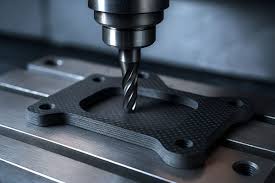

Carbon fiber CNC machining has revolutionized modern manufacturing by enabling the precise creation of intricate and complex geometries. As industries increasingly demand lightweight, durable, and high-performance components, carbon fiber has emerged as a go-to material. However, its unique properties also make it challenging to machine using traditional methods. That’s where advanced CNC machining techniques come into play, making the process more efficient and accurate.
In this article, we explore how carbon fiber CNC machining simplifies the production of complex shapes, the benefits it offers, and the techniques that make it possible.
Understanding Carbon Fiber CNC Machining
Carbon fiber CNC machining refers to the computer-controlled cutting, drilling, and shaping of carbon fiber composites into precise forms. Unlike metals or plastics, carbon fiber is a composite material made of woven fibers embedded in a resin matrix, which requires specialized tools and techniques.
The machining process involves advanced CNC equipment that ensures consistent accuracy and repeatability. With the ability to follow detailed CAD designs, manufacturers can produce highly complex components with minimal error. This makes carbon fiber CNC machining ideal for industries such as aerospace, automotive, and medical devices.
Key aspects include:
- High precision and repeatability
- Ability to work with intricate designs
- Compatibility with advanced CAD/CAM systems
- Minimal material waste with optimized cutting paths
Carbon fiber CNC machining is not just about cutting material; it’s about transforming a challenging composite into a high-performance product with exact specifications.
Why Carbon Fiber is Ideal for Complex Geometries
Carbon fiber is known for its exceptional strength-to-weight ratio, making it a preferred material for applications requiring both durability and lightness. This unique property allows engineers to design complex geometries that would be impractical with heavier materials.
Another advantage is its versatility. Carbon fiber can be molded and machined into shapes that meet highly specific functional and aesthetic requirements. Whether it’s curved surfaces, thin walls, or intricate patterns, carbon fiber CNC machining makes it achievable.
Benefits of carbon fiber for complex designs:
- Lightweight yet extremely strong
- High resistance to corrosion and fatigue
- Excellent thermal stability
- Flexibility in design and structure
With carbon fiber CNC machining, manufacturers can push the boundaries of design while maintaining structural integrity and performance.
Challenges in Machining Carbon Fiber and How to Overcome Them
Despite its advantages, carbon fiber presents several machining challenges. The material tends to fray, delaminate, or produce fine dust during cutting. These issues can compromise the quality of the final product if not handled properly.
To overcome these challenges, manufacturers use specialized tools and techniques. High-quality diamond-coated or carbide tools are commonly used to ensure clean cuts and reduce wear. Additionally, optimized cutting speeds and feed rates help minimize damage to the material.
Common challenges and solutions:
- Delamination → Use sharp, specialized cutting tools
- Fiber pull-out → Optimize cutting parameters
- Dust generation → Implement proper vacuum and filtration systems
- Tool wear → Use durable coatings like diamond or carbide
By addressing these challenges effectively, carbon fiber CNC machining becomes a reliable method for producing complex geometries with precision.
Advanced Techniques for Machining Complex Geometries
Modern CNC machining technologies have made it easier than ever to create complex carbon fiber components. Multi-axis CNC machines, for example, allow for simultaneous movement along multiple axes, enabling the creation of intricate shapes without repositioning the workpiece.
Another important technique is the use of advanced CAD/CAM software. These tools allow engineers to simulate the machining process, identify potential issues, and optimize tool paths before actual production begins. This reduces errors and improves efficiency.
Advanced techniques include:
- 5-axis CNC machining for intricate designs
- High-speed machining for smoother finishes
- Precision toolpath optimization
- Use of vacuum fixtures for stability
These innovations ensure that carbon fiber CNC machining can handle even the most demanding geometries with ease and accuracy.
Applications of Carbon Fiber CNC Machining
Carbon fiber CNC machining is widely used across various industries due to its ability to produce high-performance components with complex shapes. In aerospace, it is used for lightweight structural parts that improve fuel efficiency. In the automotive sector, it helps create durable yet lightweight components for enhanced performance.
The medical industry also benefits from carbon fiber machining, particularly in the production of prosthetics and imaging equipment. Additionally, the sports and consumer goods industries use it for products that require both strength and aesthetic appeal.
Common applications include:
- Aerospace components and structural parts
- Automotive body panels and performance parts
- Medical devices and prosthetics
- Sporting goods like bicycles and rackets
These applications highlight the versatility and importance of carbon fiber CNC machining in modern manufacturing.
Conclusion
Carbon fiber CNC machining has made the production of complex geometries more accessible, efficient, and precise than ever before. By combining advanced machining techniques with the unique properties of carbon fiber, manufacturers can create high-performance components that meet the most demanding requirements.
While challenges such as tool wear and material handling exist, they can be effectively managed with the right tools, techniques, and expertise. As technology continues to evolve, carbon fiber CNC machining will play an even greater role in shaping the future of manufacturing, enabling innovation across multiple industries.