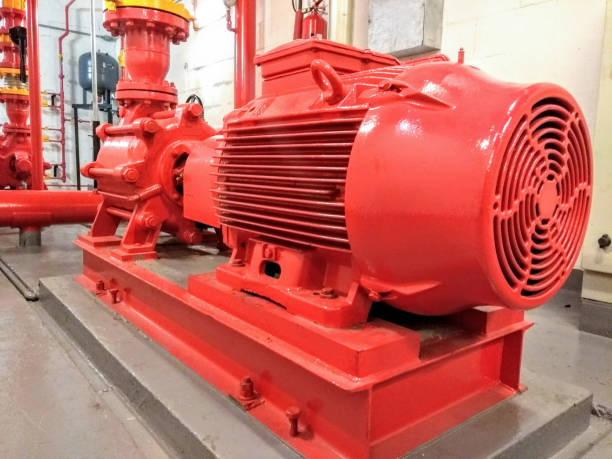

Fire pumps form the pressure-generating core of many sprinkler, hydrant, hose-reel, and water-spray systems. When the public water supply cannot provide sufficient pressure or flow, these pumps deliver water from tanks, reservoirs, or other sources to the affected area. Across Brazil, expanding industrial facilities, commercial construction, residential towers, logistics hubs, and infrastructure projects are increasing the need for dependable fire-water systems capable of operating during emergencies.
According to MarkNtel Advisors, the Brazil fire pump industry was valued at approximately USD 54.02 million in 2025 and is projected to rise from USD 56.1 million in 2026 to USD 162.8 million by 2032. This fire protection investment outlook represents an estimated CAGR of 19.43% during 2026–2032, supported by regulatory enforcement, industrial development, building modernization, and greater awareness of fire-related operational risks.
Industrial Facilities Generate the Largest Demand
Industrial users accounted for approximately 54.14% of national demand in 2026. Oil and gas installations, petrochemical plants, mines, power stations, manufacturing sites, ports, and storage terminals frequently handle combustible materials or operate equipment capable of generating heat and sparks.
These facilities often require high-capacity pumps connected to dedicated fire-water networks. Electric pumps may provide the main supply, while diesel-driven units offer backup when utility power is unavailable. Jockey pumps maintain network pressure and prevent the main equipment from starting unnecessarily after minor pressure changes.
Brazil’s oil, mining, and manufacturing sectors also operate large or remote facilities where emergency support may not arrive immediately. Onsite systems must therefore deliver adequate water until external fire services can assist.
End-Suction Pumps Maintain a Leading Position
End-suction pumps represented the leading pump type in 2026. Their compact design, relatively straightforward installation, and cost-effectiveness make them suitable for residential buildings, warehouses, commercial properties, and light industrial facilities with moderate flow requirements.
The suction inlet is positioned at one end of the pump, while water exits through a discharge connection located on the casing. These units can be coupled with electric motors or diesel engines depending on project requirements.
Larger installations may use horizontal split-case or vertical turbine pumps. Split-case systems can provide substantial flow and allow easier internal maintenance, while vertical turbine designs are useful when water must be drawn from below-ground tanks, reservoirs, or wells.
Building Expansion Supports New Installations
Urban development in São Paulo, Rio de Janeiro, Brasília, and other cities is increasing the number of residential towers, hospitals, hotels, shopping centres, warehouses, and data facilities requiring fire protection.
The Brazilian Institute of Geography and Statistics monitors the construction sector through its Annual Survey of Construction Industry, covering employment, costs, revenue, investments, and the value of construction activity. Continued building development creates direct demand for pumps, controllers, valves, tanks, piping, alarms, and inspection services.
Commercial facilities are expected to record particularly strong growth as high-rise development and organized retail expand. These buildings frequently contain complex layouts, valuable equipment, and large numbers of occupants, increasing the importance of correctly designed suppression systems.
Regulations Shape System Design
Fire-safety requirements in Brazil are enforced through state-level military fire departments and associated technical instructions. Approvals may cover water storage, hydrants, sprinklers, emergency access, alarms, evacuation arrangements, and pump performance.
The United Nations Industrial Development Organization has documented fire-safety principles for Brazilian buildings, including protection measures for industrial sites, basements, high-rise buildings, and shopping complexes.
International standards also influence engineering practices. NFPA 20 addresses the installation of stationary pumps used for fire protection, including pump rooms, power supplies, controllers, drivers, testing, and system reliability.
Compliance is not limited to installing a pump with the correct nameplate rating. Engineers must evaluate available water, required pressure, pipe losses, building height, hazard classification, and the most demanding operating scenario.
Modular Packages Improve Project Execution
Skid-mounted and modular fire pump packages are becoming more common across industrial and infrastructure projects. These systems combine the main pump, backup pump, jockey pump, controllers, valves, instruments, and sometimes the enclosure within a factory-assembled package.
Pre-engineered packages can shorten onsite installation and simplify testing. They are particularly useful for remote mines, oil and gas projects, ports, and industrial plants where construction conditions are difficult.
Local assembly can also reduce delivery delays and provide easier access to replacement parts and technical support. However, specialized engines, control panels, and certified components may still depend on imports, exposing project costs to currency movements.
Inspection Preserves Emergency Readiness
Fire pumps may remain inactive for long periods but must start immediately when needed. Regular inspection and testing are therefore essential. Maintenance teams should examine fuel, batteries, electrical supplies, lubrication, cooling, valves, controllers, alarms, and water availability.
Testing can reveal low pressure, blocked suction lines, deteriorated seals, controller faults, or insufficient flow before an emergency occurs. Remote monitoring can further improve readiness by reporting equipment status, pump starts, pressure changes, and maintenance requirements.
Brazil’s fire pump landscape is expected to expand as industrial investment, urban construction, and safety enforcement progress. Long-term performance will depend on correct sizing, dependable backup arrangements, qualified installation, and disciplined testing rather than equipment procurement alone.