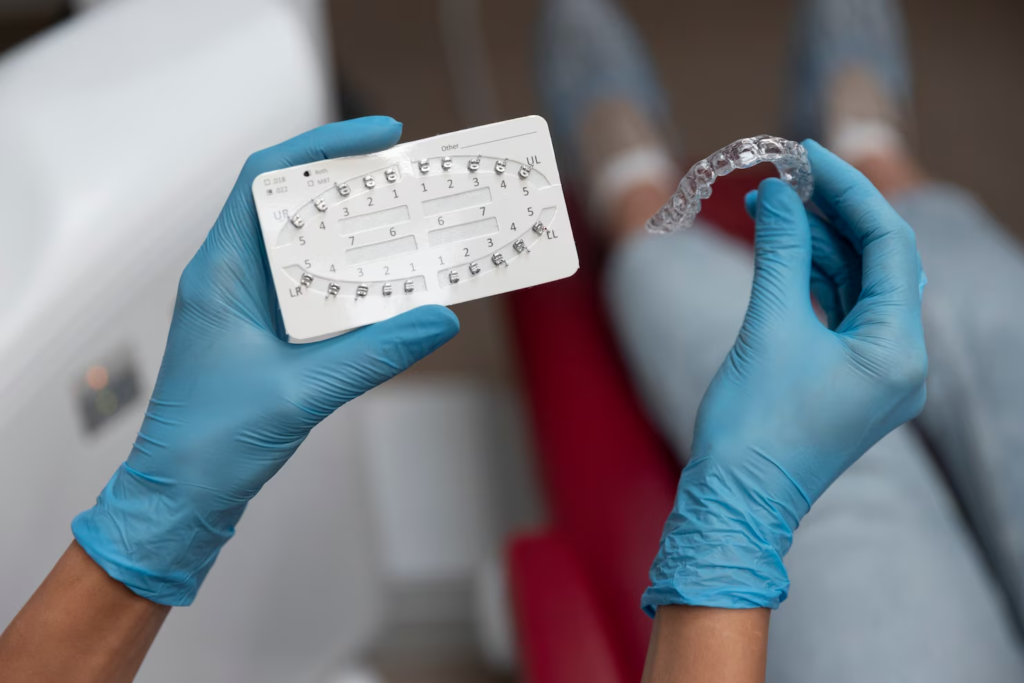

A straight smile is about more than appearance. Properly aligned teeth are easier to clean, support healthy gums, improve biting function, and can boost self confidence. Thanks to modern orthodontics, patients now have more than one option to achieve a beautiful smile. Traditional braces and Invisalign are two of the most popular treatments available today.
Both treatments are designed to straighten teeth, correct bite problems, and improve overall oral health. However, they work differently and are suitable for different types of dental conditions. Understanding the differences between braces and Invisalign can help you make an informed decision before starting your orthodontic journey.
Understanding Orthodontic Treatment
Orthodontic treatment focuses on correcting the position of teeth and jaws. Misaligned teeth may cause several problems, including:
- Crowded teeth
- Gaps between teeth
- Overbite
- Underbite
- Crossbite
- Open bite
- Difficulty chewing
- Speech concerns
- Increased risk of tooth decay and gum disease
Modern orthodontic solutions gradually move teeth into proper alignment using controlled pressure. Your orthodontist will recommend the best treatment based on your age, dental condition, lifestyle, and treatment goals.
What Are Traditional Braces?
Traditional braces have been used successfully for decades to straighten teeth and correct complex orthodontic issues. They consist of brackets attached to the teeth and connected with wires that are adjusted periodically to move teeth into their ideal positions.
Because braces remain fixed throughout treatment, they apply continuous pressure, making them highly effective for both simple and complicated alignment cases.
Types of Braces
Metal Braces
Metal braces are the most common orthodontic treatment. They are durable, reliable, and highly effective for correcting severe alignment issues.
Ceramic Braces
Ceramic braces function like metal braces but use tooth colored brackets that blend naturally with the teeth, making them less noticeable.
Self Ligating Braces
These braces use specialized clips instead of elastic bands, reducing friction and often making adjustments quicker and more comfortable.
Lingual Braces
Lingual braces are attached to the back surface of the teeth, making them almost invisible from the front while still delivering excellent orthodontic results.
What Is Invisalign?
Invisalign is a modern orthodontic system that uses a series of clear, removable aligners instead of brackets and wires.
Each aligner is custom designed using advanced digital technology to move teeth gradually into better positions. Patients usually wear each set of aligners for one to two weeks before progressing to the next set.
Since Invisalign aligners are transparent, they are much less noticeable than traditional braces and fit comfortably into everyday life.
How Does Invisalign Work?
The Invisalign process usually includes the following steps:
- Digital smile scanning
- Customized treatment planning
- Fabrication of clear aligners
- Wearing aligners for 20 to 22 hours daily
- Changing aligners every one to two weeks
- Regular orthodontic reviews
- Completion followed by retainers
Each aligner gently moves specific teeth according to the digital treatment plan until the desired smile is achieved.
Braces vs Invisalign: Major Differences
Understanding the key differences makes it easier to decide which treatment better suits your needs.
| Aspect | Braces | Invisalign |
| Appearance | Visible brackets and wires | Nearly invisible clear aligners |
| Comfort | Brackets may cause mild irritation | Smooth plastic aligners provide better comfort |
| Removal | Fixed throughout treatment | Easily removable |
| Oral Hygiene | Requires careful brushing around brackets | Teeth can be brushed normally |
| Food Restrictions | Avoid sticky, hard, and crunchy foods | No restrictions since aligners are removed while eating |
| Treatment Time | Usually 18 to 30 months | Often 12 to 18 months for suitable cases |
| Best For | Mild to severe orthodontic problems | Mild to moderate alignment issues |
| Appointments | Wire adjustments required | Periodic progress reviews |
Benefits of Traditional Braces
Traditional braces remain one of the most effective orthodontic treatments available.
Excellent for Complex Cases
Braces provide exceptional control over tooth movement and are suitable for severe crowding, major bite issues, and complicated orthodontic corrections.
Continuous Treatment
Since braces remain attached to the teeth, treatment continues around the clock without depending on patient compliance.
Suitable for All Ages
Children, teenagers, and adults can all benefit from braces depending on their orthodontic needs.
Predictable Results
Orthodontists can precisely adjust wires throughout treatment to achieve highly accurate results.
Advantages of Invisalign
Invisalign has become increasingly popular among adults and teenagers looking for a discreet orthodontic solution.
Nearly Invisible
Clear aligners are difficult to notice, making them ideal for professionals, students, and anyone concerned about appearance.
Comfortable to Wear
The smooth plastic material minimizes irritation to the cheeks and gums compared to metal brackets.
Better Oral Hygiene
Since aligners are removable, brushing and flossing remain simple throughout treatment.
No Dietary Restrictions
Patients remove aligners while eating, allowing them to continue enjoying their favorite foods.
Fewer Emergency Visits
Without brackets or wires, there is less chance of orthodontic emergencies caused by broken appliances.
Things to Consider Before Choosing Invisalign
Although Invisalign offers many benefits, success depends on patient responsibility.
Consistent Wear Is Essential
Aligners should be worn for at least 20 to 22 hours every day for effective treatment.
Not Suitable for Every Case
Some severe bite problems or complex orthodontic conditions may still require traditional braces.
Aligners Can Be Misplaced
Because they are removable, patients must remember to store them safely when eating.
Which Treatment Is More Comfortable?
Many patients find Invisalign more comfortable because the aligners have smooth edges and do not contain wires or brackets.
However, mild pressure is normal whenever a new aligner is worn. Traditional braces may cause temporary soreness after adjustments, along with occasional irritation from brackets.
Most patients adapt quickly to either treatment within a few days.
Treatment Duration
Treatment length depends on several factors, including:
- Severity of misalignment
- Age
- Patient cooperation
- Type of orthodontic problem
- Oral hygiene maintenance
Generally:
- Braces: 18 to 30 months
- Invisalign: 12 to 18 months for eligible patients
Complex cases may require longer treatment regardless of the chosen option.
Cost Comparison
The cost of orthodontic treatment varies depending on:
- Complexity of treatment
- Duration
- Type of braces
- Number of aligners
- Digital planning requirements
- Location of the dental clinic
Although Invisalign may cost slightly more in some situations, the convenience and appearance often make it worthwhile for many patients.
Your orthodontist can provide an accurate estimate after a complete examination.
How to Choose Between Braces and Invisalign
Several important factors should be considered before making your decision.
Severity of Alignment
Braces are often recommended for complicated orthodontic problems, while Invisalign is excellent for mild to moderate cases.
Lifestyle
People who frequently attend professional meetings or social events often prefer the discreet appearance of Invisalign.
Daily Commitment
Patients who can consistently wear aligners every day are excellent candidates for Invisalign. Those who may struggle with compliance often benefit more from fixed braces.
Age
Both children and adults can receive orthodontic treatment, although younger patients with developing teeth sometimes achieve better results with traditional braces.
Professional Recommendation
Your orthodontist will evaluate your bite, jaw alignment, oral health, and smile goals before recommending the most appropriate treatment.
Choose RK Dental Practice for Braces & Invisalign
Selecting the right orthodontic clinic is just as important as choosing the treatment itself. Experienced specialists can accurately assess your smile and create a personalized treatment plan that delivers long lasting results.
At RK Dental Practice, patients receive comprehensive orthodontic care using advanced technology and modern treatment methods. Whether you require traditional braces or Invisalign clear aligners, every treatment plan is designed according to your unique dental needs.
Why Choose RK Dental Practice?
Experienced Orthodontists
Personalized treatment plans prepared by skilled orthodontic professionals.
Multiple Treatment Options
Metal braces, ceramic braces, self ligating braces, and Invisalign available under one roof.
Digital Smile Planning
Advanced digital scans improve treatment accuracy and patient comfort.
Customized Care
Every smile receives an individualized treatment approach.
Modern Technology
State of the art equipment supports predictable and efficient orthodontic care.
Focus on Long Term Results
Treatments are planned to improve smile aesthetics, oral health, and bite function for years to come.
Final Thoughts
Both braces and Invisalign are highly effective orthodontic treatments that can transform your smile and improve your oral health. Traditional braces remain the preferred option for complex dental corrections, while Invisalign offers a discreet and convenient solution for suitable patients.
The best treatment depends on your dental condition, lifestyle, expectations, and commitment to treatment. Consulting an experienced orthodontist is the first step toward achieving a healthy, confident, and beautifully aligned smile.
(FAQs)
1. Which is better, braces or Invisalign?
Neither treatment is universally better. Braces are ideal for complex orthodontic problems, while Invisalign works well for mild to moderate alignment issues and offers a more discreet appearance.
2. Is Invisalign more comfortable than braces?
Yes. Most patients find Invisalign more comfortable because the aligners are smooth and do not contain metal brackets or wires that may irritate the mouth.
3. How long does orthodontic treatment usually take?
Treatment typically lasts between 12 and 30 months, depending on the severity of the dental problem and the type of treatment selected.
4. Can I eat normally during Invisalign treatment?
Yes. Invisalign aligners are removed before eating, allowing you to enjoy your normal diet. Braces, however, require avoiding hard, sticky, and crunchy foods.
5. How do I know whether I need braces or Invisalign?
A consultation with an experienced orthodontist is the best way to determine the right treatment. After examining your teeth, bite, and alignment, your dentist will recommend the option that best suits your oral health needs and smile goals.