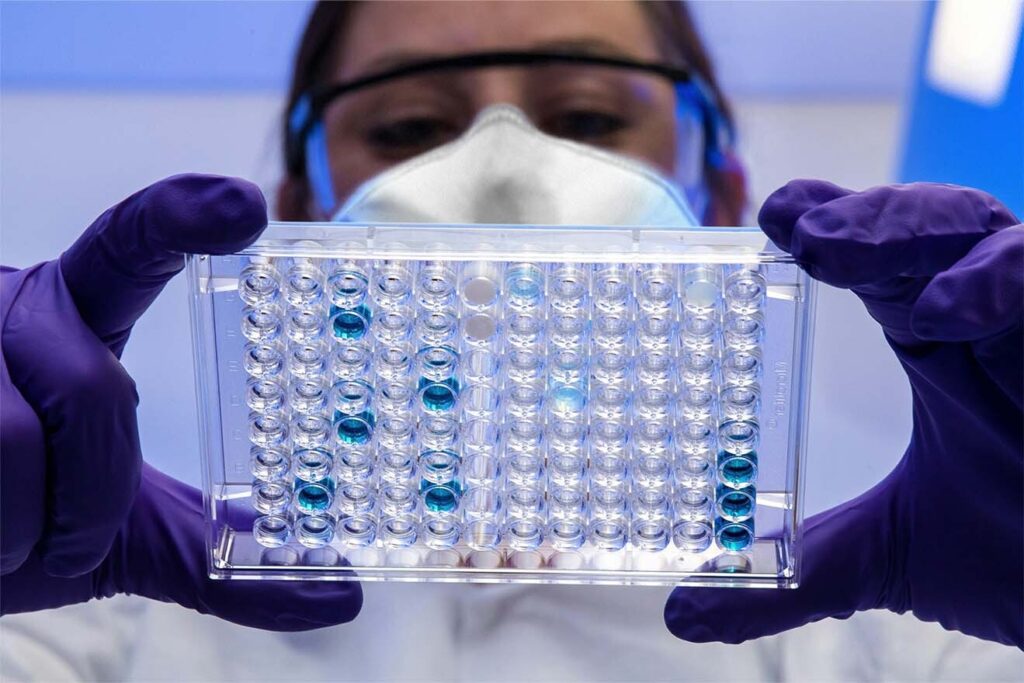

High attrition rates in clinical trials often result from poor target engagement, causing significant delays and financial setbacks. To reduce these risks, researchers require reliable methods to confirm drug-target interactions before proceeding to in vivo studies. Biochemical assays offer a solution by providing precise, quantitative data on these interactions in a controlled environment. This approach allows sponsors to make informed decisions early, ensuring that only the most promising candidates advance toward regulatory submissions, thereby optimizing the drug development pipeline.
The Role of Biochemical Techniques in Target Engagement
Target engagement verifies that a drug binds to its intended receptor or enzyme. Without this verification, observing a phenotypic change in a cell does not confirm the actual mechanism of action. Biochemical techniques isolate the interaction, providing direct evidence of binding. Scientists rely on these techniques to rank compounds based on their affinity and residence time. This data is vital for selecting lead candidates with the highest probability of clinical success.
What is Biochemical Analysis?
In drug discovery, biochemical analysis refers to the precise measurement of biological macromolecules and their interactions with therapeutic compounds. This type of analysis is typically conducted outside a living system, using purified proteins, enzymes, or receptors to evaluate how a molecule influences biological activity. The quantitative data generated from these studies form a critical foundation for early-stage drug screening and optimisation.
Evaluating Small Molecule Bioanalysis for MOA Studies
Determining the mechanism of action (MOA) is a regulatory requirement for drug approval. Small Molecule Bioanalysis provides the necessary tools to dissect how a therapeutic agent alters a biological pathway. By utilizing mass spectrometry (LC-MS) or other analytical platforms, scientists can track the exact interaction between a small molecule and its target. This process yields essential data regarding:
- Competitive vs. non-competitive inhibition
- Reversible vs. irreversible binding
- Allosteric modulation
Understanding these factors allows researchers to predict potential off-target effects and optimize the drug’s safety profile.
Methods for Measuring Binding Affinity and Kinetics
Quantifying the interaction between a drug and its target requires a detailed methodology. A well-designed Biochemical Assay will accurately measure two primary parameters: binding affinity and enzyme kinetics.
Binding Affinity Measurements
Binding affinity indicates how strongly a drug binds to its target. Common techniques to measure this include:
- Surface Plasmon Resonance (SPR)
- Isothermal Titration Calorimetry (ITC)
- Radioligand binding assays
These methods calculate the dissociation constant (Kd). A lower Kd value indicates a higher affinity, which is typically desired for lead compounds.
Enzyme Kinetics
For enzyme inhibitors, kinetic studies determine how the drug affects the rate of the biological reaction. Researchers measure the Michaelis constant (Km) and maximum velocity (Vmax) to classify the inhibitor type and calculate its potency (IC50).
Developing Assays in a Bioanalytical Laboratory
Transitioning a basic screening method into a robust, regulatory-ready test requires a structured approach. A specialized Bioanalytical Laboratory will follow strict protocols to develop and validate these methods. The validation process ensures the method is reliable across multiple days, analysts, and instrument platforms. Key parameters evaluated during validation include:
- Accuracy and precision
- Selectivity and specificity
- Calibration curve linearity
- Reagent stability
Following ICH guidelines during this phase prevents future regulatory setbacks and ensures data integrity.
Integrating Data for Pharmacokinetics and Safety
The data generated from biochemical studies does not exist in a vacuum. It must be integrated with pharmacokinetics (PK) and safety profiles to provide a complete picture of the drug candidate. Understanding the binding affinity helps predict the required therapeutic dose. If a drug has low affinity, higher doses are needed, which increases the risk of toxicity. Integrating this data early allows researchers to model the necessary PK parameters and establish a safe therapeutic window for phase 1 clinical trials.
Must Read: Comparing ELISA Assay Method vs. MSD Platform: When to Choose What?
Compliance: GLP-Compliant Standards and FDA Protocols
Regulatory agencies require strict adherence to quality standards. Generating data in a Good Laboratory Practice (GLP) environment is non-negotiable for IND-enabling studies. An FDA-audited Bioanalytical Laboratory operates under stringent Quality Assurance (QA) programs. These programs govern every aspect of the study, from sample receipt to final reporting. Maintaining GLP-compliant standards guarantees that the data is traceable, secure, and auditable. This level of rigor minimizes the risk of regulatory rejection and keeps development timelines on track.
Streamlining Drug Development with a Bioanalytical CRO
Managing complex assay development internally often drains resources and delays project timelines. Partnering with a specialized Bioanalytical CRO provides immediate access to seasoned scientists and state-of-the-art instrumentation. A responsive CRO operates with a solution-provider mindset. Through scientist-to-scientist communication, sponsors can refine study designs and quickly adapt to unexpected results. Outsourcing this work to an experienced partner ensures that projects move efficiently from early discovery through preclinical safety testing.
Conclusion
Biochemical Assays play a central role in confirming target engagement and understanding the mechanism of action during early drug development. By generating precise and quantitative data on drug–target interactions, these assays help researchers identify promising candidates and eliminate ineffective ones at an early stage. When supported by validated methods, regulatory compliance, and integration with pharmacokinetic and safety data, biochemical analysis enables more informed decision-making. Partnering with an experienced bioanalytical CRO further strengthens this process, ensuring efficient study execution and reliable data to support regulatory submissions and clinical advancement.