
Every football season, our house follows the same routine.
By noon, someone is already checking the smoker. The wings are in the oven, a pot of chili is quietly bubbling away in the kitchen, and somebody inevitably asks if they can bring “that new IPA everybody’s talking about.” Long before kickoff, the conversations have already started.
The funny part is that almost nobody gathers around the television first.
They gather around the draft tower.
“What’s on tap today?”
It’s usually the first question through the door.
One faucet might be pouring a local West Coast IPA. Another has a crisp lager that’s easy to drink through four quarters of football. If I’m lucky, the third keg is my own amber ale, brewed a few weeks earlier and finally ready to share.
Nobody asks about regulators.
Nobody asks about gas pressure.
And nobody has ever walked into my garage asking about a beer keg coupler.
Ironically, it’s one of the hardest-working pieces in the entire draft system.
The Part Nobody Notices, Until They Build Their Own Bar
Most people see a kegerator as a single appliance.
After you’ve owned one for a while, you realize it’s really a collection of well-designed parts working together.
The faucet delivers the beer.
The regulator manages carbon dioxide pressure so every pour stays consistent.
The beer lines carry the beer from keg to glass.
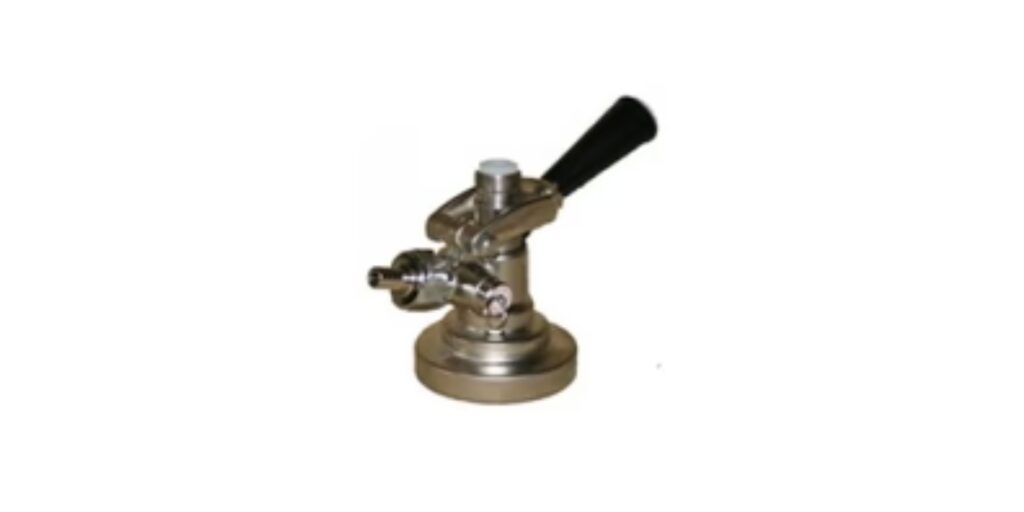
Then there’s the coupler.
It locks securely onto the keg, creates an airtight seal, allows CO₂ into the keg, and sends beer back toward the faucet. Without it, the draft system simply doesn’t exist. The impressive part isn’t that it performs all those jobs. It’s that it does them quietly enough for most people never to notice.
Good engineering often works that way.
“I Thought Every Keg Used the Same Connector.”
A buddy of mine learned otherwise.
He’d picked up a German import for a backyard Oktoberfest party and confidently announced, “I’ll have this tapped in five minutes.”
Five minutes became twenty.
Then he looked at the keg.
Then at the coupler.
Then back at the keg again.
“Why won’t this thing fit?”
The answer was surprisingly simple.
While most American breweries package their beer using what’s known as a D-System Sankey connection, several European breweries use different standards. Homebrewers often go in a completely different direction with Cornelius, or “Corny,” kegs that use ball-lock or pin-lock fittings instead.
It’s a little like discovering that not every phone charger fits every phone.
Once someone explains it, the mystery disappears.
That small lesson also explains why experienced draft beer owners pay attention to compatibility before they buy keg coupler equipment. Matching the coupler to the keg takes the guesswork out of serving beer and helps everything work exactly as intended.
The Draft Tower Has Become the New Backyard Fire Pit
One thing I’ve noticed over the last several years is how much American entertaining has changed.
People still gather around the grill.
They still argue over whose ribs are better.
Fantasy football still ruins at least one person’s Sunday afternoon.
But more homes now have spaces built specifically for spending time together.
Finished basements.
Garage bars.
Outdoor kitchens.
Covered patios with televisions mounted above the grill.
A draft tower naturally becomes part of those spaces because it invites conversation. Someone pours a pilsner, another reaches for a pale ale, and before long everyone is comparing local breweries, vacation discoveries, or the first homebrew that turned out better than expected.
Later in the evening, after the final whistle, someone usually reaches for the music.
Sometimes it’s Stevie Ray Vaughan drifting through the speakers while everyone finishes dinner on the patio. Other weekends, especially when the crowd includes a few longtime craft beer fans, the playlist takes a heavier turn with Tool or Mastodon playing in the background while conversations keep rolling long after the game is over.
That’s probably my favorite part of owning a draft system.
It isn’t really about pouring beer.
It’s about giving people one more reason to stay awhile.
The Difference Between “Good Enough” and “Built to Last”
After enough weekends around a draft system, you begin noticing something interesting.
The equipment that earns the most compliments isn’t usually the equipment people see. It’s the equipment that keeps working season after season without demanding attention. A dependable coupler falls squarely into that category. You lock it onto the keg, connect the lines, and move on to more important decisions, like whether the brisket needs another hour or if it’s finally time to kick off the cornhole tournament.
One of the guys in our homebrew club put it perfectly.
“You know what I like about good draft equipment?” he said while pouring a Czech-style pilsner. “I stop thinking about it after the first beer.”
Everyone around the table nodded.
That’s probably the highest compliment any piece of brewing equipment can receive.
Why Breweries and Homebrewers Don’t Always Use the Same Hardware
The first time I toured a regional craft brewery, I expected to learn about recipes and fermentation.
Instead, I found myself fascinated by the cellar.
Rows of stainless steel kegs stretched across the floor, each designed to move efficiently from the brewery to restaurants, sports bars, and taprooms. Commercial breweries need equipment that’s rugged, standardized, and easy for distributors and bar staff to use every day. That’s one reason the D-System Sankey coupler became the industry standard across much of the United States.
Homebrewers often have different priorities.
Many use Cornelius kegs because they’re easy to clean, simple to fill, and convenient for smaller batches brewed in a garage or basement brewery. Neither system is better. They’re simply built for different jobs.
Understanding those differences makes shopping for draft equipment surprisingly straightforward. Once you know which keg you’re serving, choosing the right beer keg coupler becomes less of a guessing game and more of a practical decision.
The Details That Separate Quality From Convenience
Most couplers look remarkably similar at first glance.
The differences appear after months, or even years, of regular use.
Well-machined components lock onto the keg smoothly instead of fighting you every time a keg needs changing. Durable seals help maintain consistent pressure while reducing unnecessary CO₂ loss. Stainless steel contact surfaces resist corrosion and hold up well in the damp environment inside a kegerator, making them a smart long-term choice for anyone who enjoys draft beer year-round.
It’s a little like buying a good cast-iron skillet.
The value isn’t obvious on day one. It becomes obvious after years of dependable use.
Viewed from a broader perspective, that’s a pattern you see throughout the homebrewing community. More hobbyists are choosing equipment designed for longevity instead of treating every purchase as temporary.
Experience Is Hard to Replace
One thing the internet can’t always provide is perspective.
Product listings tell you dimensions.
Specifications list materials.
Reviews offer snapshots of individual experiences.
What they rarely explain is how all the pieces fit together in an actual home draft system.
That’s where companies with decades of experience continue to stand apart. Beer Meister has spent nearly fifty years helping homebrewers and draft beer enthusiasts choose equipment that works together rather than simply filling shopping carts. That steady approach has earned trust across generations of customers because it focuses on lasting value instead of chasing short-lived trends.
When people decide to buy keg coupler equipment, they’re rarely looking for the flashiest option. Most simply want something that fits correctly, performs reliably, and continues doing its job every time friends gather around the draft tower.
The Conversations That Matter Most
By the fourth quarter, the game has usually become background noise.
Someone is debating whether the local brewery’s porter would pair better with smoked ribs than the stout on tap. Another friend is already planning next month’s neighborhood chili cook-off. Somebody else disappears into the garage to admire a new keezer build before returning with another round.
Nobody is talking about the coupler anymore.
And that’s exactly the point.
The best draft systems quietly become part of the experience. They support birthdays, playoff games, backyard celebrations, and ordinary Friday nights without asking for attention. The equipment fades into the background, leaving great beer and good company to take center stage.
Looking back, I think that’s what makes a home draft system special. It’s never been about owning more equipment. It’s about creating a place where people enjoy staying just a little longer, where one more conversation turns into another shared story, and where a simple beer keg coupler helps make those moments happen without anyone giving it a second thought.