
Planning a journey to the high-altitude desert of Leh-Ladakh is rarely as simple as picking a date on a calendar and booking a flight. When you evaluate a Ladakh tour package for your upcoming holiday, the time of year you choose will drastically shape your experience on the ground. A trip in May feels completely different from a trek in January, from road accessibility over mountain passes down to the nighttime temperatures in remote homestays.
Timing matters immensely in the Trans-Himalayas. Here is a realistic look at seasonal weather, pass conditions, logistics, and ideal travel windows to help you pick the right months for your mountain getaway.
Understanding Ladakh’s Seasons Before You Book
Ladakh spends half the year isolated by deep snowfall across the Zanskar and Great Himalayan ranges, while the rest of the year brings clear skies, mountain runoff, and golden poplars.
-
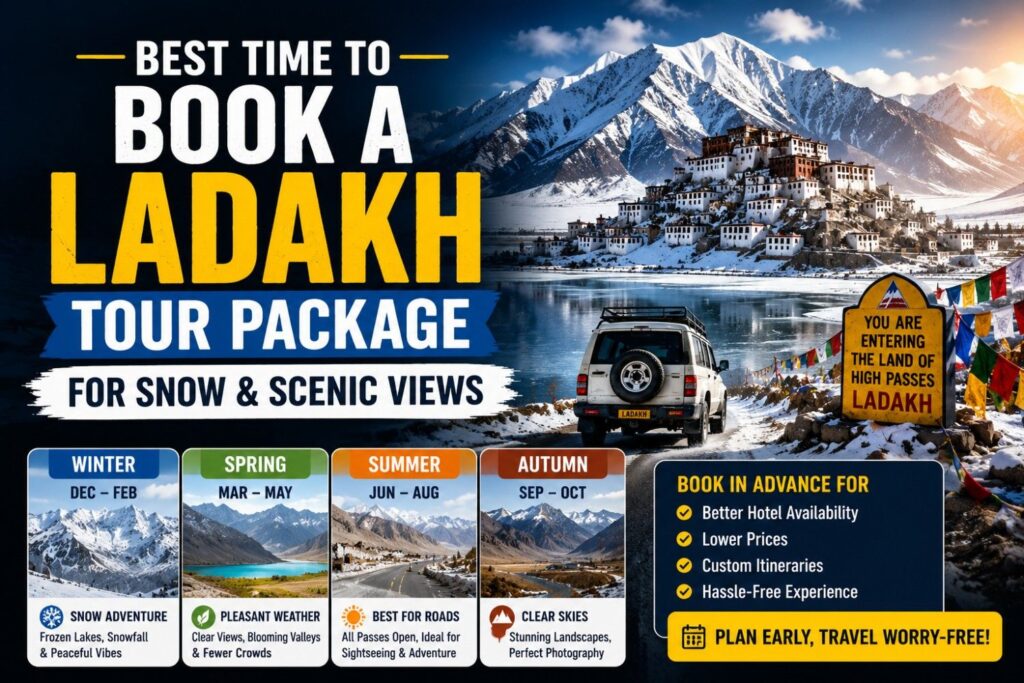
May to June (Early Season): Mountain passes open up, snow walls line the highways, and the weather settles into comfortable daytime temperatures around 15°C to 20°C.
-
July to September (Peak Summer): The entire region is accessible. Temperatures are mild, roads clear up, and high-altitude lakes display their famous brilliant turquoise hues.
-
October to November (Autumn Shift): Crisp air, sharp drop in tourist numbers, and golden foliage across local villages. Nights quickly drop below freezing.
-
December to April (Deep Winter): Extreme cold, sub-zero temperatures, frozen lakes like Pangong, and limited stay options. Accessible almost exclusively via flights to Leh.
Late Spring to Early Summer: Best for Snow Walls and Glacial Passages
If your primary goal is seeing massive snow accumulation along high mountain roads, May and early June offer the best window. The Border Roads Organisation (BRO) works continuously through early spring to clear the Manali-Leh and Srinagar-Leh highways.
When these high-altitude routes open, driving across passes like Baralacha La or Chang La takes you past towering, vertical walls of packed snow. Daytime temperatures in Leh remain comfortable for sightseeing, making it easier to adjust to the elevation. However, early season travels require patience. Sudden snowstorms can temporarily close passes like Khardung La for a few hours while road crews clear the track.
July to September: The Golden Window for Open Roads and Clear Lakes
For most travelers, particularly first-timers and families, July through September offers the smoothest overall experience. Monsoon rains rarely reach the Ladakh plateau due to the rain-shadow effect of the Himalayas, though heavy rainfall in neighboring regions like Kullu or Sonamarg can occasionally affect highway connectivity from India’s plains.
By July, ice on Pangong Tso and Tso Moriri has completely thawed, revealing deep blue and turquoise water contrasting with rugged granite peaks. High mountain tracks into the remote Changthang region or the Aryan Valley are generally clear. Local markets, cafes, and monastery festivals operate at full scale.
Winter Travel: A Completely Different Landscape
Travelers seeking stark winter landscapes, frozen river walks, or a chance to spot rare wildlife like the snow leopard book between December and February.
During these months, temperature readings in Leh often drop to -15°C at night and far lower near Pangong or the Zanskar valley. Running water freezes in pipes, so luxury amenities give way to dry toilets, traditional wood-burning stoves (bukharis), and homestay setups. Flying into Leh Kushok Bakula Rimpoche Airport is your only transport option during winter as all land routes remain snowbound.
Key Planning Considerations for High Altitude Travel
Regardless of the month you select, physical preparation and logistical details dictate whether your trip goes smoothly.
Acclimatization is Mandatory
Leh sits at roughly 11,500 feet above sea level, with passes like Khardung La exceeding 17,500 feet. Flying directly from sea level introduces a severe risk of Acute Mountain Sickness (AMS). Allocate at least 48 full hours upon arrival in Leh solely for rest and light hydration before attempting any day trips over high passes.
Permits and Documentation
Border area permits—specifically Inner Line Permits (ILP)—are required for domestic and international travelers visiting restricted regions such as Nubra Valley, Pangong Tso, Hanle, and Tso Moriri. Most structured itineraries handle this paperwork automatically, but you should always keep physical photocopies of government IDs handy for military checkpoints.
Gear and Packing Checklist
Weather swings quickly at high elevations. Even in July, a sunny 20°C afternoon in Diskit can turn into a 2°C evening once the wind picks up across the valley floor. Layering is essential:
-
Windproof and waterproof outer jacket
-
Thermal inner layers (merino wool or synthetic)
-
Sturdy footwear with solid tread for rocky terrain
-
UV-protection sunglasses and high-SPF sunscreen (the atmosphere is thin)
-
Personal medical kit including rehydration salts and basic AMS medication
Making Your Decision
If you want mild weather, easy road travel, and vivid blue lake views, choose July through September. If seeing heavy snow along the high passes tops your wishlist, aim for mid-May to mid-June. For extreme adventure and quiet winter landscapes, prepare for cold temperatures and fly in between January and February. Alignment between your seasonal expectations and ground reality ensures a safe, unforgettable journey into the high Himalayas.