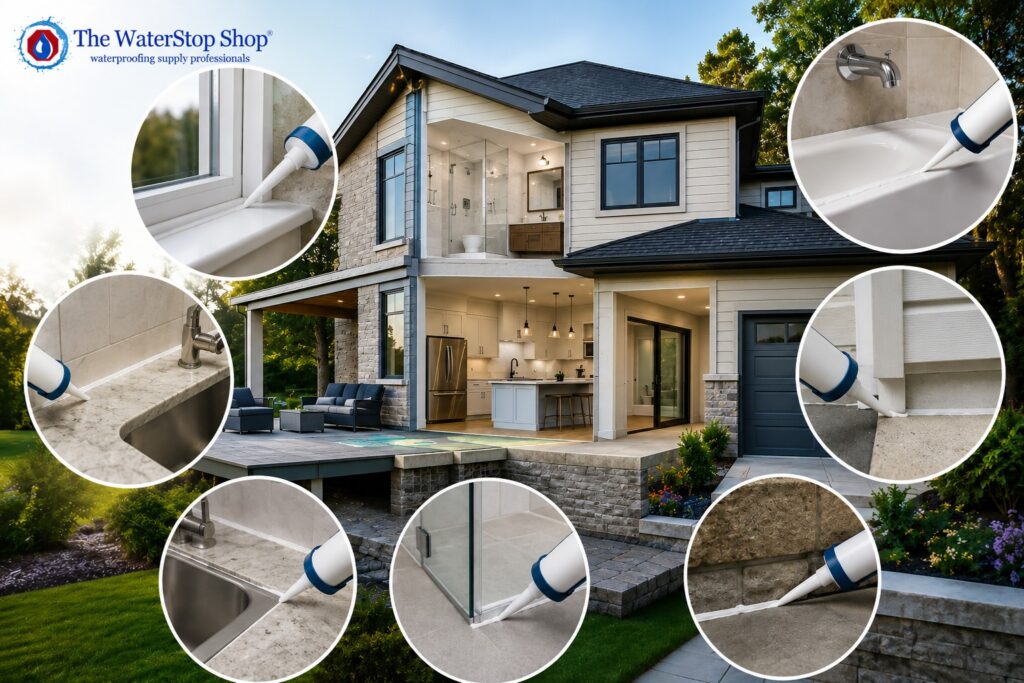

Water damage is one of the most common issues homeowners face, and it often starts in small, unnoticed gaps. A tiny opening around a shower, window, or sink may not seem serious at first, but over time, moisture can seep into surrounding materials and create costly problems. Mold growth, peeling paint, damaged flooring, and weakened structures are often linked to poor sealing.
This is where waterproof caulking becomes essential. It acts as a protective barrier that keeps water out while allowing surfaces to move naturally with temperature and moisture changes. From our experience working with homeowners, builders, and renovators, proper caulking is one of the simplest and most effective ways to prevent long-term water damage.
In this guide, we will look at the best areas in a home that need waterproof caulking, why these areas are vulnerable, and how the right sealing approach can improve durability and reduce maintenance.
Why Waterproof Caulking Matters
Caulking seals joints, gaps, and seams between surfaces. In areas exposed to moisture, waterproof products help stop water from penetrating behind walls, under floors, or into structural materials.
Benefits of waterproof caulking:
- Prevents water leaks and moisture damage
- Reduces mold and mildew growth
- Protects structural materials
- Improves energy efficiency around openings
- Extends the lifespan of surfaces and finishes
Think of waterproof caulking like a raincoat for your home. Without it, moisture can slowly work its way into places where damage is difficult and expensive to repair.
Read Also : How Weather and Moisture Affect Tile Adhesive Performance
Bathrooms: The Most Important Area for Waterproof Caulking
Bathrooms experience constant exposure to water, steam, and humidity. Even small gaps can allow moisture to spread behind tiles and fixtures.
Key bathroom areas to seal:
- Shower corners and joints
- Around bathtubs
- Vanity splashback edges
- Around sinks and taps
- Floor-to-wall joints
Why it matters
Without proper sealing:
- Water can seep behind tiles
- Mold may develop in hidden spaces
- Adhesives and grout can weaken
From our experience, bathroom leaks are among the most common causes of preventable water damage in homes.
Kitchens: Protecting High-Use Wet Areas
Kitchens may not seem as wet as bathrooms, but they still contain many areas vulnerable to water exposure.
Important kitchen sealing points:
- Around sinks
- Between splashbacks and benchtops
- Around dishwashers
- Window edges near sinks
Common problems without caulking:
- Water damage to cabinetry
- Swelling in timber surfaces
- Mold growth around sinks
Proper waterproof sealing helps maintain cleanliness and prevents moisture from damaging surrounding materials.
Windows and Door Frames
Exterior openings are major entry points for water and air if not properly sealed.
Areas to caulk:
- Window perimeters
- Door frames
- Sliding door tracks
Benefits:
- Prevents rainwater penetration
- Improves insulation
- Reduces drafts and moisture buildup
We often see water damage around windows caused by failed or missing sealant rather than problems with the window itself.
Laundry Rooms and Utility Areas
Laundry spaces are exposed to moisture from washing machines, sinks, and condensation.
Areas that need sealing:
- Around utility sinks
- Floor and wall joints
- Pipe penetrations
Why waterproof caulking is important
Water leaks in laundry areas often go unnoticed because appliances cover them. Over time, moisture can damage flooring and surrounding walls.
Around Toilets and Plumbing Fixtures
Toilets, pipes, and plumbing penetrations create small gaps where moisture can collect.
Common sealing areas:
- Base of toilets
- Pipe penetrations through walls or floors
- Around plumbing fittings
Benefits:
- Prevents water seepage
- Reduces risk of hidden mold
- Helps maintain hygiene
Proper sealing also makes cleaning easier and helps keep these areas looking neat.
Balconies and Outdoor Living Areas
Outdoor spaces face direct exposure to rain, sunlight, and temperature changes.
Important outdoor sealing areas:
- Balcony joints
- Expansion joints
- Around outdoor tiles
- Connections between walls and flooring
Why outdoor waterproofing matters
Outdoor surfaces expand and contract with weather conditions. Flexible waterproof caulking helps absorb movement while preventing water entry.
Without proper sealing, moisture can penetrate below tiles and damage the structure underneath.
Roof Flashings and Exterior Gaps
Many homeowners focus on visible interior areas while overlooking exterior sealing points.
Areas often needing waterproof caulking:
- Roof flashing joints
- Around vents and skylights
- Exterior cladding gaps
Risks of poor sealing:
- Roof leaks
- Structural timber damage
- Interior ceiling stains
Small gaps in roofing areas can allow significant water intrusion during heavy rain.
Basement and Foundation Areas
Homes with basements or lower-level foundations are especially vulnerable to moisture pressure.
Areas to seal:
- Concrete joints
- Pipe entry points
- Floor and wall connections
Why it matters
Ground moisture can slowly enter through unsealed gaps, leading to dampness and long-term structural issues.
From our experience, preventative sealing in these areas can save homeowners substantial repair costs later.
Tile Joints and Expansion Areas
Tiles naturally expand and contract due to temperature and moisture changes. Grout alone is not always enough to manage movement.
Important locations:
- Corners in tiled areas
- Floor-to-wall transitions
- Expansion joints in larger tiled surfaces
Flexible waterproof caulking helps absorb movement without cracking.
How Waterproof Caulking Improves Long-Term Durability
One of the biggest advantages of proper sealing is durability. When moisture is kept out, surrounding materials last longer.
Long-term benefits:
- Fewer repairs
- Reduced maintenance costs
- Better performance of waterproofing systems
- Longer lifespan of tiles, paint, and timber
A small amount of preventative maintenance often avoids much larger repair projects later.
Common Signs Caulking Needs Replacement
Even high-quality sealants do not last forever.
Warning signs include:
- Cracking or splitting
- Shrinkage
- Discoloration or mold buildup
- Peeling away from surfaces
Regular inspection helps identify problems before water damage develops.
Choosing the Right Waterproof Caulking
Not all sealants are suitable for wet areas.
Key factors to consider:
- Indoor or outdoor use
- Flexibility requirements
- UV and weather resistance
- Mold-resistant properties
- Compatibility with surface materials
We recommend selecting products specifically designed for the environment where they will be used.
Common Mistakes Homeowners Make
Using the wrong product
Some general-purpose sealants are not designed for wet environments.
Applying over dirty surfaces
Dust, old sealant, or moisture can reduce adhesion.
Ignoring movement joints
Rigid products may crack in areas with expansion and contraction.
Delaying replacement
Old or damaged caulking loses effectiveness over time.
These issues are preventable with proper product selection and maintenance.
Sustainability and Smarter Home Maintenance
Waterproof caulking also supports more sustainable property care.
How:
- Extends the life of building materials
- Reduces waste from repairs and replacements
- Improves energy efficiency around windows and doors
Protecting existing materials is often more environmentally responsible than replacing damaged components later.
Our Experience in the Field
From working with waterproofing and sealing systems across different projects, we have found that the smallest gaps often lead to the biggest problems.
Homes that receive proper sealing in vulnerable areas tend to:
- Stay drier and cleaner
- Require fewer repairs
- Maintain their appearance longer
On the other hand, neglected joints frequently become sources of ongoing moisture issues and repair costs.
Conclusion
Waterproof caulking plays an important role in protecting homes from moisture damage. Bathrooms, kitchens, windows, balconies, and other vulnerable areas all benefit from proper sealing that keeps water out and supports long-term durability.
By identifying high-risk areas and using the right waterproof sealants, homeowners can prevent costly repairs and maintain a safer, cleaner living environment. At The WaterStop Shop, we help customers choose reliable waterproofing and sealing products designed to perform in real-world conditions.
Final Takeaway
Small gaps can lead to major water damage if left unsealed.
Next steps:
- Inspect moisture-prone areas around your home
- Replace damaged or aging sealant
- Choose waterproof products suited to each location
- Maintain joints regularly to prevent future issues
Proper caulking is a simple step that can protect your home and reduce maintenance costs for years to come.