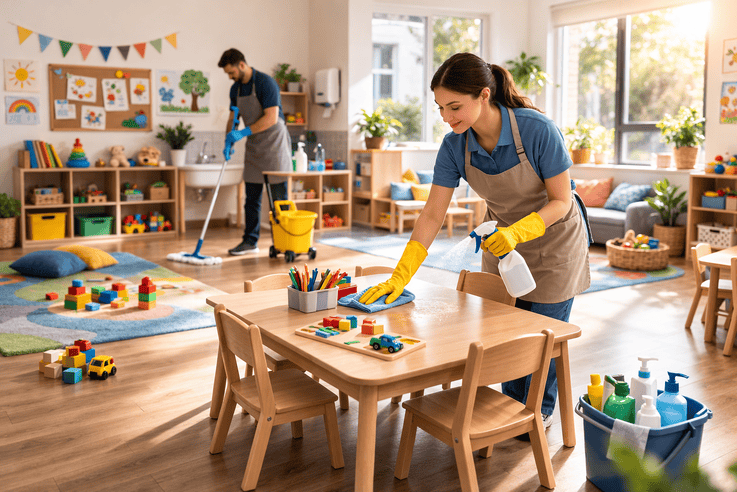

Childcare centres are carefully structured spaces where learning, play, rest and care all intersect. While much attention is given to educational programs, staffing ratios and daily routines, there is another layer of planning that often goes unnoticed. The systems that keep early learning environments hygienic operate quietly in the background, shaping how safe and healthy these spaces remain day after day. Central to this effort are the cleaning products used in childcare, which support hygiene outcomes while needing to align with the sensitivities of young children.
This article takes a closer look at how cleaning practices are approached within early learning settings, why product selection matters, and how these decisions may influence both compliance and confidence for families and educators alike.
What Happens After the Children Go Home
Once the day winds down and children head home, a different type of work begins. Tables are wiped, floors are cleaned, bathrooms are sanitized and shared toys are prepared for the next day. These tasks may appear straightforward, yet they involve structured routines and informed choices.
Childcare environments differ significantly from offices or retail spaces. Children spend more time on the floor, touch surfaces frequently and often place objects in their mouths. Because of this, the cleaning products used in childcare are considered part of a broader risk management approach rather than simple housekeeping supplies.
Daily Cleaning in Childcare Settings Is Continuous
Cleaning in early learning centres is rarely limited to one part of the day. Many centres follow cycles that span from morning arrival through to closing time.
During the day, educators may clean tables between activities, wipe down shared resources and address spills or accidents as they occur. Bathrooms and nappy change areas receive regular attention, and toys may be rotated for cleaning to reduce the spread of germs.
At the end of the day, more thorough cleaning often takes place. Floors, sleeping mats and high-contact areas are addressed, setting the environment up for the next morning. These routines help maintain consistency and may support infection control during peak illness seasons.
Why Childcare Cleaning Differs From Other Facilities
While hygiene is important in all shared spaces, childcare settings face unique considerations. Young children’s immune systems are still developing, and exposure levels differ due to close contact and play-based learning.
For this reason, the cleaning products used in childcare environments are often assessed not only for effectiveness but also for suitability. Products designed for industrial or heavy commercial use may not align with the needs of early learning spaces, even if they perform well in other contexts.
This distinction highlights why childcare providers often seek guidance when reviewing or updating their cleaning protocols.
The Role of Cleaning Products Used in Childcare Environments
The products selected for use in early learning centres sit at the intersection of hygiene, safety and practicality. Effective cleaning needs to reduce the presence of bacteria and viruses while also supporting a safe indoor environment for children and staff.
Many centres consider factors such as residue, fragrance strength and frequency of use. Cleaning products used in childcare are commonly chosen with an awareness of how often surfaces are touched and how close children are to those surfaces throughout the day.
Industry guidance and specialist suppliers play a role here. Resources that focus specifically on early learning settings may provide clarity around appropriate product selection and application. For example, Ramsey Agencies are leaders in cleaning products used in childcare, offering insights into how products may be aligned with childcare-specific requirements without relying on general-purpose solutions.
Ingredient Awareness and Product Selection
Ingredient awareness has become an increasing point of discussion within childcare communities. Educators and centre managers may review product data sheets, labelling and safety information to better understand what is being used in shared spaces.
While legislation does not always prescribe exact products, it does shape expectations around health and safety. The cleaning products used in childcare are often selected with consideration for repeated exposure, ventilation and compatibility with daily routines.
This approach reflects a growing understanding that cleaning is not only about immediate results but also about long-term use within an enclosed environment.
Compliance, Policies and Duty of Care
Childcare centres operate within national and state frameworks that influence operational decisions. Cleaning practices are commonly documented within policies that outline frequency, responsibilities and procedures.
These documents support accountability and provide clarity for staff. They also demonstrate that cleaning products used in childcare form part of a wider compliance picture rather than being selected in isolation.
Staff training plays a role as well. Knowing how to apply products correctly, store them safely and follow recommended dilution or contact times contributes to consistency across the centre.
Articles published on platforms such as PostsContent often explore these broader operational considerations. Linking to internal resources like publishing guidance at https://www.postscontent.com/post-new-article/ helps situate discussions like this within a wider context of workplace standards and procedural clarity.
Environmental and Long-Term Considerations
Beyond immediate hygiene outcomes, some childcare providers consider the longer-term impact of cleaning routines. Indoor air quality, ventilation and repeated product use may influence how centres approach their cleaning strategies over time.
While sustainability may not be the primary driver in every setting, it often forms part of ongoing conversations about best practice. Reviewing cleaning products used in childcare may align with broader operational reviews, particularly when centres update policies or respond to community feedback.
Transparency and Trust in Childcare Environments
Parents and carers rarely see the full scope of cleaning routines that take place in early learning centres. What they do see is a clean, orderly environment when they arrive for pick-up or drop-off.
Transparency around hygiene practices may help build trust. When centres communicate how they approach cleaning and why certain products are chosen, families gain insight into the level of care being applied behind the scenes.
This topic aligns with broader discussions around service quality and accountability that are often explored in editorial content. Referencing related insights published through https://www.postscontent.com/post-new-article/ allows readers to connect childcare hygiene practices with wider conversations about organizational responsibility.
Why Cleaning Choices Matter in Early Learning Settings
The decisions made about cleaning products used in childcare reflect more than operational convenience. They form part of a layered approach to child wellbeing, staff safety and regulatory compliance.
By understanding the reasoning behind these choices, readers gain a clearer picture of how early learning environments function beyond the classroom. The quiet systems that support cleanliness and safety contribute to the daily experiences of children, educators and families alike.
Conclusion
Cleaning in childcare settings is a structured, ongoing process shaped by unique environmental and developmental considerations. The cleaning products used in childcare support hygiene goals while needing to align with the sensitivities of young learners. By examining these behind-the-scenes decisions, it becomes easier to appreciate how thoughtful planning contributes to safe and supportive early learning environments.