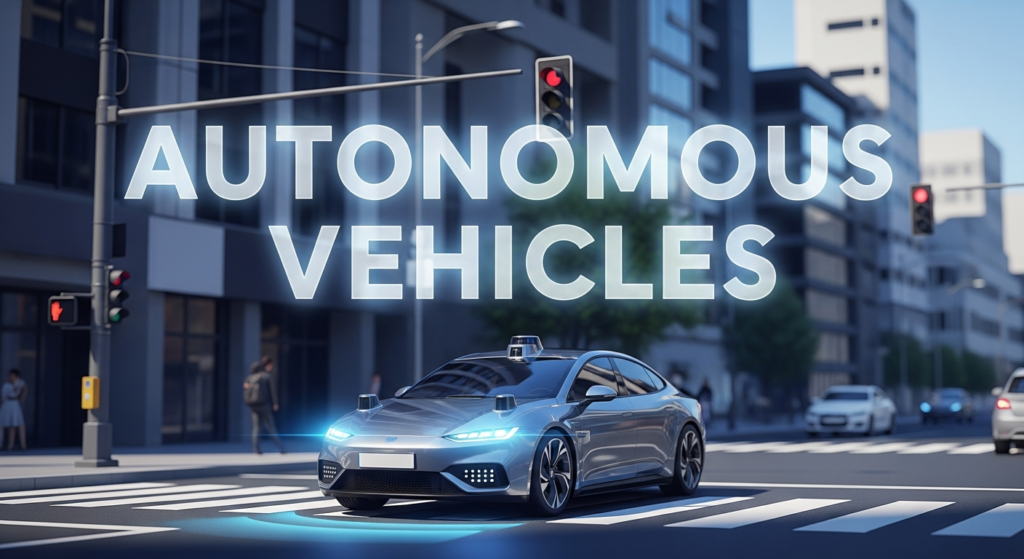

Artificial intelligence is transforming the transportation industry, with autonomous vehicles at the forefront of this technological revolution. Powered by machine learning, computer vision, sensor fusion, and advanced navigation systems, self-driving vehicles are becoming increasingly capable of operating safely and efficiently with minimal human intervention. As these technologies continue to evolve, autonomous vehicles are set to reshape personal transportation, public transit, and commercial logistics worldwide.
The Evolution of Autonomous Vehicles
The development of autonomous vehicles has been a remarkable journey from simple driver-assistance technologies to intelligent self-driving systems. Early innovations focused on features like cruise control and lane departure warnings, which reduced driver workload but still relied heavily on human supervision and decision-making.
The emergence of artificial intelligence dramatically accelerated the evolution of autonomous driving. Today’s autonomous vehicles process massive amounts of real-time data using sophisticated neural networks and predictive algorithms. They can identify pedestrians, recognize traffic signals, detect surrounding vehicles, and respond instantly to changing road conditions. As these capabilities continue to improve, autonomous vehicles are steadily moving from controlled testing environments to everyday public roads, creating safer and more accessible transportation solutions.
Core Technologies Powering Autonomous Vehicles
Autonomous vehicles rely on several advanced technologies working together to understand their surroundings and make safe driving decisions. Each system performs a specific function while continuously communicating with the others to ensure smooth and reliable vehicle operation.
Machine Learning and Deep Neural Networks
Machine learning serves as the intelligence behind autonomous driving. Engineers train deep neural networks using millions of miles of driving data, enabling vehicles to recognize road signs, classify objects, predict traffic behavior, and improve decision-making over time. Continuous learning allows these systems to become more accurate and reliable with every new dataset.
Computer Vision
Computer vision enables autonomous vehicles to interpret the world through multiple high-resolution cameras positioned around the vehicle. Advanced image-processing algorithms analyze road markings, traffic lights, pedestrians, cyclists, and other vehicles in real time. This visual understanding helps the vehicle make rapid and informed driving decisions.
LiDAR and Radar Systems
Although cameras provide detailed visual information, they can struggle in darkness, fog, or heavy rain. To overcome these limitations, autonomous vehicles combine LiDAR and radar technologies.
LiDAR generates highly detailed three-dimensional maps by emitting laser pulses and measuring their reflections. Radar uses radio waves to detect the distance, speed, and movement of nearby objects regardless of weather or lighting conditions. Together, these technologies provide comprehensive environmental awareness that significantly improves driving safety.
Sensor Fusion
Sensor fusion combines information from cameras, LiDAR, radar, GPS, and ultrasonic sensors into a unified representation of the surrounding environment. Artificial intelligence continuously evaluates each sensor’s reliability and adjusts accordingly. For example, during heavy rainfall when camera visibility decreases, the system automatically relies more heavily on radar and LiDAR data. This intelligent coordination enables autonomous vehicles to maintain accurate perception in challenging driving conditions.
The Levels of Driving Automation
The Society of Automotive Engineers (SAE) established six levels of driving automation to classify the capabilities of autonomous vehicles. These levels provide a standardized framework for understanding how much responsibility remains with the human driver.
Level 0 – No Automation: The driver performs all driving tasks without automated assistance.
Level 1 – Driver Assistance: The vehicle supports one driving function, such as adaptive cruise control or lane-keeping assistance, while the driver remains fully responsible.
Level 2 – Partial Automation: The vehicle can simultaneously control steering and acceleration, but the driver must continuously monitor the road and remain ready to intervene.
Level 3 – Conditional Automation: The vehicle manages all driving tasks under specific operating conditions but may request the driver to take control when necessary.
Level 4 – High Automation: The vehicle can perform all driving functions independently within designated operational areas or predefined conditions without requiring driver intervention.
Level 5 – Full Automation: The vehicle is capable of handling every driving situation under all road and weather conditions without any human involvement.
Today, most commercially available autonomous vehicles operate at SAE Levels 2 and 3. Several manufacturers are actively testing Level 4 systems in controlled environments, while fully autonomous Level 5 vehicles remain the long-term objective of the automotive industry.
Common Mistakes to Avoid When Developing Autonomous Vehicles
Developing autonomous vehicles is a complex process that requires precision, extensive testing, and continuous refinement. Even experienced engineering teams can encounter challenges that affect system performance, safety, and public confidence. Avoiding common mistakes can significantly improve the reliability and success of autonomous driving projects.
Ignoring Rare Driving Scenarios
One of the biggest mistakes is training AI models primarily for common driving situations while overlooking unusual events. Autonomous vehicles must be capable of responding to unexpected obstacles, sudden road hazards, unpredictable pedestrian behavior, and extreme weather conditions. Preparing for these edge cases is essential for ensuring safe operation.
Depending Too Heavily on One Sensor
No single sensing technology can accurately interpret every driving environment. Cameras may struggle at night or during heavy rain, while LiDAR and radar each have their own limitations. Relying on only one sensor increases the likelihood of inaccurate decisions. Combining multiple sensors through advanced sensor fusion creates a more dependable perception system.
Overlooking Cybersecurity
Because autonomous vehicles are connected through digital networks, they can become targets for cyberattacks if proper security measures are not implemented. Strong encryption, secure software architecture, regular security updates, and continuous threat monitoring are necessary to protect both vehicles and user data.
Delaying Regulatory Planning
Waiting until the final stages of development to consider government regulations often results in costly redesigns and project delays. Developers should align their engineering processes with current and upcoming transportation standards from the beginning to simplify certification and deployment.
Setting Unrealistic Expectations
Marketing autonomous technology beyond its actual capabilities can damage public trust. Manufacturers should communicate clearly about system limitations while emphasizing ongoing improvements, responsible deployment, and safety-first development practices.
Expert Strategies for Building Better Autonomous Vehicles
Leading automotive companies continue to improve autonomous driving technology by adopting innovative development methods and advanced artificial intelligence solutions.
Adopt Federated Learning
Federated learning allows AI models to improve by learning from multiple vehicle fleets without transferring sensitive user information to a central database. This approach enhances privacy while accelerating machine learning performance across distributed networks.
Expand Vehicle-to-Everything (V2X) Communication
Modern autonomous vehicles benefit greatly from V2X technology, which enables communication with nearby vehicles, traffic signals, road infrastructure, and cloud-based traffic management systems. This real-time information exchange helps reduce congestion, improve traffic coordination, and enhance overall road safety.
Utilize Synthetic Training Data
Collecting real-world driving data is both time-consuming and expensive. Artificial intelligence can generate realistic virtual driving environments that expose autonomous systems to thousands of dangerous or uncommon scenarios. Synthetic data speeds up development while improving AI decision-making accuracy.
Integrate Intelligent Fleet Management
Advanced fleet management platforms provide continuous monitoring of vehicle health, battery performance, route optimization, maintenance scheduling, and operational efficiency. Combining these systems with autonomous technology improves productivity while reducing operating costs.
The Impact of Autonomous Vehicles on Urban Mobility and Logistics
Autonomous vehicles are transforming far more than personal transportation. Their widespread adoption has the potential to reshape cities, improve environmental sustainability, and modernize global supply chains.
In urban environments, autonomous ride-sharing services and robotaxis can reduce dependence on privately owned vehicles. Fewer personal cars may lead to lower traffic congestion, decreased parking demand, and more space for parks, cycling infrastructure, and pedestrian-friendly communities. The growing adoption of electric autonomous vehicles also supports cleaner transportation by lowering greenhouse gas emissions and improving urban air quality.
The logistics industry is also experiencing significant change. Autonomous trucks can operate for extended periods without the fatigue limitations faced by human drivers, allowing faster deliveries and more efficient freight transportation. When integrated with automated warehouses, AI-powered routing systems, and predictive logistics software, autonomous fleets help businesses reduce transportation costs while improving supply chain resilience.
Future Trends in Autonomous Vehicle Technology
The future of autonomous transportation will be shaped by rapid advances in artificial intelligence, connectivity, and intelligent infrastructure.
High-speed communication technologies such as 5G and future 6G networks will enable near-instant data exchange between vehicles, cloud platforms, and smart city infrastructure. This enhanced connectivity supports cooperative driving, allowing fleets of autonomous vehicles to coordinate movements, optimize traffic flow, and respond collectively to changing road conditions.
Artificial General Intelligence (AGI) and more advanced machine learning models are expected to further improve autonomous decision-making. Future vehicles may better understand human behavior, anticipate driver and pedestrian intentions, and safely navigate increasingly complex traffic environments with minimal human oversight.
As smart infrastructure continues to expand worldwide, autonomous transportation will become more efficient, connected, and accessible, creating safer roads and more sustainable mobility solutions.
Conclusion
Autonomous vehicles represent one of the most significant technological advancements in modern transportation. By combining artificial intelligence, machine learning, computer vision, sensor fusion, and intelligent connectivity, self-driving systems are improving road safety, reducing traffic congestion, and increasing transportation efficiency.
Although challenges related to regulation, cybersecurity, infrastructure, and public acceptance remain, continuous innovation is bringing fully autonomous mobility closer to reality. Organizations that invest in advanced AI technologies, robust safety systems, and intelligent transportation infrastructure today will be well-positioned to lead the next generation of smart, connected, and sustainable transportation.