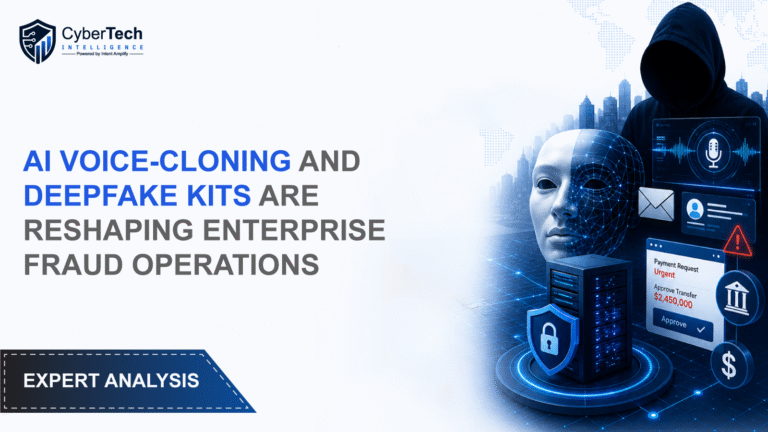

Deepfake Fraud & AI-Driven Impersonation: The New Corporate Risk Landscape (2026)
Cybercrime is no longer just about phishing emails or stolen passwords.
We are now facing a new class of financial and operational threat—AI-powered impersonation at scale.
Our latest executive analysis reveals how generative AI is fundamentally reshaping fraud, trust, and enterprise security across global organizations.
Key Insights from the Report
• Business Email Compromise (BEC) remains one of the highest-loss cybercrime categories, driving billions in annual damages across enterprises
• AI-enabled phishing and impersonation now account for a significant share of cloud-related security incidents, accelerating both scale and sophistication of attacks
• A majority of organizations remain unprepared for AI-augmented cyber threats, exposing gaps in governance, identity validation, and transaction security
What’s Changing
Deepfake-enabled fraud is no longer experimental.
It is now a commercialized attack model, powered by:
- AI voice cloning and video impersonation
- Real-time executive simulation
- Automated phishing and multilingual deception
- Synthetic identities used in onboarding and finance workflows
The result is a growing breakdown in digital trust—especially across treasury, procurement, and executive approval systems.
Why This Matters for Business Leaders
Organizations are increasingly exposed to:
- Fraudulent wire transfers and payment manipulation
- Executive impersonation in live financial approvals
- Supplier and onboarding fraud using synthetic identities
- Regulatory, legal, and reputational fallout from AI-driven deception
Traditional security controls built for “classic phishing” are no longer sufficient.
This analysis combines intelligence from cybersecurity research, financial fraud studies, and AI-risk modeling to map how enterprises can respond to this evolving threat environment.
Read the full expert-analysis to understand the risks, industry exposure, and 90-day resilience strategy shaping enterprise security in 2026.
Deepfake Fraud & AI-Driven Impersonation: The New Corporate Risk Landscape (2026)
Cybercrime is no longer just about phishing emails or stolen passwords.
We are now facing a new class of financial and operational threat—AI-powered impersonation at scale.
Our latest executive analysis reveals how generative AI is fundamentally reshaping fraud, trust, and enterprise security across global organizations.
Key Insights from the Report
• Business Email Compromise (BEC) remains one of the highest-loss cybercrime categories, driving billions in annual damages across enterprises
• AI-enabled phishing and impersonation now account for a significant share of cloud-related security incidents, accelerating both scale and sophistication of attacks
• A majority of organizations remain unprepared for AI-augmented cyber threats, exposing gaps in governance, identity validation, and transaction security
What’s Changing
Deepfake-enabled fraud is no longer experimental.
It is now a commercialized attack model, powered by:
- AI voice cloning and video impersonation
- Real-time executive simulation
- Automated phishing and multilingual deception
- Synthetic identities used in onboarding and finance workflows
The result is a growing breakdown in digital trust—especially across treasury, procurement, and executive approval systems.
Why This Matters for Business Leaders
Organizations are increasingly exposed to:
- Fraudulent wire transfers and payment manipulation
- Executive impersonation in live financial approvals
- Supplier and onboarding fraud using synthetic identities
- Regulatory, legal, and reputational fallout from AI-driven deception
Traditional security controls built for “classic phishing” are no longer sufficient.
This analysis combines intelligence from cybersecurity research, financial fraud studies, and AI-risk modeling to map how enterprises can respond to this evolving threat environment.
Read the full expert-analysis to understand the risks, industry exposure, and 90-day resilience strategy shaping enterprise security in 2026.
💡 Why This Matters for Enterprises
Organizations today face increasing exposure across:
- Treasury and wire-transfer authorization systems
- Executive communication and approval workflows
- Supplier onboarding and procurement processes
- Regulatory, legal, and compliance frameworks
The result is a growing breakdown in digital trust infrastructure, where traditional verification methods like voice confirmation and email authentication are no longer reliable.
📊 Industry Impact
Sectors most affected include:
- Financial Services (high-value transaction fraud)
- Healthcare (identity and onboarding abuse)
- Manufacturing (supplier payment manipulation)
- Legal & Insurance (confidential transaction exploitation)
🧠 Strategic Insight
Security leaders are shifting focus from perimeter defense to trust validation architecture, including:
- Multi-channel transaction verification
- Out-of-band approvals for financial transfers
- Behavioral analytics and anomaly detection
- Treasury workflow segmentation
🚀 Final Outlook
Deepfake fraud is no longer an emerging risk — it is now a mainstream enterprise threat category.
The key question for organizations in 2026 is no longer if AI-driven impersonation will impact them, but how prepared their trust systems are when it happens.
Contact Us
1846 E Innovation Park Dr, Suite 100, Oro Valley, AZ 85755
Phone: +1 (845) 347-8894, +91 77760 9266
Contact Us
1846 E Innovation Park Dr, Suite 100, Oro Valley, AZ 85755
Phone: +1 (845) 347-8894, +91 77760 9266