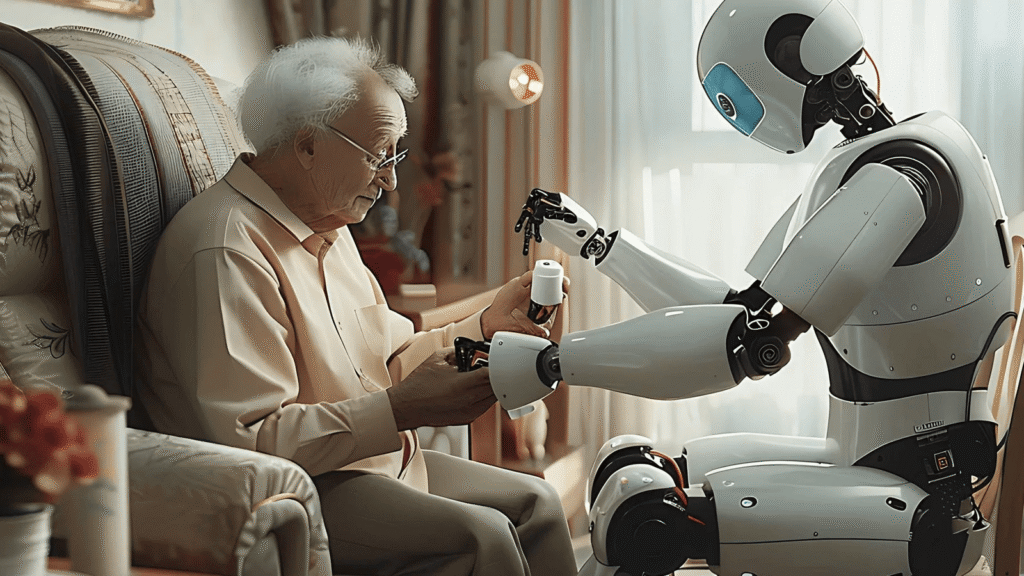

A thoughtful exploration of how AI for Social Care can support communities, reduce loneliness, and reflect human values through intentional, community-led technology design. As AI becomes increasingly present in daily life, the question grows more urgent: can we build Ethical AI design for community based support that genuinely enhances wellbeing rather than simply performing automated tasks?
Artificial intelligence is often seen as cold, mechanical, and indifferent to the human world it influences. That perception isn’t entirely wrong, but when it is developed with purpose, AI care has the potential to become a real pillar of social support. In the context of AI for Social Care, its role can expand far beyond data-driven assistance. It can help ease loneliness, support ageing populations, and act as a bridge for human connection—especially as mobility, social interaction, and emotional support become more challenging for older adults.
This is where thoughtful technology can truly shine. The question is not whether AI can feel, but whether well-designed Social AI can learn from human behaviour and respond with patterns that resemble empathy rather than cold automation.
What It Means for AI to “Care”
AI doesn’t miss loved ones or worry about neighbours—but it can help us recognise and address loneliness more sensitively. Teaching AI for Social Care to “care” isn’t about building emotional machines; it’s about crafting technology that notices patterns, listens attentively, and supports people with trained, respectful responses. True care involves mutual respect, and while AI can’t replicate real friendship, it can reinforce connection by learning routines, preferences, and communication styles.
But a critical balance remains. While AI for Social Care solutions for reducing loneliness must feel natural and supportive, they must not become so human-like that they replace real social interaction. Retaining a lightly robotic voice or persona may be a necessary safeguard to ensure AI supplements—not substitutes—human companionship. With the global shortage of carers, trained and secure compassionate AI tools can help close the gap while still encouraging real human bonds.
Social Impact Is a Design Choice
Thoughtful technology doesn’t happen by accident. It requires intentional design that prioritises social outcomes. A leading example is the Tovertafel in the Netherlands—a decade-old innovation that uses interactive games to bring joy, stimulation, and connection to people in care settings. Tools like these show how ethical AI design for community based support can elevate quality of life when implemented with purpose and consistent human oversight.
With virtual and in-person check-ins, these tools can become safe and meaningful components of elderly care. The aim is not to replace caregivers but to amplify their ability to provide attention, comfort, and engagement.
Community-Led Development Works Better
Thoughtful technology can empower or exclude depending on how it’s built. That’s why communities must be active collaborators, not passive recipients. One powerful example is Barcelona’s resident-driven data commons, where citizens decide how their data is used and what AI projects progress.
These success stories reflect a core principle of AI for Social Care: start with the social issue, not the technology. Identify who will be affected and what challenges matter most, then build transparent, accountable systems rooted in real human needs.
Regulation Is Necessary, But Not Sufficient
Governments are beginning to catch up. The EU AI Act is a major step, banning systems that pose unacceptable societal risks. But regulation alone can’t match AI’s rapid evolution. By the time legislation arrives, technology may already be in use.
That’s why a culture of ethical responsibility is essential. Developers must think beyond efficiency. Companies must prioritise long-term social value. And the public must be empowered to understand how AI impacts their daily lives and how to challenge biases or harms when they arise.
So, Can AI Care?
If used responsibly, AI for Social Care can be a powerful tool for reducing isolation, supporting wellbeing, and supplementing overstretched human care systems. AI cannot feel empathy, but it can imitate emotional reasoning in ways that uplift and support those who need it most.
The real question isn’t whether machines can be compassionate—it’s whether we can build technology that reflects compassion, fairness, dignity, and equity in its design. We already have early examples that show what’s possible, and the evolution of Social AI continues to accelerate.
We may never expect AI to care in a moral sense. But we can—and must—design systems that act with care through intentional governance, ethical frameworks, and deep respect for human needs. That is how we fill growing companionship gaps and shape a future where technology elevates human connection rather than replacing it.
Explore AI TechPark for the latest insights in AI, IoT, cybersecurity, ai tech news, and expert-driven AI for Social Care updates.