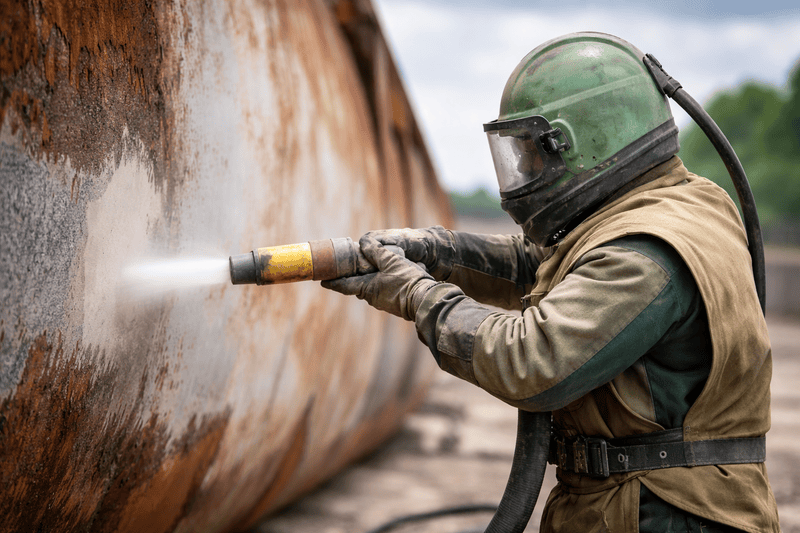

Abrasive Blasting plays a central role in how surfaces are cleaned, restored and prepared across a wide range of Australian industries. From infrastructure maintenance and marine works to residential renovations and heritage restoration, this method supports effective surface treatment where traditional cleaning techniques may fall short. Rather than being a single process, abrasive blasting refers to a group of techniques that use propelled media to remove coatings, corrosion or contaminants in a controlled manner.
As expectations around durability, safety and finish quality continue to rise, Abrasive Blasting remains relevant because it addresses the foundation of any successful coating or repair project. Proper surface preparation may influence how well protective coatings bond, how long materials last, and how safely structures perform over time.
Understanding what abrasive blasting involves
At its core, Abrasive Blasting involves propelling an abrasive material at high velocity onto a surface. The impact removes unwanted layers such as rust, paint, scale or biological growth. The choice of abrasive media, pressure and technique varies depending on the substrate, the condition of the surface and the intended outcome.
Unlike chemical stripping or manual sanding, blasting provides uniform results across large or complex surfaces. This consistency is particularly valuable when working on steel structures, concrete surfaces or machinery components where uneven preparation may lead to premature failure.
Industry discussions often reference Abrasive Blasting as a category rather than a single method, acknowledging the range of approaches available depending on project requirements.
Common applications across Australian industries
Abrasive Blasting is used extensively in industrial maintenance, particularly where steel structures are exposed to harsh environmental conditions. Bridges, tanks, pipelines and industrial equipment rely on thorough surface preparation before recoating or refurbishment.
In marine environments, blasting assists with removing marine growth and corrosion from vessels, pylons and jetties. Coastal exposure accelerates deterioration, making effective preparation essential for long-term protection.
The construction sector also relies on blasting to prepare concrete and steel surfaces prior to sealing, coating or repair. Even in residential settings, abrasive blasting may be applied to strip paint from brickwork, timber beams or metal fixtures where preservation is preferred over replacement.
Surface preparation and coating performance
The performance of protective coatings depends heavily on surface condition. Coatings applied to poorly prepared surfaces may fail prematurely, leading to increased maintenance costs and safety risks.
Abrasive Blasting creates a clean, textured surface that promotes adhesion. This surface profile allows coatings to mechanically bond, improving longevity. Without adequate preparation, even high-quality coatings may not perform as intended.
Professionals involved in Blasting Services often emphasise that preparation is not a secondary step but a critical phase that directly influences outcomes across infrastructure, industrial and commercial projects.
Types of abrasive media and their uses
Different abrasive media are selected based on surface sensitivity, environmental considerations and desired finish. Hard media such as garnet or steel grit may be used for heavy corrosion removal on robust substrates. Softer media like crushed glass or soda may be applied where surface preservation is required.
The selection process considers not only effectiveness but also waste management and environmental impact. In Australia, increasing attention is given to responsible media selection and containment to reduce environmental harm and meet regulatory requirements.
This flexibility allows Abrasive Blasting to be adapted to diverse applications without compromising surface integrity.
Environmental and safety considerations
Modern abrasive blasting practices place strong emphasis on safety and environmental management. Dust suppression, containment systems and personal protective equipment are integral components of responsible operations.
Silica exposure, waste disposal and noise control are key considerations, particularly on urban or occupied sites. Advances in equipment and processes have improved control over airborne particles, reducing risk to workers and surrounding environments.
When discussing Surface Cleaning in professional contexts, the focus often extends beyond effectiveness to include how processes align with workplace health, safety standards and environmental obligations.
Precision and control in contemporary blasting
Technological improvements have increased the level of precision achievable through abrasive blasting. Adjustable pressure systems, specialised nozzles and alternative blasting methods allow operators to tailor the process to specific surfaces.
This control is especially valuable in heritage restoration, where original materials must be preserved while removing decades of accumulated coatings. Controlled blasting may remove unwanted layers without damaging underlying substrates, supporting conservation objectives.
Precision also reduces material waste and rework, contributing to project efficiency.
Cost considerations and long-term value
While Abrasive Blasting represents an upfront investment, it often contributes to long-term cost efficiency. Properly prepared surfaces may extend the life of coatings, reduce maintenance cycles and minimise unexpected failures.
In industrial settings, downtime associated with premature coating failure can be costly. Effective surface preparation helps mitigate these risks by supporting predictable performance.
For asset owners, blasting is often viewed not as an expense but as a preventative measure that protects structural integrity and operational reliability.
Integration with broader maintenance strategies
Abrasive Blasting is rarely performed in isolation. It is typically part of a broader maintenance or refurbishment strategy that includes inspection, repair and protective coating application.
By integrating blasting into scheduled maintenance programs, asset managers may reduce emergency repairs and extend service life. This approach supports proactive asset management rather than reactive problem-solving.
In Australia’s infrastructure and industrial sectors, such integrated strategies are increasingly important as assets age and environmental exposure intensifies.
Regulatory and quality standards
Blasting projects are often governed by industry standards that specify cleanliness levels, surface profiles and inspection criteria. These standards provide benchmarks for quality and consistency, ensuring surfaces meet requirements before subsequent work proceeds.
Compliance with these standards supports safety, performance and accountability across projects. Documented preparation processes also assist with audits and long-term asset records.
Professional abrasive blasting operations align their processes with these expectations to deliver reliable, repeatable outcomes.
The role of expertise and planning
Successful Abrasive Blasting depends on more than equipment alone. Operator expertise, site assessment and planning all influence results. Understanding substrate behaviour, environmental conditions and project constraints allows for informed decision-making.
Careful planning may reduce project timelines, minimise disruption and improve finish quality. This expertise becomes particularly important on complex sites or where multiple surfaces require different treatment approaches.
As blasting techniques continue to evolve, skilled application remains central to achieving consistent, high-quality outcomes.
Conclusion
Abrasive Blasting remains a foundational process in surface preparation, restoration and maintenance across Australia. Its adaptability, effectiveness and compatibility with modern safety and environmental practices support its continued relevance across industries.
By removing contaminants and creating optimal surfaces for coating or repair, abrasive blasting contributes to structural longevity and performance. When applied thoughtfully and responsibly, it supports both immediate project needs and long-term asset protection.