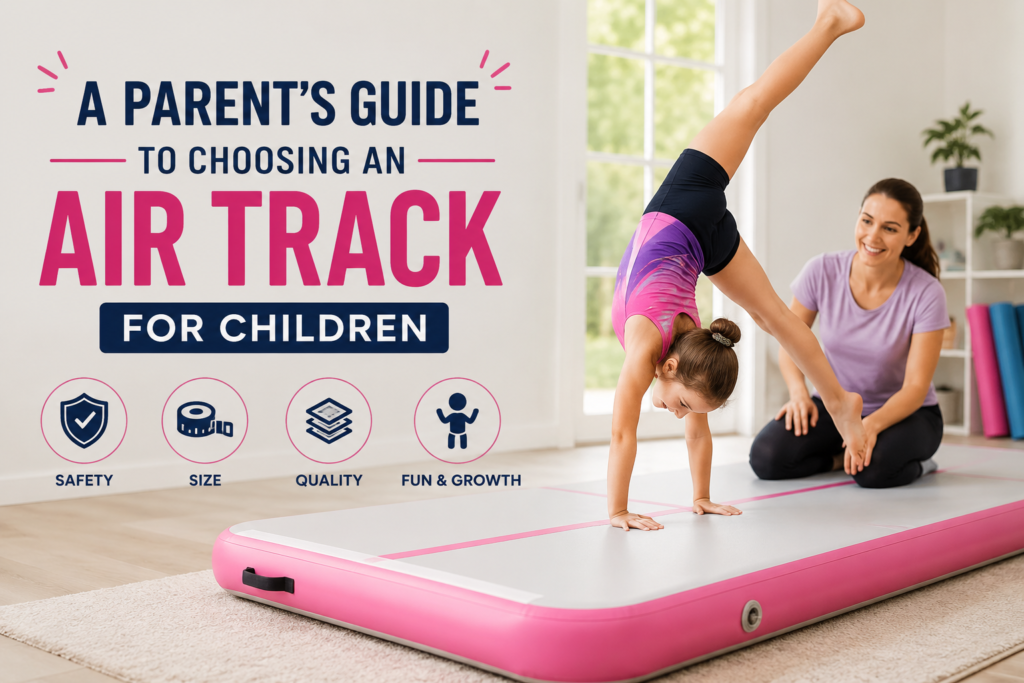

Parents are always looking for ways to encourage their children to stay active, build confidence, and develop healthy habits. Gymnastics, cheerleading, dance, and general physical play are excellent activities that help children improve balance, coordination, flexibility, and strength. One piece of equipment that has become increasingly popular among families is the Air Track.
Designed with an inflatable surface that provides cushioning and support, this training mat offers a safer environment for children to practice movements, tumbling skills, and recreational activities. However, with so many options available, selecting the right model can feel overwhelming. Understanding the key factors involved can help parents make an informed decision that suits both their child’s needs and the available space at home.
Consider Your Child’s Age and Skill Level
The first step in choosing the right mat is evaluating the child’s age and current ability level. Younger children who are just beginning gymnastics or basic movement exercises typically require a smaller and softer training surface. More experienced athletes may benefit from longer and thicker options that provide additional bounce and room for skill progression.
Parents should avoid purchasing equipment solely based on their child’s current abilities. Children often progress quickly, especially when they practice regularly. Selecting a model that allows room for growth can provide better long-term value and reduce the need for future upgrades.
Measure Available Space Carefully
One of the most common mistakes parents make is purchasing a mat without measuring the available training area first. Before selecting a size, it is important to assess the space where the equipment will be used.
Indoor users should consider room dimensions, ceiling height, furniture placement, and safe clearance around the training area. Outdoor users should ensure there is enough flat, obstacle-free ground available for safe use.
Many experts recommend leaving additional space around the mat for run-ups, landings, and general safety. Proper planning helps create a comfortable environment where children can practice confidently.
Choose the Right Length
Length plays a major role in determining how useful the mat will be over time.
Shorter models are often suitable for beginners learning basic skills, stretches, and simple drills. Longer options provide more room for connected movements, tumbling passes, and advanced exercises.
Parents should balance their available space with their child’s future training goals. While a compact option may seem practical initially, a slightly longer model can offer greater versatility as skills develop.
Understand Thickness and Cushioning
Thickness is another important factor that affects performance and safety.
Thinner mats generally work well for younger children and lighter users. Thicker designs provide greater shock absorption and can support a wider range of activities. The ability to adjust air pressure also allows parents to customize firmness according to their child’s weight and experience level.
A properly inflated surface helps reduce impact on joints while still providing enough support for skill development. This balance is especially important for growing children who need a comfortable environment for repeated practice sessions.
Pay Attention to Material Quality
Not all inflatable training mats are made with the same materials. Higher-quality construction often translates into better durability, improved safety, and longer product life.
Parents should look for features such as reinforced seams, durable drop-stitch construction, reliable valves, and abrasion-resistant surfaces. These elements help prevent leaks and maintain performance over years of regular use.
A well-constructed mat can withstand both indoor and outdoor training while remaining stable and comfortable for children.
Prioritize Safety Features
Safety should always remain the top priority when selecting gymnastics equipment for young athletes.
Experts recommend placing the mat on a clean, flat surface free from sharp objects and obstacles. Children should avoid wearing shoes during use, and younger users should always be supervised by a responsible adult. Additionally, only one child should use the mat at a time to reduce the risk of collisions and injuries.
Parents should also check air pressure regularly to ensure the surface provides adequate cushioning without becoming overly firm. Proper setup and supervision contribute significantly to a safer training experience.
Think About Portability and Storage
One major advantage of inflatable training mats is their portability. After use, they can be deflated, rolled up, and stored conveniently.
Families with limited space may benefit greatly from this feature. Whether the mat is used in a living room, garden, garage, or local sports facility, easy storage makes it practical for everyday use.
Manufacturers such as AirTumble have highlighted the importance of portability, allowing families to move training equipment between locations with minimal effort.
Consider Indoor and Outdoor Use
Many parents want equipment that can be used both inside and outside the home. While inflatable mats are generally versatile, it is important to follow proper usage guidelines.
For outdoor sessions, a protective ground sheet can help prevent damage from rough surfaces. Users should avoid wet conditions and prolonged exposure to extreme heat, which may affect performance and air pressure.
Selecting a model designed for multiple environments can provide greater flexibility and value.
Evaluate Long-Term Value
Price is always a consideration, but parents should focus on overall value rather than simply choosing the cheapest option.
A high-quality product may cost more initially, but superior materials, better durability, and enhanced safety features often result in lower long-term costs. Investing in a reliable training surface can support years of physical activity and skill development.
Many families find that trusted brands such as AirTumble provide a combination of quality construction, portability, and performance that supports both recreational use and structured training.
Final Thoughts
Choosing the right Air Track for a child involves more than simply selecting a size or color. Parents should consider age, skill level, available space, thickness, material quality, safety features, portability, and long-term value before making a decision.
When selected carefully, an Air Track can provide a safe and enjoyable environment where children build confidence, improve physical skills, and stay active. With proper supervision and setup, an Air Track can become a valuable addition to any family’s home training routine.
Frequently Asked Questions
1. What size Air Track is best for beginners?
Smaller to medium-sized models are typically suitable for beginners, especially younger children who are learning basic skills and movements.
2. Is an Air Track safe for children?
Yes, when used correctly, supervised appropriately, and maintained at the recommended air pressure, it provides a cushioned surface that can help reduce impact during practice.
3. Can children use inflatable gymnastics mats outdoors?
Yes. However, they should be placed on a clean, flat surface and protected from sharp objects, excessive heat, and wet conditions.
4. How often should air pressure be checked?
It is advisable to check the pressure before each training session to ensure the surface provides proper support and cushioning.
5. How long does an inflatable gymnastics mat typically last?
The lifespan depends on build quality, frequency of use, and maintenance. Well-constructed products can provide years of reliable performance when cared for properly.