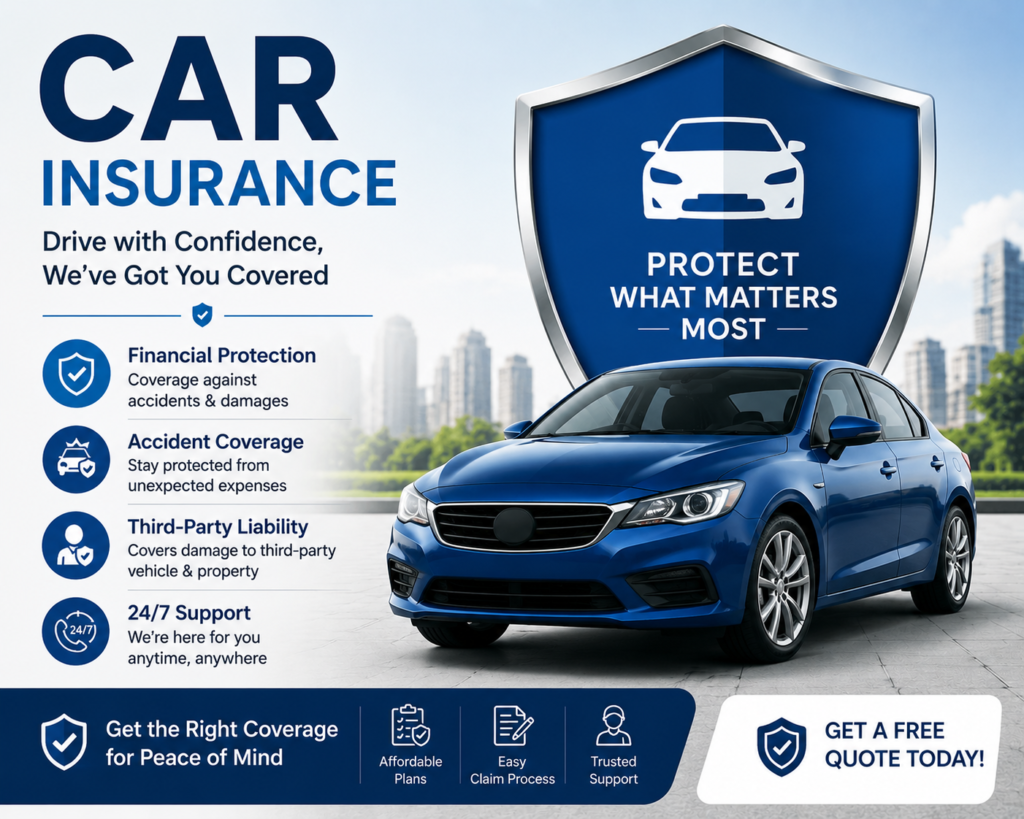

Owning a car comes with the responsibility of protecting both your vehicle and yourself from unexpected financial losses. This is where car insurance plays a vital role. Whether you drive daily for work or occasionally for leisure, having the right insurance policy ensures you remain financially secure in case of accidents, theft, natural disasters, or legal liabilities. Beyond being a legal requirement in India, car insurance offers peace of mind by covering expenses that could otherwise be difficult to manage.
Why Car Insurance Is Important
Every vehicle on Indian roads must have at least a valid third party car insurance policy under the Motor Vehicles Act. Driving without insurance can lead to penalties, fines, and legal complications. However, while third-party coverage satisfies the legal requirement, many vehicle owners choose comprehensive insurance for broader financial protection.
A well-chosen car insurance policy protects you against repair costs, damage caused by natural calamities, theft, fire, vandalism, and third-party liabilities. Considering the increasing cost of vehicle repairs and spare parts, insurance can save you from significant out-of-pocket expenses.
Types of Car Insurance Policies
Third party car insurance is the minimum insurance coverage required by law. It covers financial liabilities arising from injuries, death, or property damage caused to another person due to your vehicle. However, it does not cover damages to your own car.
This policy is suitable for owners of older vehicles with lower market value or those looking for basic legal compliance at an affordable premium.
Comprehensive Car Insurance
Comprehensive car insurance provides wider protection by covering both third-party liabilities and damages to your own vehicle. It protects against accidents, theft, fire, floods, cyclones, earthquakes, riots, and other unforeseen events. It also allows policyholders to purchase useful add-on covers for enhanced protection.
For new cars or vehicles with high market value, comprehensive insurance is generally the preferred option.
Factors to Consider Before Buying Car Insurance
When purchasing car insurance, don’t focus solely on the premium amount. Instead, compare policies based on coverage, claim settlement ratio, customer reviews, network garages, and available add-on covers.
The Insured Declared Value (IDV) is another important factor. It represents the current market value of your vehicle and determines the maximum compensation you can receive if your car is declared a total loss or stolen. Choosing an appropriate IDV helps strike a balance between premium cost and financial protection.
Useful Add-On Covers
Insurance companies offer several add-ons that improve the protection offered by a comprehensive policy. Popular options include:
- Zero depreciation cover
- Engine protection cover
- Roadside assistance
- Return-to-invoice cover
- Consumables cover
- No Claim Bonus (NCB) protection
These optional covers may slightly increase the premium but can substantially reduce your expenses during a claim.
Benefits of Buying Car Insurance Online
Buying car insurance online has become increasingly popular because of its convenience and transparency. Online platforms allow customers to compare multiple insurers, check premiums instantly, customize coverage, and purchase policies without paperwork.
Some of the major benefits include:
- Instant policy issuance
- Easy premium comparison
- Paperless documentation
- Secure online payment
- Quick policy renewal
- Access to customer reviews and claim information
Many insurers also provide digital claim tracking, making the entire process more efficient.
Tips for Lowering Your Insurance Premium
You can reduce your car insurance premium without compromising essential coverage by following a few simple practices. Renew your policy before it expires to retain your No Claim Bonus. Install approved anti-theft devices, avoid making small claims whenever possible, and compare plans from multiple insurers before purchasing.
If your vehicle is older and has a low market value, third party car insurance may be a cost-effective option. However, if your car is relatively new, comprehensive insurance usually offers better long-term financial protection.
Conclusion
Choosing the right car insurance policy is an important financial decision that protects both your vehicle and your savings. While third party car insurance fulfills the legal requirement, comprehensive coverage offers broader protection against a wide range of risks. Before purchasing a policy, carefully compare insurers, review the coverage, understand exclusions, and select add-ons based on your driving needs. A well-informed decision today can help you avoid significant financial stress in the future while ensuring safer and more confident driving.