
Software-as-a-Service (SaaS) applications have become the foundation of modern business operations. Organisations now depend on dozens—or even hundreds—of cloud applications to support collaboration, finance, HR, customer engagement, and software development. While these platforms improve productivity, they also introduce new security challenges that traditional security tools struggle to address.
In 2026, attackers are increasingly targeting the SaaS configuration, identity, and integration layers rather than exploiting operating systems or network infrastructure. This shift has made SaaS Security Posture Management (SSPM) an essential component of every enterprise security strategy.
Why SaaS Security Has Changed
Modern SaaS environments are highly interconnected. Applications exchange data through APIs, employees authenticate using Single Sign-On (SSO), and third-party integrations automate business workflows. A single configuration mistake or excessive permission can expose sensitive business information across multiple platforms.
Cybercriminals recognise that compromising a trusted SaaS application often provides faster access to valuable corporate data than attacking traditional infrastructure. Misconfigured sharing settings, inactive user accounts, overprivileged administrators, and risky third-party applications have become common attack paths.
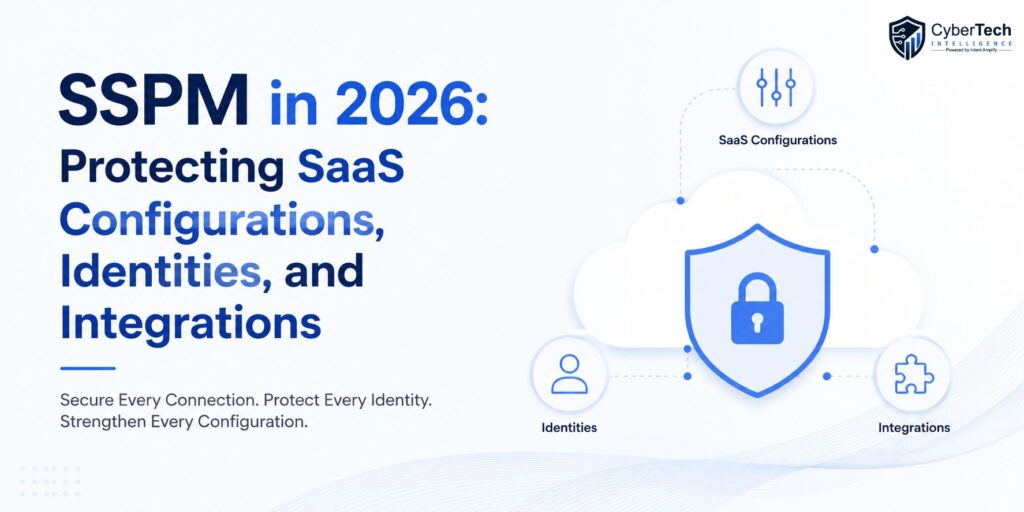
The Three Layers Every Organisation Must Protect
1. SaaS Configuration Security
Many security incidents begin with simple configuration errors. Public file sharing, disabled audit logging, weak authentication policies, or unrestricted external collaboration can create unnecessary exposure.
An SSPM platform continuously monitors SaaS applications against security best practices, identifies risky settings, and alerts administrators before attackers can exploit them.
2. Identity Security
Identity has become the new security perimeter. Employees access business applications from multiple devices and locations, making identity protection more important than ever.
SSPM solutions help organisations identify:
- Dormant user accounts
- Privileged users with excessive permissions
- Accounts without multi-factor authentication
- Risky administrative activities
- Shadow identities across SaaS applications
Reducing unnecessary privileges significantly lowers the likelihood of account compromise leading to broader organisational damage.
3. Integration Security
Businesses rely heavily on connected applications. CRM platforms integrate with marketing tools, HR systems connect with payroll software, and collaboration platforms exchange data with dozens of third-party services.
Every integration introduces another trust relationship. Poorly governed API connections or unverified third-party applications can create hidden security risks.
Modern SSPM platforms provide visibility into connected applications, monitor API permissions, and help security teams identify integrations that exceed approved access levels.
Benefits of SaaS Security Posture Management
Implementing SSPM delivers measurable security improvements across the organisation:
- Continuous monitoring of SaaS security posture
- Automated detection of configuration drift
- Improved compliance with security frameworks
- Reduced identity-related risks
- Better visibility into third-party integrations
- Faster remediation of security issues
- Stronger governance across cloud applications
Rather than relying on periodic audits, security teams gain real-time insight into evolving SaaS risks.
Best Practices for SSPM in 2026
To strengthen SaaS security, organisations should adopt several key practices:
- Enable multi-factor authentication across all SaaS platforms.
- Apply least-privilege access for every user.
- Regularly review administrator accounts.
- Continuously monitor configuration changes.
- Audit third-party integrations and API permissions.
- Remove inactive users and unused applications.
- Automate policy enforcement wherever possible.
These practices help reduce attack surfaces while improving operational efficiency.
Looking Ahead
As organisations continue expanding their SaaS ecosystems, attackers will increasingly exploit misconfigurations, identity weaknesses, and insecure integrations instead of traditional network vulnerabilities. Security teams require continuous visibility into these cloud environments to stay ahead of evolving threats.
In 2026, SaaS Security Posture Management is no longer simply a compliance tool—it is a critical capability for protecting business applications, safeguarding sensitive data, and maintaining trust across the modern cloud environment. Organisations that proactively secure their SaaS configurations, identities, and integrations will be far better positioned to reduce cyber risk and strengthen their overall security posture.
About Cyber Tech Intelligence
Cyber Tech Intelligence is a leading cybersecurity intelligence platform dedicated to delivering research-driven insights, threat intelligence, and strategic analysis across the evolving cybersecurity landscape. We help enterprises, CISOs, technology leaders, and cybersecurity vendors navigate emerging threats, security technologies, and business risks with confidence. Our expertise spans AI Security, Threat Intelligence, Cloud Security, Identity Security, Zero Trust, SIEM, XDR, DevSecOps, Application Security, and Enterprise Cyber Resilience. Through independent research, executive engagement, and market intelligence, we provide actionable insights that support informed decision-making and stronger security outcomes.
At Cyber Tech Intelligence, we believe effective cybersecurity strategies are built on trusted intelligence, transparency, and strategic relevance. Our services include cybersecurity research reports, threat trend analysis, executive briefings, vendor intelligence, CISO engagement programs, webinars, and advisory services designed to help organizations stay resilient in a rapidly changing threat environment. Whether you are looking for strategic cybersecurity insights, partnership opportunities, or expert guidance, our team is ready to help. Contact Us to connect with our cybersecurity experts and learn how we can support your organization’s security goals.