
Highway speed usually means road noise, and most drivers just accept the rattle and hum without questioning it. Worth questioning it anyway. Nine times out of ten it’s not the car itself causing that noise — it’s a missing layer of sound dampening material, and adding one solves the problem faster than people expect.
What a Damping Sheet Actually Does
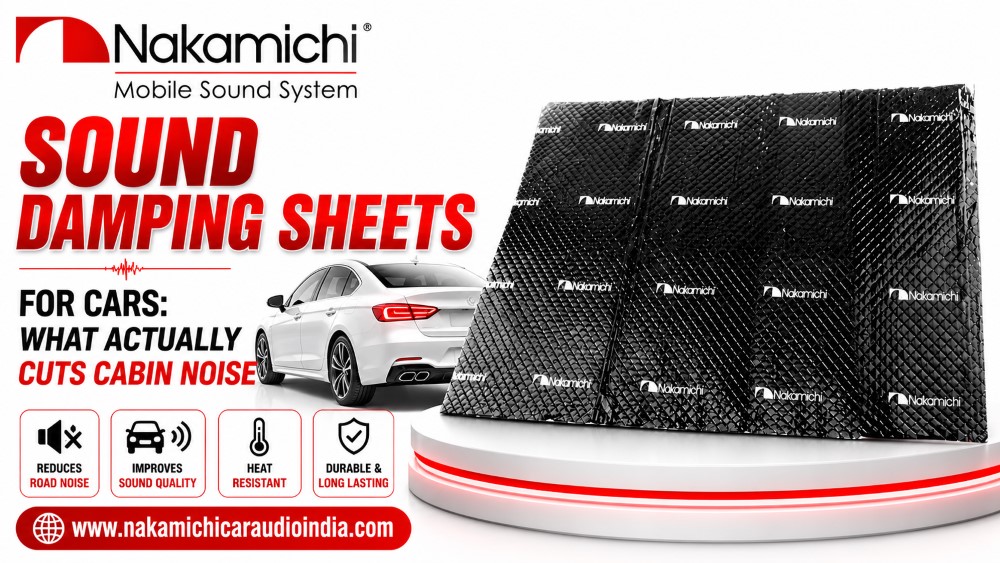
Regular insulation blocks sound by trapping air. A sound damping sheet works differently, adding weight straight onto a metal panel through a strong adhesive, so vibration gets soaked up before it ever becomes a rattle. Every bass note makes an untreated door panel want to buzz right along with it, and the sheet simply holds that panel still. Skip it, and a speaker upgrade still sounds thin no matter how good the speakers are, since it’s fighting an untreated surface the entire time. Doors see the biggest improvement from this treatment, mainly because a properly applied sheet kills the tinny resonance that makes factory speakers sound weaker than they really are, and it’s one of the cheapest fixes in the whole car audio process. The floor is another area worth treating alongside the doors. Road texture at highway speeds transmits straight through the floorpan as a low rumble that quietly wears on the ears over long drives without ever announcing itself as a distinct noise. A single layer of damping sheet across the floor pan makes a measurable difference in how quiet the cabin feels on long motorway runs.
Nakamichi’s Damping Sheet Options
Nakamichi’s sound damping sheet for car NZ-0119 comes in at 2.2mm thickness, built mainly for door and floor panel application where more mass makes a real difference on larger flat surfaces. Thinner panels or tighter spaces call for something different, which is where the NZ-0118 Q-Film fits in — sized at 820mm by 460mm per sheet, designed as a lighter vibration film for spots where a bulkier sheet simply won’t sit flush. Installation on both products stays straightforward — peel, place, and press firmly into the panel. No specialist tools are needed, and most door panels can be treated in under an hour once they’re off. Getting the surface clean and dry before applying makes the biggest difference to how well the adhesive bonds long-term.
Both products come out of Nakamichi’s India, distributed through Supreme Audiotronics, which backs every purchase with real local warranty support instead of leaving buyers dealing with an unaccountable import brand.
Picking Between Damping Options
A few things worth checking before buying any cars sound dampening tools:
- Sheet thickness matched to panel size, thicker for larger flat surfaces
- Adhesive quality, since weak bonding starts peeling within a year
- Coverage per box, enough for all four doors plus the floor if needed
- Heat resistance, given how hot a parked car gets under direct sun
Installation area matters just as much as product choice — treating all four doors gives a noticeably quieter cabin than treating just two, and pairing door treatment with a floor layer closes off most of the remaining noise paths that a speaker upgrade alone can’t fix.
FAQs
Do sound-damping sheets really improve speaker sound quality?
Yes. Cutting down panel vibration lets speakers perform closer to their actual specification instead of fighting resonance from a rattling door.
How many sheets are needed for a full car installation?
Most builds use roughly one box per two doors, depending on panel size, with extra sheets often applied to the floor and trunk for complete coverage.
Is installing a sound-damping sheet a DIY job?
Yes, particularly for door panels, though removing the panel correctly and applying the adhesive evenly does take some patience and basic tools.