
Choosing the right software is one of the most important technology decisions a business can make. Whether you’re launching a startup, modernizing operations, or developing a customer-focused platform, the software you choose directly impacts your productivity, scalability, and long-term costs.
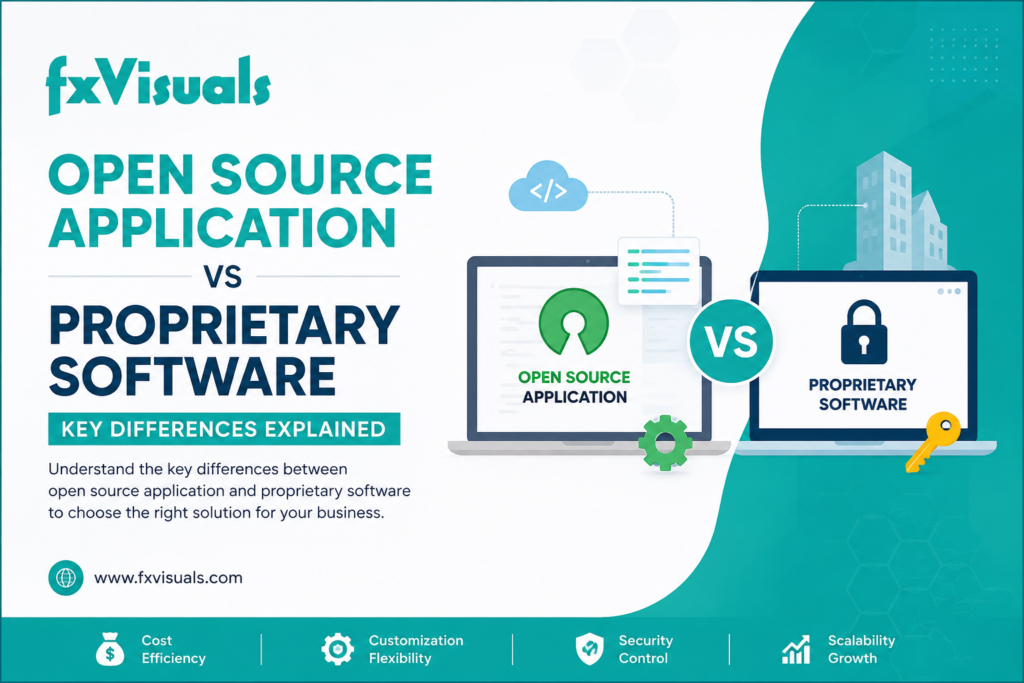
Today, businesses generally choose between an open source application and proprietary software. While both can deliver excellent results, they differ significantly in terms of licensing, customization, flexibility, security, and ownership.
In this guide, we’ll explain the key differences between these two software models to help you determine which solution best fits your business needs.
What Is an Open Source Application?
An open source application is software whose source code is publicly available. Developers can view, modify, and improve the code under the terms of an open-source license. This gives businesses the freedom to customize the software without being locked into a single vendor.
Popular open-source applications include WordPress, Magento Open Source, Drupal, Linux, and Moodle. These platforms are supported by active developer communities that continuously improve features, fix bugs, and enhance security.
For businesses looking for complete flexibility and long-term control, open-source software is often an ideal choice.
What Is Proprietary Software?
Proprietary software is owned and managed by a company that keeps the source code private. Users purchase a license or subscription to use the software but cannot modify its core functionality.
Examples include Microsoft Office, Adobe Photoshop, Salesforce, and AutoCAD. These solutions typically offer dedicated customer support, regular updates, and ready-to-use features, making them suitable for businesses that need quick deployment with minimal customization.
Open Source Application vs Proprietary Software
Although both options help businesses improve efficiency, they differ in several important areas.
1. Cost
One of the biggest advantages of an open source application is its lower upfront cost. Most open-source software can be downloaded and used without paying licensing fees. Businesses generally invest only in customization, hosting, maintenance, and ongoing support.
Proprietary software usually involves monthly or annual subscription fees, additional user licenses, and upgrade costs. Over time, these recurring expenses can become significant, especially for growing businesses.
2. Customization and Flexibility
Customization is where open-source software truly stands out.
Because developers have full access to the source code, businesses can:
- Build custom features
- Modify workflows
- Integrate third-party APIs
- Improve user experiences
- Scale functionality as the business grows
If your organization requires software tailored to specific business processes, working with a professional development team can maximize the benefits of open-source technology.
Related Service: https://www.fxvisuals.com/services/custom-application-development/
Proprietary software, on the other hand, offers limited customization since changes depend on what the software vendor allows.
3. Security
Security is often misunderstood when comparing these two software models.
Open-source applications benefit from continuous reviews by global developer communities. Vulnerabilities are often identified and fixed quickly because thousands of developers contribute to improving the software.
However, businesses must regularly install updates and follow security best practices to maintain protection.
Proprietary software relies entirely on the vendor for security patches and updates. While reputable vendors provide reliable security, users have little control over when fixes are released.
4. Ownership and Vendor Lock-In
One major benefit of an open source application is ownership.
Businesses control their software, data, hosting environment, and future development. If needed, they can change developers or hosting providers without rebuilding the entire system.
With proprietary software, organizations often become dependent on a single vendor. Migrating to another platform can be expensive and time-consuming due to licensing restrictions and limited access to the underlying software.
5. Scalability
As businesses grow, their software should grow with them.
Open-source applications are highly scalable because developers can continuously add new modules, integrate cloud services, improve databases, and optimize performance.
This flexibility makes open-source software an excellent choice for startups and enterprises planning long-term growth.
Businesses looking to develop scalable web platforms can also explore Web Development Services:
https://www.fxvisuals.com/services/web-development/
Which Option Is Better for Your Business?
The right choice depends on your business objectives.
Choose an open source application if you need:
- Complete software ownership
- High customization
- Lower long-term costs
- Better scalability
- API integrations
- Flexibility for future growth
Choose proprietary software if you need:
- Ready-to-use solutions
- Dedicated vendor support
- Faster deployment
- Minimal technical management
Many organizations also combine both approaches by using proprietary productivity tools while building custom business applications on open-source platforms.
Why Businesses Choose Open Source Development
More companies are investing in custom open-source solutions because they offer greater flexibility and long-term value.
An open-source approach allows businesses to:
- Reduce licensing costs
- Customize software for unique workflows
- Integrate with existing business systems
- Scale without major platform limitations
- Maintain full ownership of their applications
Whether you’re building a customer portal, CRM, ERP, eCommerce platform, or enterprise application, open-source technology provides a solid foundation for future growth.
If you’re also planning a mobile solution, explore Mobile Application Development Services:
https://www.fxvisuals.com/services/mobile-application-development/
Frequently Asked Questions
Is an open source application free?
Most open-source applications are free to download and use. However, businesses may invest in customization, hosting, maintenance, and professional support.
Is open-source software secure?
Yes. When properly maintained and updated, open-source software can be highly secure due to continuous community reviews and frequent security updates.
Can businesses customize open-source applications?
Absolutely. Since the source code is accessible, developers can build features that match specific business requirements.
Which option is more cost-effective?
For businesses planning long-term growth, open-source software often provides better value because there are no recurring licensing fees.
Can fxVisuals develop custom open-source applications?
Yes. At fxVisuals, we design and develop secure, scalable, and fully customized open-source web and mobile applications tailored to your business goals.
Conclusion
Choosing between an open source application and proprietary software depends on your organization’s priorities. If flexibility, customization, scalability, and ownership are important, open-source software is often the smarter long-term investment. If you prefer a ready-made solution with vendor-managed support and maintenance, proprietary software may better suit your needs.
At fxVisuals, we help businesses build modern digital solutions using reliable open-source technologies that support long-term growth and innovation. Whether you need a custom web application, mobile app, or enterprise software solution, our experienced development team can deliver a solution tailored to your requirements.
Ready to build your next software solution? Visit https://www.fxvisuals.com/contact/ to discuss your project with our experts.