
Being diagnosed with Polycystic Ovary Syndrome (PCOS) can raise many questions, especially if you’re planning to start or grow your family. One of the most common concerns women have is, “Can I get pregnant with PCOS?” The encouraging news is that many women with PCOS successfully conceive, either naturally or with the help of fertility treatments.
If you’ve been trying to conceive without success, you may also wonder whether Rainbow IVF is the right option. While IVF isn’t the first treatment recommended for every woman with PCOS, it can be an effective solution in specific situations, particularly when other fertility treatments haven’t worked.
This comprehensive guide explains how PCOS affects fertility, when IVF may be recommended, what the treatment process involves, success factors, and practical tips to improve your chances of a healthy pregnancy.
What Is PCOS?
Polycystic Ovary Syndrome (PCOS) is one of the most common hormonal disorders affecting women of reproductive age. It occurs when hormone levels become imbalanced, which can interfere with ovulation and make it more difficult to conceive.
Not every woman with PCOS experiences the same symptoms. Some may have mild hormonal changes, while others experience more noticeable reproductive and metabolic issues.
While many women with PCOS can conceive naturally, others may benefit from specialized fertility treatments depending on their medical condition. Consulting the experts at Rainbow IVF Agra can help you understand your fertility health and create a treatment plan designed specifically for you.
Common Symptoms of PCOS
Women with PCOS may experience:
- Irregular or missed menstrual periods
- Difficulty ovulating
- Acne or oily skin
- Excess facial or body hair
- Weight gain or difficulty losing weight
- Thinning hair on the scalp
- Darkened skin around the neck or underarms
- Multiple small follicles visible on the ovaries during ultrasound
Some women discover they have PCOS only after experiencing fertility challenges.
How Does PCOS Affect Fertility?
For pregnancy to occur naturally, the ovaries need to release a mature egg each month. Many women with PCOS experience irregular ovulation or may not ovulate regularly at all.
Without regular ovulation:
- Eggs are not released consistently.
- Menstrual cycles become unpredictable.
- The timing of conception becomes more difficult.
PCOS may also be associated with:
- Hormonal imbalance
- Insulin resistance
- Higher androgen (male hormone) levels
- Increased risk of obesity
These factors can collectively reduce the chances of natural conception.
Can Women with PCOS Get Pregnant Naturally?
Yes. Many women with PCOS become pregnant naturally.
However, conception may take longer because ovulation occurs less frequently.
The chances of natural pregnancy often improve through:
- Maintaining a healthy weight
- Regular physical activity
- Balanced nutrition
- Managing insulin resistance
- Following medical advice
- Ovulation-inducing medications when appropriate
If pregnancy doesn’t occur after regular attempts, consulting a fertility specialist is recommended.
When Should You See a Fertility Specialist?
You should consider visiting a fertility specialist if:
- You’re under 35 and have been trying to conceive for 12 months without success.
- You’re over 35 and have been trying for six months.
- Your periods are consistently irregular.
- You have been diagnosed with PCOS.
- You’ve experienced multiple pregnancy losses.
- Your partner has known fertility concerns.
Early evaluation helps identify the most suitable treatment option.
Understanding IVF
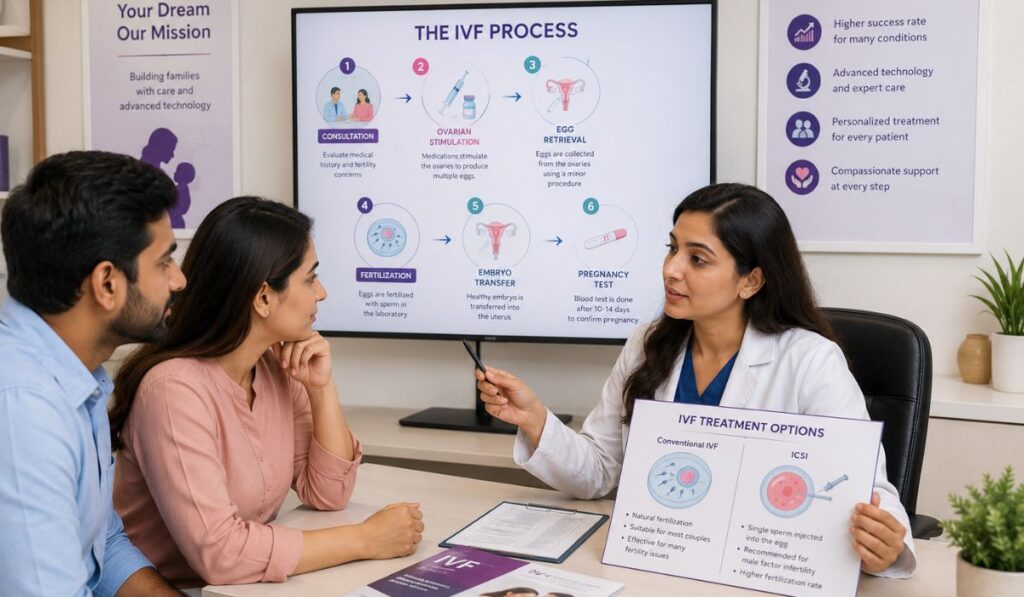
In Vitro Fertilization (IVF) is an assisted reproductive technology that helps fertilization occur outside the body.
During IVF:
- The ovaries are stimulated to produce multiple mature eggs.
- Eggs are collected through a minor procedure.
- Eggs and sperm are fertilized in a specialized laboratory.
- Healthy embryos are monitored.
- One or more embryos are transferred into the uterus.
The goal is to improve the chances of achieving a successful pregnancy.
Can IVF Help Women with PCOS?
Yes, IVF can be highly effective for women with PCOS, particularly when other fertility treatments have not resulted in pregnancy.
IVF may be recommended if:
- Ovulation medications haven’t worked.
- Multiple IUI cycles have been unsuccessful.
- Additional fertility factors are present.
- Age is becoming an important consideration.
- Fallopian tube damage exists.
- Male factor infertility is also involved.
IVF allows fertility specialists to carefully monitor egg development and select healthy embryos for transfer.
Why IVF Works Well for Some Women with PCOS
Women with PCOS often have a good ovarian reserve, meaning they may produce multiple eggs during stimulation.
This can provide several advantages:
- More eggs available for fertilization
- Better embryo selection
- Opportunity to freeze additional embryos
- Higher cumulative pregnancy opportunities
However, careful monitoring is essential because women with PCOS may respond strongly to fertility medications.
IVF Process for Women with PCOS: Step-by-Step
If your fertility specialist recommends IVF, understanding each stage of the treatment can help you feel more prepared and confident. Although every treatment plan is personalized, the IVF process generally follows the same sequence of steps.
Step 1: Initial Fertility Consultation
Your IVF journey begins with a detailed consultation. During this visit, your fertility specialist reviews your medical history, menstrual cycle, previous treatments, lifestyle, and any existing health conditions.
The doctor may also recommend tests such as:
- Hormone profile (FSH, LH, AMH, Thyroid)
- Blood sugar and insulin assessment
- Pelvic ultrasound
- Ovarian reserve evaluation
- Semen analysis for your partner
- General health screening
These investigations help determine the most appropriate IVF protocol for your individual needs.
Step 2: Ovarian Stimulation
Women with PCOS often have a higher number of follicles in their ovaries. Instead of releasing one egg naturally, fertility medications are used to stimulate the ovaries to produce multiple mature eggs.
During this stage:
- Daily hormone injections are administered.
- Regular ultrasound scans monitor follicle growth.
- Blood tests check hormone levels.
- Medication doses may be adjusted based on your response.
Careful monitoring is especially important for women with PCOS to reduce the risk of Ovarian Hyperstimulation Syndrome (OHSS).
Step 3: Trigger Injection
Once the follicles reach the appropriate size, a trigger injection is given to help the eggs complete their final stage of maturation.
Egg retrieval is usually scheduled about 34–36 hours after the trigger injection.
Step 4: Egg Retrieval
Egg retrieval is a minimally invasive procedure performed under light anesthesia or sedation.
During the procedure:
- A thin ultrasound-guided needle is used to collect mature eggs from the ovaries.
- The procedure typically takes 20–30 minutes.
- Most patients return home the same day.
Some mild cramping or spotting afterward is normal, and recovery is usually quick.
Step 5: Fertilization in the Laboratory
The retrieved eggs are combined with your partner’s sperm or donor sperm in a specialized embryology laboratory.
Depending on your fertility condition, fertilization may occur through:
- Conventional IVF
- Intracytoplasmic Sperm Injection (ICSI)
The embryologists closely monitor embryo development over the following days.
Step 6: Embryo Development
The fertilized eggs develop into embryos over the next 3–5 days.
During this period, specialists assess:
- Cell division
- Embryo quality
- Growth pattern
- Overall developmental progress
The healthiest embryo(s) are selected for transfer.
Step 7: Embryo Transfer
Embryo transfer is a simple, painless procedure that usually does not require anesthesia.
A thin catheter is used to gently place the selected embryo into the uterus.
After the transfer:
- You can usually return home shortly afterward.
- Your doctor will provide instructions regarding medications and activity.
- Normal daily activities can often be resumed, unless advised otherwise.
Step 8: Pregnancy Test
Approximately 10–14 days after embryo transfer, a blood test is performed to determine whether implantation has occurred.
This waiting period can feel emotionally challenging, so staying positive and following your doctor’s guidance is important.
Is IVF Successful for Women with PCOS?
One of the most common questions women ask is whether PCOS reduces the chances of IVF success.
The encouraging news is that many women with PCOS achieve successful pregnancies through IVF.
In fact, women with PCOS often have a good ovarian reserve, which means they may produce a higher number of eggs during stimulation. This can provide more embryos for selection and, in some cases, allow additional embryos to be frozen for future use.
However, success depends on several factors rather than PCOS alone.
Factors That Influence IVF Success
Every fertility journey is unique, and IVF outcomes can vary based on:
- Age of the woman
- Egg quality
- Sperm quality
- Embryo quality
- Uterine health
- Overall lifestyle
- Presence of other medical conditions
- Following the recommended treatment plan
Working closely with an experienced fertility specialist can help optimize these factors wherever possible.
Can PCOS Increase IVF Risks?
Although IVF is generally considered safe, women with PCOS require careful monitoring because they may respond more strongly to fertility medications.
Ovarian Hyperstimulation Syndrome (OHSS)
OHSS occurs when the ovaries become overly stimulated and enlarge due to fertility medications.
Symptoms May Include:
- Abdominal bloating
- Mild to moderate pelvic discomfort
- Nausea
- Weight gain over a short period
- Fluid retention
Modern IVF protocols are designed to minimize this risk, and your fertility team will monitor you closely throughout treatment.
Multiple Pregnancy
If more than one embryo is transferred, there is an increased chance of twins or higher-order pregnancies.
Your fertility specialist will discuss the most appropriate embryo transfer strategy based on your age, embryo quality, and medical history.
Lifestyle Tips to Improve IVF Success with PCOS
While no lifestyle change can guarantee pregnancy, healthy habits can support fertility and overall well-being.
Maintain a Healthy Weight
Even modest weight loss in overweight women with PCOS may help improve hormonal balance and ovulation.
Focus on:
- Balanced meals
- Regular exercise
- Sustainable habits instead of crash diets
Follow a PCOS-Friendly Diet
Choose foods that support stable blood sugar levels and overall health.
Include:
- Fresh vegetables
- Seasonal fruits
- Whole grains
- Lean proteins
- Healthy fats
- High-fiber foods
Limit:
- Sugary beverages
- Refined carbohydrates
- Processed snacks
- Fried foods
- Excess sweets
Eating regular, nutritious meals can help support metabolic health.
Stay Physically Active
Aim for at least 30 minutes of moderate activity on most days.
Suitable options include:
- Brisk walking
- Yoga
- Swimming
- Cycling
- Stretching exercises
Regular movement supports both physical and emotional health.
Prioritize Sleep
Good sleep helps regulate hormones and supports recovery.
Aim for:
- 7–9 hours of quality sleep
- Consistent sleep and wake times
- A relaxing bedtime routine
Manage Stress
Fertility treatment can be emotionally demanding.
Helpful stress-management techniques include:
- Meditation
- Deep breathing
- Mindfulness
- Reading
- Listening to music
- Spending time with loved ones
Seeking professional counseling is also beneficial if you’re feeling overwhelmed.
Follow Your Doctor’s Advice
Avoid making changes to medications or supplements without consulting your fertility specialist.
Attend all scheduled appointments, as regular monitoring allows your treatment plan to be adjusted when needed.
Common Myths About PCOS and IVF
Myth 1: Women with PCOS Can Never Get Pregnant
Fact: Many women with PCOS conceive naturally or with fertility treatments, including IVF.
Myth 2: IVF Guarantees Pregnancy
Fact: IVF improves the chances of pregnancy but cannot guarantee success in every case.
Myth 3: PCOS Always Requires IVF
Fact: Many women with PCOS conceive through lifestyle changes, ovulation induction, or IUI before IVF becomes necessary.
Myth 4: Pregnancy Cures PCOS
Fact: Pregnancy does not cure PCOS. Ongoing healthy lifestyle habits and medical follow-up remain important after childbirth.
When Should Women with PCOS Consider IVF?
Not every woman with PCOS needs IVF. In many cases, pregnancy can be achieved with lifestyle modifications, ovulation-inducing medications, or Intrauterine Insemination (IUI). However, IVF may become the most suitable option when these treatments are unsuccessful or when additional fertility challenges are present.
Your fertility specialist may recommend IVF if:
- You have not conceived after several cycles of ovulation induction.
- Multiple IUI attempts have not resulted in pregnancy.
- You are over the age of 35 and time is an important factor.
- There are additional fertility concerns, such as blocked fallopian tubes or male factor infertility.
- You have experienced recurrent pregnancy loss and require advanced fertility evaluation.
- Your doctor believes IVF offers the highest chance of pregnancy based on your medical condition.
Every treatment decision should be based on a comprehensive fertility assessment and personalized medical advice.
How to Improve Your Chances of IVF Success with PCOS
Although no treatment can guarantee pregnancy, certain healthy habits may support your fertility and overall treatment experience.
Choose an Experienced Fertility Clinic
The expertise of your fertility specialist and embryology team plays an important role in planning the right treatment protocol and monitoring your response carefully.
Follow Your Treatment Plan
Take medications exactly as prescribed and attend every scheduled appointment.
Regular monitoring allows your doctor to:
- Adjust medication doses if needed.
- Monitor follicle development.
- Reduce potential complications.
- Determine the best timing for egg retrieval.
Maintain a Positive Lifestyle
Small daily habits can make a meaningful difference during fertility treatment.
Try to:
- Eat balanced meals.
- Stay physically active.
- Drink enough water.
- Get sufficient sleep.
- Avoid smoking and alcohol.
- Reduce unnecessary stress.
Stay Emotionally Supported
The IVF journey can involve emotional ups and downs. Lean on your partner, family members, trusted friends, or professional counselors whenever you need support.
Remember that emotional well-being is an important part of overall fertility care.
Why Choose Rainbow IVF Agra?
Choosing the right fertility center is one of the most important decisions in your parenthood journey. At Rainbow IVF Agra, every patient receives personalized care with a focus on medical excellence and compassionate support.
Experienced Fertility Specialists
The experienced medical team evaluates each couple individually and develops treatment plans based on their unique fertility needs.
Advanced Fertility Technology
Rainbow IVF is equipped with modern fertility laboratories and advanced reproductive technologies that support accurate diagnosis and high-quality fertility care.
Personalized Treatment Plans
No two fertility journeys are the same. Every treatment plan is tailored according to factors such as age, fertility history, ovarian reserve, hormone levels, and overall health.
Compassionate Patient Care
The clinic understands that infertility affects both physical and emotional well-being. Patients receive guidance, counseling, and continuous support throughout every stage of treatment.
Ethical and Transparent Care
Patients receive clear information about recommended treatments, procedures, expected outcomes, and associated costs, helping them make informed decisions with confidence.
Frequently Asked Questions (FAQs)
1. Can women with PCOS become pregnant naturally?
Yes. Many women with PCOS conceive naturally, especially with healthy lifestyle changes and proper medical guidance. However, some may require fertility treatments depending on the severity of ovulation problems and other fertility factors.
2. Is IVF the first treatment for PCOS?
Not usually. Doctors often begin with lifestyle modifications and ovulation-inducing medications. IVF is generally recommended if these treatments are unsuccessful or if additional fertility factors are present.
3. Is IVF successful for women with PCOS?
Many women with PCOS achieve successful pregnancies through IVF. Success depends on several factors, including age, egg quality, sperm quality, embryo quality, uterine health, and adherence to the treatment plan.
4. Does PCOS increase the risk of miscarriage?
Some studies suggest that women with PCOS may have a slightly higher risk of pregnancy complications. Early diagnosis, proper prenatal care, and following your doctor’s recommendations can help support a healthy pregnancy.
5. Can losing weight improve fertility in PCOS?
Yes. For women who are overweight, even a modest reduction in body weight may improve ovulation, hormonal balance, and fertility outcomes. Your healthcare provider can recommend a safe and personalized weight management plan.
6. Is IVF painful?
Most IVF procedures are well tolerated. Egg retrieval is performed under sedation or anesthesia, so discomfort is usually minimal. Some women may experience mild cramping or bloating afterward.
7. How long does an IVF cycle take?
A complete IVF cycle typically takes several weeks, although the exact timeline varies depending on your treatment protocol and individual response.
8. Can PCOS return after pregnancy?
Yes. Pregnancy does not cure PCOS. Since PCOS is a long-term hormonal condition, maintaining a healthy lifestyle and attending regular medical check-ups remain important even after childbirth.
Conclusion
A diagnosis of PCOS does not mean you have to give up your dream of becoming a parent. While PCOS can make conception more challenging, many women successfully achieve healthy pregnancies with the right combination of lifestyle changes, medical care, and fertility treatments. Early diagnosis, timely intervention, and personalized treatment can significantly improve your chances of success.
If you have been trying to conceive without success or have concerns about PCOS-related infertility, consulting an experienced fertility specialist is the best next step. Every fertility journey is unique, and a customized treatment plan can help you move closer to your goal of parenthood.
At Rainbow IVF Agra, our experienced fertility specialists provide advanced fertility treatments, personalized care, and compassionate support throughout your journey. Whether you’re exploring fertility treatment for the first time or considering IVF, our team is here to guide you every step of the way.
Book your consultation with Rainbow IVF Agra today and take the first step toward building the family you’ve always dreamed of.