A company’s website often answers questions long before a salesperson does.
A procurement manager comparing software vendors, a CEO researching a potential partner, or a journalist looking for company information all tend to visit the website before making contact. They may spend only a few minutes browsing, but those few minutes shape their opinion of the business.
Interestingly, visitors rarely stop and think, “This website doesn’t look credible.” Instead, they make smaller judgments that lead to the same conclusion. A confusing menu suggests poor organization. Broken links raise questions about reliability. Outdated visuals make the business appear inactive. None of these issues prove that the company lacks expertise, yet together they influence how people perceive the brand.
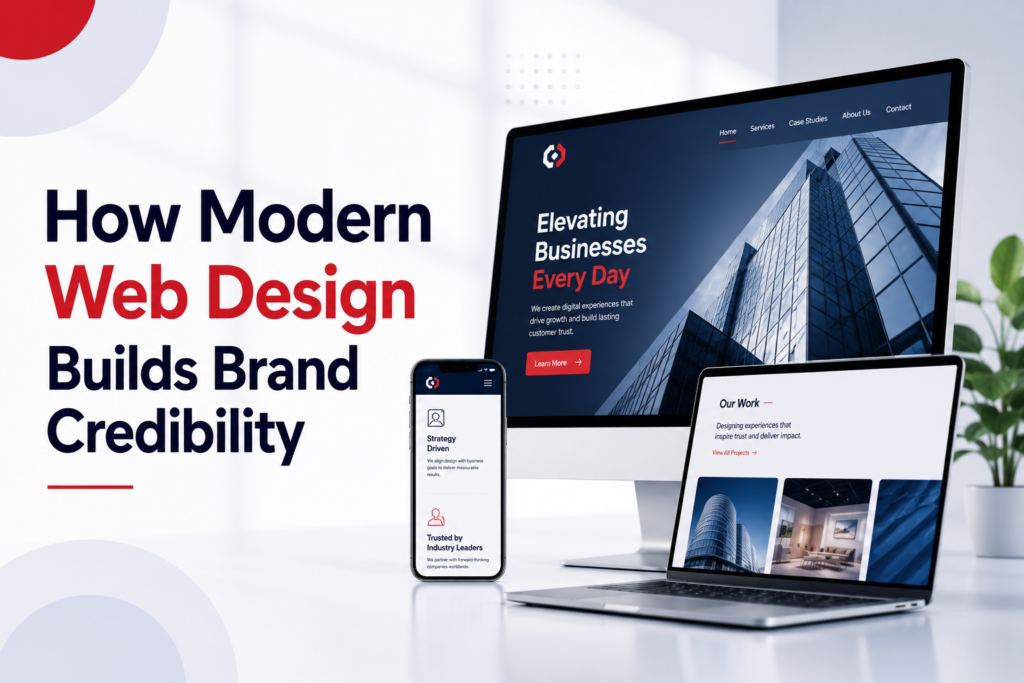
That is why modern web design is not just about appearance. It helps businesses communicate professionalism before a single conversation begins.
Credibility Is Built Through Hundreds of Small Details
Trust is rarely created by one impressive homepage.
It develops through a series of small experiences that feel consistent and reliable. Visitors notice whether pages load quickly, whether navigation is intuitive, whether information is easy to understand, and whether every section feels connected.
Imagine visiting two consulting firms.
The first website has clear navigation, current case studies, readable typography, and an obvious way to contact the team. The second contains outdated announcements, inconsistent layouts, and pages that don’t work properly on mobile devices.
Even if both firms have equal expertise, most people will naturally place more confidence in the first one.
Design Shapes Expectations
People often associate the quality of a digital experience with the quality of the business itself.
This doesn’t mean every website needs elaborate animations or expensive visual effects. It means the experience should feel thoughtful.
A visitor who can quickly find pricing information, understand a service offering, or locate customer success stories begins to feel that the company values clarity. That impression carries into future interactions.
The opposite is also true. If finding basic information feels like work, visitors may assume working with the company will be equally difficult.
Consistency Makes a Brand Feel Established
Large organizations create content across many channels. Their website, social media, presentations, sales documents, and marketing campaigns all contribute to the same brand experience.
When the website reflects the same visual identity and messaging found elsewhere, visitors see a company that appears organized and dependable.
Consistency is not about making every page look identical. It is about making every interaction feel connected.
The same colors, typography, imagery, and tone create familiarity, and familiarity often leads to trust.
A Good Website Respects the Visitor’s Time
One of the quickest ways to lose credibility is to make visitors search for information that should be easy to find.
Modern websites remove unnecessary obstacles.
Navigation is clear.
Pages have a logical structure.
Important actions are easy to identify.
Forms request only relevant information.
This creates a smoother experience that leaves visitors with a positive impression, even if they spend only a few minutes on the site.
Mobile Experience Influences Professional Reputation
Enterprise buyers no longer wait until they return to their desks to research companies.
They browse websites between meetings, during travel, and while attending conferences. If a website performs poorly on a mobile device, visitors notice immediately.
Buttons that are difficult to tap, overlapping text, or slow loading pages do more than frustrate users. They suggest the business may not be paying attention to customer experience.
A responsive website demonstrates that the company expects visitors to engage from different devices and has planned accordingly.
Strong Content Needs Strong Design
Even expert content can lose its impact when the presentation gets in the way.
Long paragraphs without spacing, inconsistent headings, or difficult-to-read typography discourage visitors from continuing.
Modern web design helps content breathe.
Thoughtful layouts guide readers naturally from one section to the next. Supporting visuals break up complex topics. Clear hierarchy helps visitors understand what deserves attention first.
The design doesn’t compete with the content. It helps people absorb it.
Credibility Also Comes From Performance
Visual design is only one part of the experience.
Visitors also notice how the website behaves.
They expect:
- Fast loading pages
- Secure browsing
- Working links
- Accurate information
- Accessible navigation
- Reliable search functionality
Each successful interaction reinforces the idea that the company is dependable.
Performance may not be immediately visible, but people certainly notice when it is missing.
Social Proof Deserves Better Presentation
Many enterprise websites include testimonials, client logos, awards, certifications, and case studies.
These elements strengthen credibility only when they are easy to find and presented in context.
A customer quote hidden near the bottom of an unrelated page carries less impact than one placed alongside the solution it supports.
Similarly, a case study becomes more persuasive when visitors can quickly understand the customer’s challenge, the approach taken, and the outcome achieved.
Design helps these trust signals work harder.
A Website Should Reflect How the Business Has Evolved
Companies grow.
They enter new markets, launch new products, expand their expertise, and develop stronger customer relationships.
Unfortunately, many websites tell the story of the company as it existed several years ago.
An outdated website creates a gap between the business people experience and the business they see online.
Regular updates help ensure the website reflects the organization’s current capabilities rather than its past.
Why Modern Web Design Has Become a Strategic Investment
Marketing teams today expect websites to do much more than provide information.
A website supports lead generation, customer education, recruitment, investor relations, and brand positioning at the same time.
That broader responsibility explains why many organizations invest in
web design services that balance visual appeal with usability, accessibility, performance, and business objectives.
A modern website is not simply a marketing asset. It is often the first meaningful interaction someone has with the brand.
Final Thoughts
Brand credibility is built long before a proposal is sent or a contract is signed. It begins the moment someone visits a company’s website and starts forming opinions based on what they see and how easily they can accomplish their goals.
Modern web design supports that process by reducing friction, improving clarity, and creating experiences that feel reliable from the first click. When every part of the website reflects the quality of the business behind it, visitors are more likely to stay, explore, and continue the conversation.
For organizations looking to strengthen their digital presence, Tangence understands that thoughtful design, user-focused experiences, and well-planned web design services help create websites that inspire confidence while supporting long-term business growth.