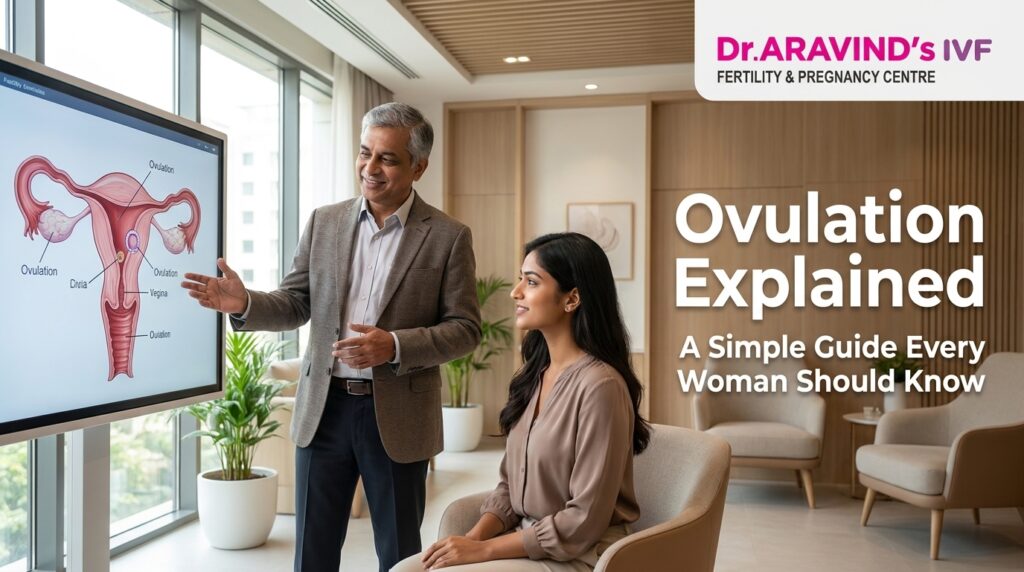

Ovulation Explained: A Simple Guide
Many women only begin learning about ovulation when they start planning for pregnancy. Yet ovulation is one of the most important parts of the menstrual cycle and plays a central role in natural conception. Understanding when and how ovulation occurs can help you recognize your fertile window, identify possible fertility concerns, and know when it’s time to seek expert medical advice.
If you’re searching for the best fertility hospital in Nagapattinam, learning the basics of ovulation is the first step toward making informed reproductive health decisions. At Dr. Aravind’s IVF Fertility & Pregnancy Centre, we believe that informed patients are empowered patients, and understanding your body’s natural cycle can make your fertility journey less stressful.
What Is Ovulation?
Ovulation is the process where one mature egg is released from the ovary. This usually happens once during each menstrual cycle, typically around the middle of the cycle, although the exact timing differs from woman to woman.
After the egg is released, it travels through the fallopian tube where it can be fertilized by sperm. If fertilization does not occur within about 12 to 24 hours, the egg naturally dissolves and menstruation begins later in the cycle.
Healthy ovulation is one of the strongest indicators of good reproductive health.
How Does Ovulation Happen?
Ovulation is controlled by a carefully balanced interaction of hormones.
The process begins when the brain signals the ovaries to prepare an egg for release. As the egg matures, estrogen levels increase. This triggers a surge in luteinizing hormone (LH), which causes the mature egg to be released.
Following ovulation, progesterone prepares the uterus for a possible pregnancy. If pregnancy doesn’t occur, hormone levels decrease and a new menstrual cycle begins.
Because hormone balance is essential, even small disruptions may affect ovulation and fertility.
Signs That You May Be Ovulating
Every woman experiences ovulation differently, but some common signs include:
- Clear, stretchy cervical mucus similar to egg whites.
- Mild pain or discomfort on one side of the lower abdomen.
- Slight increase in basal body temperature.
- Increased sexual desire.
- Breast tenderness.
- A heightened sense of smell in some women.
Tracking these signs each month can help identify your fertile window and improve pregnancy planning.
What Can Affect Ovulation?
Several health and lifestyle factors can interfere with normal ovulation.
Polycystic Ovary Syndrome (PCOS)
PCOS is one of the most common causes of irregular ovulation and infertility. Women with PCOS often experience irregular periods and hormonal imbalance.
Thyroid Disorders
An overactive or underactive thyroid can disrupt hormone production and affect egg release.
Stress
Chronic emotional stress may influence hormone levels and delay ovulation.
Weight Changes
Both obesity and being underweight can interfere with normal ovarian function.
Age
As women grow older, both egg quantity and egg quality gradually decline. Understanding ovarian reserve is important when planning pregnancy. Our article on Understanding AMH Levels and Pregnancy explains how AMH testing provides valuable information about fertility potential.
Why Ovulation Matters for Pregnancy
Without ovulation, pregnancy cannot occur naturally.
Even if menstrual periods appear regular, ovulation may not always happen every month. This is why fertility specialists often recommend ovulation assessment as part of a fertility evaluation.
Women experiencing irregular cycles should also understand the causes behind menstrual irregularities. Our guide on Irregular Periods: Fertility Causes and Treatment explains how hormone disorders, PCOS, thyroid disease, and other conditions can affect fertility and what treatment options are available.
Early diagnosis often allows simpler treatment and improves pregnancy outcomes.
When Should You Consult a Fertility Specialist?
Consider seeking professional advice if:
- Your periods are consistently irregular.
- You do not notice signs of ovulation.
- You have been trying to conceive for 12 months without success.
- You have PCOS, thyroid disease, or endometriosis.
- You are over 35 and planning pregnancy.
Receiving timely female fertility treatment can improve your chances of conception while reducing unnecessary delays.
Conclusion
Ovulation is much more than the release of an egg—it is a key indicator of reproductive health and fertility. Understanding your menstrual cycle, recognizing ovulation signs, and seeking early medical advice when something seems unusual can make a significant difference to your pregnancy journey.
At Dr. Aravind’s IVF Fertility & Pregnancy Centre, we are committed to helping couples receive personalized fertility care backed by modern reproductive medicine. If you’re looking for the best fertility hospital in Nagapattinam, our experienced team provides comprehensive fertility evaluation and compassionate treatment supported by fertility experts in india. Our patient-first approach reflects the quality standards expected from the Best IVF Centre in India, helping couples move forward with confidence.
FAQs
1. What is ovulation in simple terms?
Ovulation is the release of a mature egg from the ovary during the menstrual cycle. This is the time when pregnancy is most likely to occur if sperm is present.
2. When does ovulation usually happen?
Ovulation generally occurs about 12–16 days before your next menstrual period, although the timing varies depending on the length of your cycle.
3. How can I tell if I am ovulating?
Common signs include clear cervical mucus, mild pelvic pain, increased libido, and a slight rise in basal body temperature. Ovulation kits can also help identify fertile days.
4. Can I get pregnant if I don’t ovulate?
Natural pregnancy requires ovulation. If ovulation is absent or irregular, fertility treatment may help identify and address the underlying cause.
5. When should I see a fertility specialist for ovulation problems?
If you have irregular periods, difficulty conceiving, or suspect you are not ovulating regularly, consult a fertility specialist for a complete reproductive evaluation.