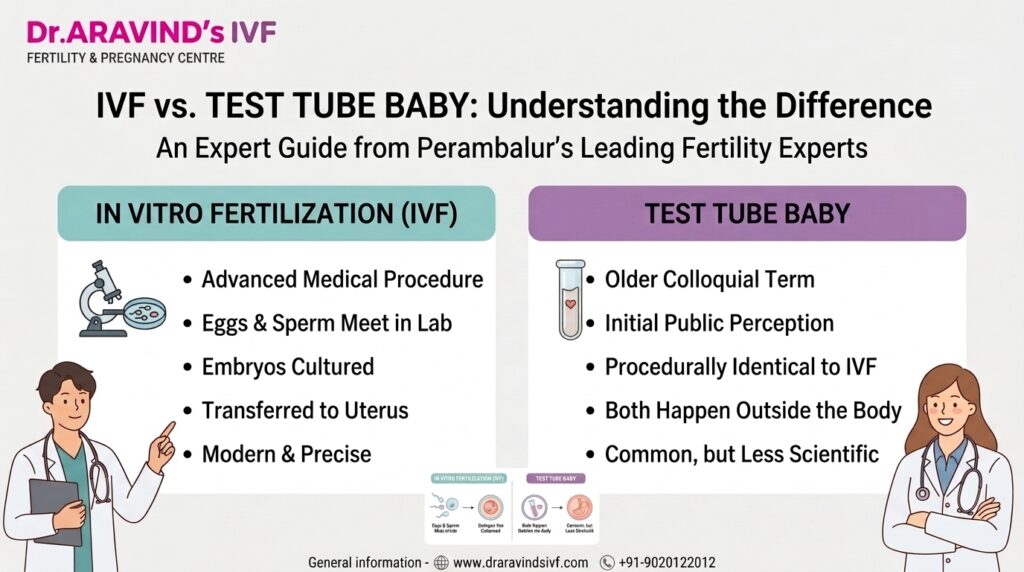

If you’ve been searching for IVF vs test tube baby explained, you’re not alone. Many couples wonder whether IVF and a test tube baby are two different treatments. The simple answer is no—they refer to the same fertility process. Understanding this can help you make informed decisions as you begin your journey toward parenthood.
What Is IVF?
In Vitro Fertilization (IVF) is an advanced fertility treatment where eggs are collected from the ovaries and fertilized with sperm in a specialized laboratory. After healthy embryos develop, one embryo is carefully transferred into the uterus, where pregnancy can begin naturally.
IVF is commonly recommended for couples facing blocked fallopian tubes, male infertility, ovulation disorders, endometriosis, unexplained infertility, or age-related fertility challenges.
What Is a Test Tube Baby?
A “test tube baby” is simply a baby conceived through IVF. Although this phrase remains popular, it is medically outdated because fertilization takes place in a laboratory culture dish rather than inside a test tube. Today, fertility specialists generally use the term IVF baby, but both names describe the same treatment.
How Does IVF Work?
The IVF process usually includes:
- Ovarian stimulation with fertility medications.
- Egg retrieval from the ovaries.
- Fertilization of eggs and sperm in the laboratory.
- Careful monitoring of embryo development.
- Transfer of a healthy embryo into the uterus.
- Pregnancy testing about two weeks later.
Because fertilization occurs outside the body, IVF can help overcome several fertility problems that make natural conception difficult.
If you’re looking for expert fertility care, choosing a trusted Fertility Centre in Perambalur ensures personalized evaluation and treatment based on your individual needs.
Benefits of IVF
IVF offers many advantages, including:
- Helps couples with various fertility conditions.
- Bypasses blocked fallopian tubes.
- Supports couples with male infertility.
- Allows specialists to monitor embryo development.
- Provides personalized treatment plans for better outcomes.
Common Myths
Myth: IVF and test tube baby treatment are different.
Fact: They are the same treatment; only the terminology differs.
Myth: Test tube babies are different from naturally conceived babies.
Fact: Babies conceived through IVF grow and develop just like naturally conceived children.
When Should You Consider IVF Treatment?
Deciding to begin IVF is a personal choice that should be made after a thorough fertility evaluation. While some couples conceive naturally after lifestyle changes or basic fertility treatments, others may benefit from IVF sooner depending on their medical condition.
Your fertility specialist may recommend IVF if you have blocked or damaged fallopian tubes, severe male infertility, endometriosis, ovulation disorders, a low ovarian reserve, or unexplained infertility that has not responded to other treatments. Women over the age of 35 may also be advised to consider IVF earlier because fertility naturally declines with age.
One of the greatest advantages of IVF is that every treatment plan can be tailored to the couple’s individual needs. Before starting treatment, doctors perform detailed fertility assessments, review medical history, and explain each stage of the process. This personalized approach helps couples understand their options and make confident decisions.
It is also important to remember that success depends on several factors, including age, egg and sperm quality, overall reproductive health, and the underlying cause of infertility. Maintaining a healthy lifestyle, following medical advice, and attending regular follow-up appointments can all support the treatment journey and improve the chances of achieving a healthy pregnancy.
FAQs
1. Is IVF the same as a test tube baby?
Yes. A test tube baby is simply a baby conceived through IVF.
2. Why is the term “test tube baby” outdated?
Because fertilization takes place in a laboratory culture dish, not inside a test tube.
3. Who may need IVF?
Couples with blocked tubes, male infertility, ovulation disorders, endometriosis, or unexplained infertility may benefit from IVF.
Conclusion
Understanding IVF vs test tube baby explained helps clear up one of the most common fertility misconceptions. IVF and test tube baby treatment refer to the same advanced procedure that has helped millions of families worldwide. At Dr.Aravind’s IVF Fertility & Pregnancy Centre, couples receive compassionate, personalized fertility care to help them take the next confident step toward parenthood.