
A commercial entrance is one of the few building systems that almost every occupant interacts with every day. Employees use it to start and end their workdays, customers form first impressions around it, and deliveries depend on it functioning without interruption. Yet entrances often receive attention only after something goes wrong.
That mindset is beginning to change. Facility leaders are managing buildings that are more connected, security conscious, and operationally demanding than they were a decade ago. Hybrid work schedules have altered traffic patterns, accessibility expectations have increased, and businesses are under growing pressure to minimize disruptions that affect productivity and customer experience.
These shifts have elevated access control and commercial automatic door maintenance from routine building functions to strategic priorities that directly influence security, operational resilience, and business continuity.
Why Entrances Are No Longer Simple Building Components
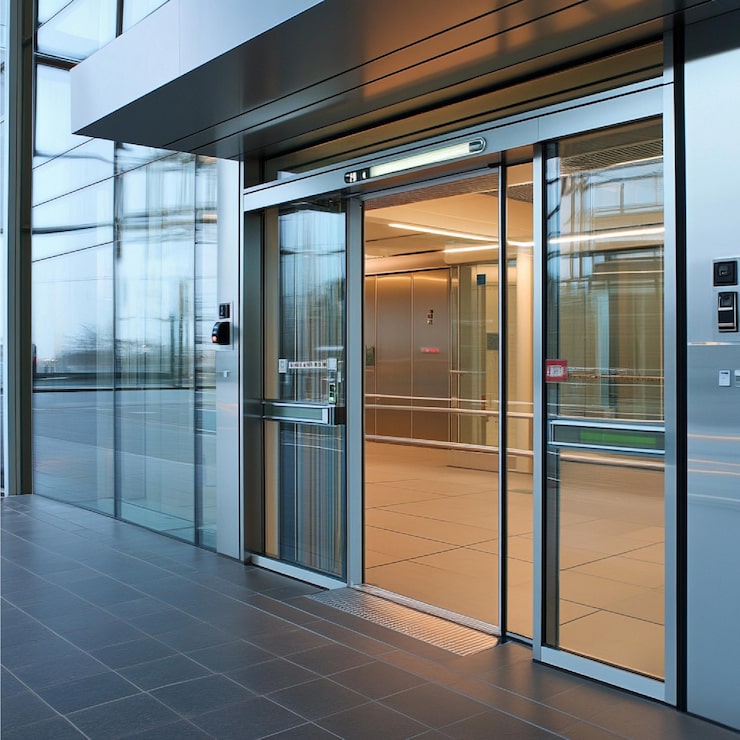
Commercial entrances have become increasingly sophisticated. A modern entrance system may include automatic operators, electronic locks, credential readers, motion sensors, visitor management platforms, and building management software that communicates with other systems throughout the facility.
This integration delivers significant advantages, but it also creates greater interdependence. A malfunctioning sensor may prevent a door from opening correctly. An issue with an access credential system can delay employee entry. A door that fails to close completely may create both security vulnerabilities and energy losses.
Facility professionals increasingly recognize that entrances are no longer isolated pieces of hardware. They are interconnected systems that support the broader performance of the building.
Why Access Control Is Becoming an Operational Tool
For many years, access control systems were viewed almost exclusively through the lens of security. Their primary purpose was to keep unauthorized individuals out of sensitive areas.
Today, their value extends much further.
Modern access control platforms generate information that can help organizations better understand how facilities operate. Entry and occupancy patterns can reveal when spaces experience peak demand, where congestion occurs, and how traffic moves throughout a property.
Consider a healthcare facility where patient arrivals consistently create bottlenecks near certain entrances. Access data can help identify these patterns and support staffing adjustments or changes to traffic flow. Office buildings can also use access information to better understand workplace utilization and make more informed decisions about space planning.
Security remains essential, but data generated through access control systems increasingly contributes to operational planning and resource management.
The Cost of Deferred Maintenance Is Often Underestimated
Automatic doors generally perform their jobs quietly and consistently, which can make them easy to overlook. However, the economics of waiting for failures can be surprisingly unfavorable.
A malfunctioning entrance can create costs that extend well beyond the repair itself. Businesses may experience delivery delays, reduced productivity, customer inconvenience, and increased security concerns. In some environments, even a short disruption can have broader consequences.
Consider a retail property during the holiday season. A malfunctioning automatic entrance can slow customer flow and create frustration during periods of high foot traffic. In a healthcare setting, a faulty door can impede movement for patients, staff, and equipment. Distribution facilities may experience delays that affect schedules and downstream operations.
The financial impact of these disruptions often exceeds the cost of preventive maintenance.
Reliability Has Become a Competitive Advantage
The U.S. Department of Energy has long emphasized that building openings can significantly influence energy efficiency and operational performance. Doors that fail to close properly or operate inefficiently may contribute to energy losses and higher operating costs.
At the same time, building owners are facing increasing expectations regarding accessibility and safety. The Americans with Disabilities Act establishes requirements that directly affect automatic door operation, while fire and life safety regulations place additional responsibilities on property owners.
Many compliance issues develop gradually. Sensors drift out of calibration, operators begin cycling more slowly, and hardware experiences wear from repeated use. Because these changes occur over time, problems may remain unnoticed until performance deteriorates significantly.
Preventive maintenance helps organizations identify these issues before they evolve into safety concerns or operational disruptions.
What Effective Commercial Automatic Door Maintenance Looks Like
An effective maintenance program focuses on reliability rather than simply responding to failures.
Common activities often include:
- Inspecting operators and control systems
- Testing sensors and safety devices
- Verifying proper door speeds and closing functions
- Examining hardware for wear
- Adjusting components and lubrication points
- Confirming integration with access control systems
These activities may seem routine, but their value lies in preserving consistency.
In facilities where entrances cycle hundreds or even thousands of times each day, minor issues can quickly develop into larger operational problems. Identifying concerns early generally requires fewer resources and reduces the likelihood of emergency service interruptions.
Why the Human Experience Still Matters
Commercial entrances also influence perceptions in ways that are easy to underestimate.
Employees notice when they encounter obstacles entering the building. Customers remember inconvenient experiences. Tenants often view entrance performance as an indicator of how well a property is managed overall.
A properly functioning entrance communicates competence, safety, and professionalism. A malfunctioning one can quietly undermine those impressions.
This is particularly important in industries such as healthcare, hospitality, retail, and professional services, where experience increasingly shapes competitive differentiation.
Looking Ahead
Buildings are becoming smarter, more connected, and more dependent on integrated systems that support both people and operations. In this environment, entrances deserve more strategic attention than they have traditionally received.
The growing importance of commercial automatic door maintenance and the expanding role of access control reflect a broader shift in facility management thinking. Entrances are no longer simply points of entry and exit. They are systems that influence security, efficiency, accessibility, and business continuity simultaneously.
Organizations that treat these systems as strategic assets rather than background infrastructure are often better positioned to reduce risk, improve occupant experiences, and maintain operational resilience in an increasingly demanding business environment.