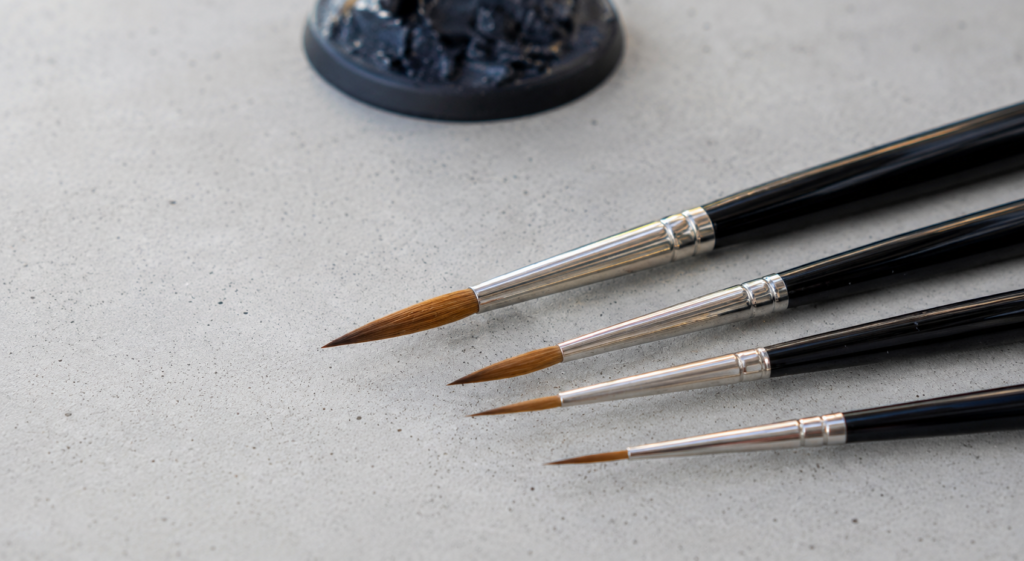

Ask any painting tutor in the UK what separates a confident wash from a muddy one, and the conversation rarely starts with pigment or paper. It starts with the brush. Ferrule shape, hair quality, and how a tool holds its point under pressure make or break fine watercolour work long before colour choice comes into play which is exactly why so many working artists keep returning to kolinsky sable brushes rather than experimenting with newer synthetic alternatives. It isn’t brand loyalty or habit. It’s the physics of the hair itself, and once you understand what’s actually happening at a microscopic level, the preference makes a lot more sense.
What Real Kolinsky Sable Actually Is
Genuine Kolinsky hair comes from the tail of the Siberian weasel, a species found across Siberia and parts of northern China, not a fibre engineered in a lab. Each hair tapers naturally from a thick base to a fine point and carries a slight inherent curve, which is what gives a well-made brush the ability to form an extremely fine tip even after being loaded with a generous amount of colour. Cheaper animal-hair blends and early synthetic fibres struggle to replicate this taper consistently, which is why quality varies so wildly between low-cost brushes even when they’re marketed under near-identical names.
The “Snap” That Professionals Won’t Compromise On
Ask a working illustrator why they pay considerably more for a single brush than an entire starter set elsewhere, and the answer usually comes down to one word: snap. Snap describes how quickly and precisely a wet brush returns to its original point after being pressed onto paper. Kolinsky hair has a natural resilience that lets it carry a full belly of water and pigment, release it evenly, then spring back into a sharp point almost instantly.
That responsiveness is what lets an artist move from a broad wash straight into hairline detail without switching tools mid-painting, which matters a great deal when working wet-in-wet with the sort of fluid watercolour paints uk studios and college courses tend to favour for their transparency and lightfastness. A brush that hesitates or splays at exactly the wrong moment can undo twenty minutes of careful layering in a single stroke.
Choosing the Right Size and Shape
Kolinsky brushes aren’t bought for a single job, and it’s worth understanding the range before settling on one size. A small round, somewhere in the 000 to size 2 territory, is built for fine linework, botanical detail and lettering, where the point needs to stay controlled under sustained, delicate pressure. Mid-range rounds, roughly size 4 to size 8, tend to become the workhorse brush in most kits, handling tasks from portrait shading to controlled washes across a small area.
Larger rounds and mop-style Kolinsky brushes come into play for broader washes, skies and backgrounds, where the brush needs to carry a substantial amount of liquid without losing its edge control when the artist needs to cut in around a shape. Many working artists build a kit gradually, adding one size at a time as a particular subject or technique demands it, rather than acquiring a full set upfront that may include sizes they rarely reach for.
Synthetic vs Kolinsky: An Honest Comparison
Synthetic brushes have improved significantly over the past decade, and for students or anyone painting occasionally, a good synthetic can be a perfectly sensible starting point there’s no need to pretend otherwise. Modern synthetic filaments are more affordable, more consistent from brush to brush, and increasingly good at mimicking the taper of natural hair.
Where they still tend to fall short is in extended wet-in-wet sessions, where synthetic fibres lose their point faster and don’t carry quite the same volume of liquid. For a hobbyist painting landscapes at the weekend, that difference may never really register. For a working illustrator producing detailed botanical studies or portrait commissions for hours at a stretch, it adds up fast, both in the finished result and in how often brushes need replacing.
Why the Investment Pays Off Over Time
This is really where the value argument settles for most professionals. A well cared-for Kolinsky brush, particularly in the smaller detail sizes, can outlast a dozen synthetic replacements bought over the same working life. Cowling & Wilcox has supplied working artists across London and the South East with genuine Kolinsky brushes for decades, and the pattern among long-term customers is consistent: once someone tries a properly made Kolinsky round for fine detail work, they rarely go back, even if the upfront cost gives them pause the first time.
The maths tends to bear this out over a working year rather than a single purchase. A synthetic detail brush used daily by a professional illustrator might keep its point for a few months of heavy use before splaying beyond usefulness, while a well-maintained Kolinsky in the same role can remain reliable for several years. Spread across that timeframe, the higher initial price per brush often works out lower than the cost of repeatedly replacing a synthetic alternative, without even accounting for the hours saved by not fighting a tired brush mid-commission.
The Paper Underneath Matters Too
Brush quality only tells half the story. The surface a brush meets matters just as much for the final result. A Kolinsky brush loaded with a rich wash behaves very differently on a heavily sized, smooth cartridge sheet than it does on textured cold-press watercolour paper, and even preparatory sketches benefit from having the right surface underneath them.
Many artists keep a stock of multi purpose art paper on hand for warm-up studies and colour tests before committing a wash to a finished sheet, since testing brush behaviour on a cheaper surface first avoids wasting both time and pigment on a piece that was never going to work in the first place.
Keeping a Kolinsky Brush at Its Best
Looking after a Kolinsky brush isn’t complicated, but it does need a little more care than a synthetic that can be rinsed and forgotten. Rinsing thoroughly after each session, reshaping the tip by hand while it’s still damp, and storing brushes upright or lying flat rather than bristle-down in a jar all help preserve the taper that makes the hair worth paying for in the first place. Left wet in a pot or squashed into a tight case, even the best Kolinsky brush will lose its snap far sooner than it should.
So the honest answer to why professional artists across the UK keep choosing Kolinsky sable over the newer alternatives isn’t tradition for its own sake. It’s that the hair genuinely behaves differently under a loaded, moving brush, and for anyone whose work depends on fine, repeatable control, that difference tends to be worth the investment many times over. Take a look at the full range here.