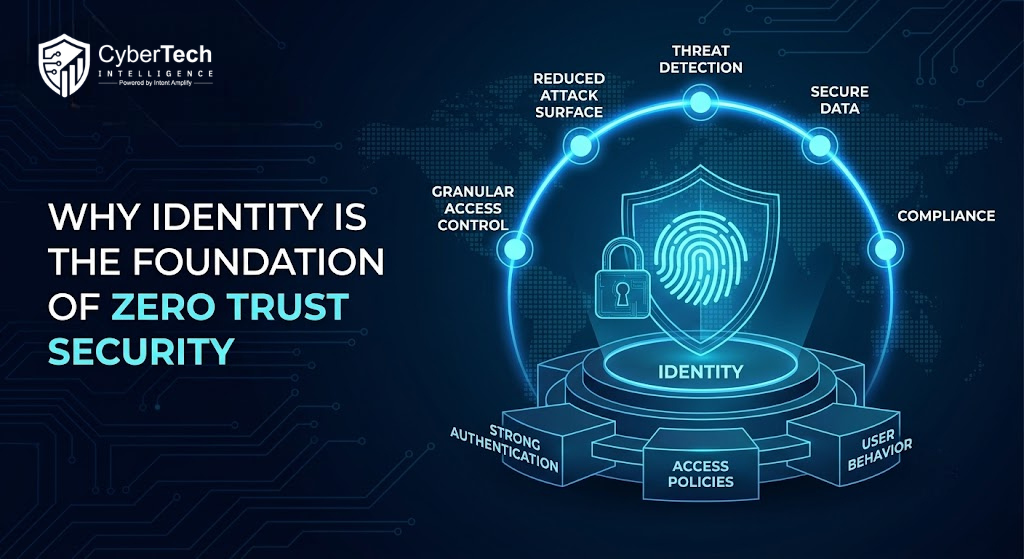

As organizations embrace cloud computing, hybrid work, and digital transformation, traditional approaches to cybersecurity are becoming less effective. Employees now access applications, business systems, and sensitive information from multiple devices and locations, often outside the traditional corporate network. At the same time, cybercriminals continue to exploit stolen credentials, compromised accounts, and identity-based attacks to gain unauthorized access to enterprise environments. In this evolving threat landscape, organizations need a security model that continuously verifies every user, device, and access request rather than assuming trust based on network location. This is the core principle of Zero Trust Security, and identity serves as its foundation.
Zero Trust is built on the principle of “never trust, always verify.” Instead of automatically trusting users who are inside the corporate network, every access request is evaluated based on identity, device health, location, behavior, and contextual risk. Whether an employee is working from the office, home, or another location, the same verification process applies. Identity becomes the primary factor that determines who can access business resources and under what conditions.
Read More: https://tinyurl.com/3cvczxuf
Modern cyberattacks increasingly target identities rather than infrastructure. Attackers frequently use phishing emails, credential theft, password spraying, social engineering, and account compromise to gain access to enterprise systems. Once valid credentials are obtained, attackers often move laterally across networks while appearing to be legitimate users. This makes identity protection one of the most important aspects of enterprise cybersecurity. Zero Trust addresses this challenge by continuously validating identities throughout every user session rather than relying on a single login event.
Identity and Access Management (IAM) provides the foundation for Zero Trust implementation. IAM enables organizations to centrally manage user identities, authentication methods, access permissions, and authorization policies. Every user receives only the level of access required to perform their specific responsibilities, following the principle of least privilege. Restricting unnecessary permissions significantly reduces the potential impact of compromised accounts while limiting opportunities for attackers to expand their access.
Multi-Factor Authentication (MFA) further strengthens identity security within Zero Trust environments. Passwords alone are no longer sufficient because they can be stolen through phishing campaigns, malware, or credential leaks. MFA requires users to verify their identities using additional authentication factors such as one-time verification codes, biometric authentication, security keys, or authentication applications. Even if attackers obtain passwords, they remain unable to access protected systems without the additional authentication factor.
Continuous authentication is another defining characteristic of Zero Trust Security. Traditional security models typically verify user identity only during the initial login process. However, user risk can change during an active session. Zero Trust continuously evaluates user behavior, device status, geographic location, and access patterns throughout the session. If suspicious activity is detected, organizations can require additional verification, restrict access, or terminate the session immediately to prevent unauthorized activity.
Behavioral analytics significantly enhances identity-based Zero Trust security. Artificial intelligence and machine learning continuously analyze user behavior to establish normal patterns of activity. Login times, application usage, device behavior, network access, and geographic locations are monitored to detect anomalies. If a user suddenly logs in from an unusual location, attempts to access unfamiliar systems, or displays abnormal behavior, the system can automatically increase authentication requirements or block access until the activity is verified.
Device identity is equally important within Zero Trust environments. Organizations must verify not only who is requesting access but also whether the device meets security requirements. Managed endpoints should have updated operating systems, endpoint protection software, encryption, and secure configurations before accessing corporate resources. Devices that fail compliance checks can be denied access or granted only limited permissions until security requirements are satisfied.
Cloud adoption has reinforced the importance of identity as the new security perimeter. Modern organizations rely heavily on Software-as-a-Service (SaaS) applications, cloud storage, collaboration platforms, and remote access solutions. Since users frequently connect over the public internet rather than private corporate networks, network boundaries alone can no longer provide effective protection. Identity becomes the primary control that secures access to cloud resources regardless of where users are located.
Privileged Access Management (PAM) also plays a critical role in Zero Trust. Administrative accounts provide elevated permissions that can significantly impact enterprise systems if compromised. Zero Trust applies strict identity verification to privileged users by requiring stronger authentication, session monitoring, temporary privilege elevation, and continuous oversight. Limiting administrative access reduces the likelihood of attackers gaining unrestricted control over critical infrastructure.
Threat intelligence further strengthens identity-based Zero Trust strategies. Security platforms continuously compare authentication events against threat intelligence feeds containing known malicious IP addresses, compromised credentials, attack techniques, and emerging threats. This additional context enables organizations to make dynamic access decisions based on current threat conditions rather than static security policies.
Security Operations Centers (SOCs) benefit greatly from identity-focused Zero Trust architectures. Continuous monitoring of authentication events, privilege changes, endpoint activity, and user behavior provides analysts with greater visibility into potential threats. Early detection of suspicious identity-related activity enables faster investigation and incident response while reducing the risk of widespread compromise.
Employee awareness remains an essential part of identity protection. Even with advanced security technologies, users remain frequent targets of phishing and social engineering attacks. Regular cybersecurity awareness training helps employees recognize credential theft attempts, use strong authentication methods correctly, and report suspicious activity promptly. A well-informed workforce complements Zero Trust technologies by reducing opportunities for identity compromise.
Business resilience increasingly depends on protecting digital identities. As organizations continue expanding remote work, cloud adoption, and digital transformation initiatives, identity has become the primary gateway to business applications and sensitive information. Organizations that secure identities effectively are better positioned to reduce cyber risk, maintain operational continuity, and support secure business growth.
Ultimately, identity is the foundation of Zero Trust Security because every access decision begins with verifying who is requesting access. By combining Identity and Access Management, Multi-Factor Authentication, continuous verification, behavioral analytics, device validation, threat intelligence, and least-privilege access controls, organizations can build a stronger security posture that protects against modern cyber threats. As the cybersecurity landscape continues to evolve, identity-driven Zero Trust strategies will remain essential for securing enterprise environments and enabling confident digital transformation.
Read More: https://tinyurl.com/3cvczxuf