
A Strong Perimeter Air Monitoring Plan Starts With Risk Reduction
A successful project starts with good planning, especially when construction, demolition, redevelopment, or environmental remediation activities have the potential to affect ambient air quality near the project boundary. A perimeter air monitoring plan helps identify where monitoring stations should be placed, what parameters should be measured, what action levels should be used, and how project information will be reviewed during the work.
The purpose of the plan is not simply to collect data. A well-designed plan helps project teams reduce the risk of impacting off-site receptors, including neighboring properties, nearby buildings, pedestrians, workers, and surrounding communities. Real-time monitoring strengthens that plan by allowing project teams to see changing conditions as they occur and respond before conditions become a larger concern.
Core message: Real-time perimeter monitoring turns a monitoring plan into an active risk-management tool by helping project teams see changing conditions and respond quickly.
Monitoring Locations Should Be Planned Around Receptors and Site Conditions
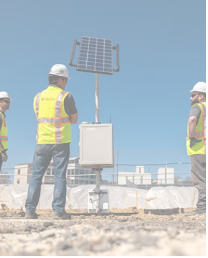
Every project site is different. The size of the property, the location of nearby receptors, surrounding land uses, prevailing wind patterns, active work areas, and site access limitations all influence where monitoring stations should be placed. A perimeter air monitoring plan begins by identifying monitoring locations that provide useful coverage around the project boundary and help distinguish upwind, downwind, and crosswind conditions.
Real-time monitoring is especially valuable because project conditions can change as work progresses. Excavation areas may move, demolition work may shift, weather conditions may change, and truck routes or loading areas may become more active at different times. When monitoring data is available in real time, project teams can evaluate these changing conditions and adjust controls, field practices, or monitoring locations as appropriate to help protect off-site receptors.
Real-Time Data Helps Project Teams Act Before Small Issues Become Larger Ones
Traditional monitoring approaches can leave teams waiting for information until after field activities have already occurred. Real-time monitoring provides a more practical risk-management tool because it supports timely decision-making during active work. If readings begin to increase at the perimeter, the project team can evaluate current site activities, review wind direction, check field controls, and determine whether additional response measures are needed.
This immediate visibility can support corrective actions such as modifying work sequencing, increasing dust suppression, adjusting excavation or material-handling methods, improving cover practices, reviewing equipment operation, or temporarily pausing specific activities until conditions improve. The benefit is not only better documentation; it is the ability to manage the project proactively while work is underway.
Multiple Measurements Provide a Clearer Picture of Perimeter Conditions
A complete monitoring program often requires more than one type of measurement. Depending on the project, perimeter monitoring may include particulate measurements, total volatile organic compounds, compound-specific air monitoring, and meteorological data such as wind speed and wind direction. These measurements help project teams understand whether observed conditions are related to site activity, background conditions, changing weather, or other nearby sources.
Using real-time information from multiple monitoring points gives project stakeholders a clearer picture of conditions around the project boundary. When combined with documented work activities and weather information, the data can help support defensible decisions and more effective communication with clients, regulators, neighbors, and other interested parties.
Better Information Supports Better Communication
Perimeter air monitoring is often most valuable when it supports clear communication. Clients want to know whether work is being performed responsibly. Project managers need timely information to keep work moving safely and efficiently. Regulators and community stakeholders may need assurance that the project team is tracking conditions and responding appropriately when needed.
Real-time monitoring helps meet these needs by making information available during the monitoring period rather than only after work is complete. Organized data, trend review, meteorological context, and documented response actions can help demonstrate that the project team is actively managing potential off-site impacts rather than reacting after the fact.
Flexible Monitoring Programs Can Be Scaled to the Project
Not every project requires the same monitoring approach. Some projects may need short-term monitoring during a specific phase of work, while others may require monitoring throughout a longer construction or remediation program. A practical monitoring plan should be scalable so that equipment, monitoring locations, parameters, and reporting frequency match the level of risk and the needs of the client.
Real-time perimeter monitoring is well suited for this kind of flexible planning. Monitoring programs can be designed around project-specific activities, receptor locations, regulatory requirements, client expectations, and schedule constraints. This allows clients to focus resources where they provide the greatest risk-reduction value.
Final Note
At AirLogics, our goal is to provide dependable real-time perimeter monitoring solutions that help clients manage changing conditions around project boundaries and reduce the risk of impacting off-site receptors. Whether a project involves construction, demolition, redevelopment, or environmental remediation activities, real-time monitoring can help provide timely information, support defensible decision-making, and improve communication from project start to project completion.
By pairing careful planning with real-time data, clients can better understand site conditions as they develop, respond more effectively to changing conditions, and document the steps taken to protect nearby receptors.