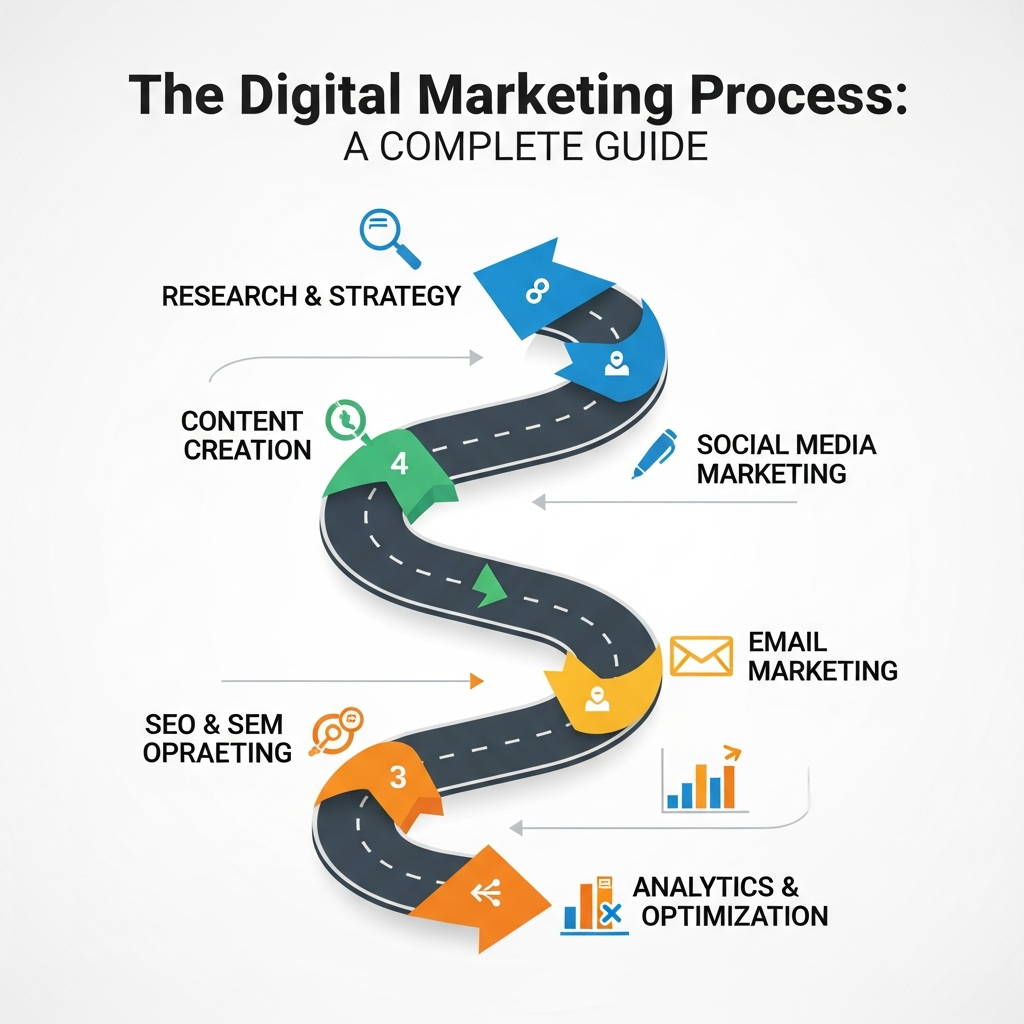

Digital marketing has transformed how businesses connect with customers. Whether you’re a startup, a small business, or a global enterprise, having a structured digital marketing process is essential for building brand awareness, generating leads, and increasing sales. Instead of relying on random campaigns or guesswork, a well-defined process helps you create measurable strategies that deliver consistent results.
This complete guide explains every stage of the digital marketing process, the key channels involved, the best tools to use, and proven practices for achieving long-term business growth.
What Is the Digital Marketing Process?
The digital marketing process is a systematic approach to planning, executing, managing, and optimizing online marketing activities. It ensures that every campaign aligns with business goals and reaches the right audience through the most effective digital channels.
Rather than focusing on a single tactic, the process integrates multiple strategies such as search engine optimization (SEO), content marketing, social media marketing, email marketing, paid advertising, and analytics.
A structured process helps businesses:
- Increase website traffic
- Generate qualified leads
- Improve brand visibility
- Build customer relationships
- Boost conversions
- Maximize return on investment (ROI)
Why the Digital Marketing Process Matters
A successful digital marketing strategy doesn’t happen by accident. Without a clear process, businesses often waste time and budget on ineffective campaigns.
Benefits of following a digital marketing process include:
- Better campaign planning
- Consistent branding
- Data-driven decision-making
- Improved customer engagement
- Higher conversion rates
- Efficient resource allocation
- Easier performance tracking
By following a step-by-step framework, marketers can identify what works, eliminate ineffective tactics, and continuously improve results.
Step 1: Define Your Marketing Goals
Every digital marketing campaign begins with clear objectives. Your goals should support your overall business strategy and be measurable.
Examples include:
- Increase website traffic by 30%
- Generate 500 qualified leads per month
- Grow email subscribers
- Improve search engine rankings
- Increase online sales
- Build brand awareness
- Boost customer retention
Using SMART goals—Specific, Measurable, Achievable, Relevant, and Time-bound—makes it easier to evaluate success.
Step 2: Understand Your Target Audience
Knowing your audience is the foundation of effective digital marketing. The better you understand your customers, the more relevant your campaigns become.
Research factors such as:
- Age
- Gender
- Location
- Income
- Interests
- Online behavior
- Pain points
- Buying habits
Creating buyer personas helps visualize your ideal customers and tailor your messaging to meet their needs.
Step 3: Conduct Market and Competitor Research
Before launching campaigns, analyze your market and competitors.
Research should include:
- Industry trends
- Customer demand
- Competitor strengths
- Competitor weaknesses
- Pricing strategies
- Content performance
- Keyword opportunities
Competitor analysis reveals gaps you can use to differentiate your business.
Step 4: Build Your Digital Marketing Strategy
Your strategy serves as the roadmap for all marketing activities.
A complete strategy typically includes:
- Target audience
- Marketing goals
- Budget
- Content plan
- SEO strategy
- Social media plan
- Paid advertising
- Email marketing
- KPIs
- Reporting schedule
This ensures every marketing effort supports the same objectives.
Step 5: Create a Professional Website
Your website is the center of your digital marketing ecosystem.
A high-performing website should include:
- Fast loading speed
- Mobile responsiveness
- Clear navigation
- Secure HTTPS connection
- Strong calls-to-action (CTAs)
- Optimized landing pages
- High-quality content
A professional website builds trust and improves conversion rates.
Step 6: Perform Keyword Research
Keyword research helps identify the terms your audience uses when searching online.
Focus on:
- Short-tail keywords
- Long-tail keywords
- Transactional keywords
- Informational keywords
- Local search terms
Using relevant keywords throughout your website improves visibility in search engine results.
Step 7: Optimize for Search Engines (SEO)
Search engine optimization increases organic traffic by improving your site’s visibility.
Important SEO areas include:
On-Page SEO
- Optimized titles
- Meta descriptions
- Internal linking
- Header tags
- Image optimization
- Keyword placement
Technical SEO
- XML sitemaps
- Page speed
- Mobile optimization
- Crawlability
- Structured data
Off-Page SEO
- Backlink building
- Guest posting
- Brand mentions
- Social sharing
SEO is a long-term investment that continues delivering results over time.
Step 8: Develop Valuable Content
Content marketing attracts, educates, and converts potential customers.
Popular content formats include:
- Blog posts
- Videos
- Infographics
- Podcasts
- Case studies
- E-books
- Webinars
- Product guides
High-quality content answers customer questions while building authority and trust.
Step 9: Leverage Social Media Marketing
Social media platforms allow businesses to engage directly with their audience.
Common platforms include:
- X (Twitter)
- TikTok
- YouTube
Effective social media strategies focus on consistency, audience engagement, and valuable content rather than constant promotion.
Step 10: Launch Email Marketing Campaigns
Email marketing remains one of the highest ROI digital channels.
Successful campaigns include:
- Welcome emails
- Promotional offers
- Newsletters
- Product recommendations
- Follow-up emails
- Cart abandonment reminders
Segmenting your audience improves personalization and engagement.
Step 11: Use Pay-Per-Click (PPC) Advertising
Paid advertising delivers immediate visibility.
Popular PPC platforms include:
- Google Ads
- Facebook Ads
- Instagram Ads
- LinkedIn Ads
- Microsoft Ads
Successful PPC campaigns require:
- Keyword targeting
- Audience segmentation
- Compelling ad copy
- Landing page optimization
- Budget management
Step 12: Track Performance with Analytics
Measuring campaign performance is essential for continuous improvement.
Key metrics include:
- Website traffic
- Conversion rate
- Bounce rate
- Cost per acquisition (CPA)
- Return on ad spend (ROAS)
- Click-through rate (CTR)
- Customer lifetime value (CLV)
Data-driven decisions lead to better marketing outcomes.
Essential Digital Marketing Channels
An effective strategy combines multiple channels.
Search Engine Optimization
Generates long-term organic traffic.
Content Marketing
Builds authority and attracts customers.
Social Media Marketing
Increases engagement and brand awareness.
Email Marketing
Nurtures leads and encourages repeat business.
Paid Advertising
Provides fast visibility and targeted reach.
Affiliate Marketing
Expands sales through partner promotions.
Influencer Marketing
Leverages trusted creators to reach niche audiences.
Best Digital Marketing Tools
Popular tools include:
Google Analytics
Tracks website performance and user behavior.
Google Search Console
Monitors search visibility and indexing.
SEMrush
Offers keyword research, competitor analysis, and SEO insights.
Ahrefs
Provides backlink analysis and keyword opportunities.
Canva
Creates professional marketing visuals.
Mailchimp
Manages email marketing campaigns.
HubSpot
Supports CRM, automation, and inbound marketing.
WordPress
The most widely used content management system for business websites.
Common Challenges in Digital Marketing
Businesses often face obstacles such as:
- Increasing competition
- Frequent algorithm updates
- Limited budgets
- Content saturation
- Ad fatigue
- Changing customer behavior
Overcoming these challenges requires continuous learning, testing, and optimization.
Best Practices for a Successful Digital Marketing Process
To maximize results:
- Set measurable goals.
- Know your audience.
- Focus on high-quality content.
- Optimize for mobile users.
- Maintain SEO best practices.
- Test different marketing strategies.
- Analyze performance regularly.
- Update old content.
- Build customer trust.
- Stay informed about industry trends.
Consistency and adaptability are key to long-term success.
Future Trends in Digital Marketing
The digital landscape continues to evolve. Businesses should prepare for:
- Artificial intelligence (AI) in marketing
- Voice search optimization
- Personalized customer experiences
- Video-first content strategies
- Marketing automation
- Privacy-focused data collection
- Interactive content
- Omnichannel marketing
Keeping pace with these trends helps businesses remain competitive.
Conclusion
The digital marketing process is more than a collection of online tactics—it’s a strategic framework for attracting, engaging, and converting customers. By defining clear goals, understanding your audience, creating valuable content, optimizing for search engines, leveraging social media, running targeted advertising, and continuously analyzing performance, businesses can build sustainable growth in an increasingly competitive online marketplace.
Success doesn’t come from using every available marketing channel. Instead, it comes from selecting the right channels, executing them consistently, measuring results, and making data-driven improvements over time. Whether you’re a beginner launching your first campaign or an experienced marketer refining your strategy, following a structured digital marketing process will help you achieve stronger visibility, better customer relationships, and higher returns on your marketing investment.