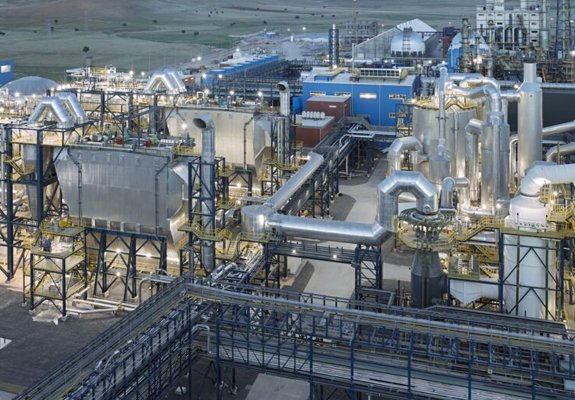

IMARC Group’s comprehensive DPR report, titled “Sulfuric Acid Production Cost Analysis Report 2026: Industry Trends, Plant Setup, Machinery, Raw Materials, Investment Opportunities, Cost and Revenue,” provides a complete roadmap for setting up a sulfuric acid production plant setup. The sulfuric acid market is driven by its critical role as a foundational chemical across multiple industries, including fertilizers, chemicals, petroleum refining, metal processing, and water treatment. The growing global demand for phosphate fertilizers, supported by rising agricultural activity and food security needs, remains the primary market driver.
The global sulfuric acid market size was valued at USD 16.11 Billion in 2025. According to IMARC Group estimates, the market is expected to reach USD 19.17 Billion by 2034, exhibiting a CAGR of 2.0% from 2026 to 2034.
This feasibility report covers a comprehensive market overview to micro-level information such as unit operations involved, raw material requirements, utility requirements, infrastructure requirements, machinery and technology requirements, manpower requirements, packaging requirements, and transportation requirements. The sulfuric acid production plant setup cost is provided in detail covering project economics, capital investments (CapEx), project funding, operating expenses (OpEx), income and expenditure projections, fixed costs vs. variable costs, direct and indirect costs, expected ROI and NPV, profit and loss account, and financial analysis.
What is Sulfuric Acid (H₂SO₄)?
Sulfuric acid (H₂SO₄) is a colorless, odorless, and highly corrosive mineral acid that plays a vital role in modern industrial operations. Produced mainly through the contact process, it is valued for its strong acidic and dehydrating properties. Its ability to react with a wide range of metals, salts, and organic compounds makes it an essential raw material and processing agent across numerous chemical manufacturing industries.
As one of the most widely produced industrial chemicals, sulfuric acid is often considered a key indicator of a nation’s industrial development. Global production exceeds 250 million metric tonnes annually, reflecting its extensive use in sectors such as fertilizers, petroleum refining, metal processing, and chemical synthesis. It is available in various concentrations, from dilute sulfuric acid to highly concentrated oleum, allowing it to meet the specific purity and performance requirements of diverse industrial applications.
To gain detailed insights — Request Sample: https://www.imarcgroup.com/sulfuric-acid-manufacturing-plant-project-report/requestsample
Key Investment Highlights
- Process Used: Combustion of sulfur or sulfur-containing compounds, catalytic oxidation of SO₂ to SO₃ (using V₂O₅ catalyst), absorption of SO₃ in sulfuric acid to form oleum, dilution of oleum with water, cooling, storage, and distribution.
- End-use Industries: Fertilizers, chemicals and petrochemicals, metal processing and mining, automotive and battery manufacturing, petroleum refining, and water and wastewater treatment.
- Applications: Phosphate fertilizer production, chemical synthesis, petroleum refining, lead-acid battery electrolytes, metal pickling and ore processing, and semiconductor-grade ultra-pure acid production.
- Plant Capacity: Proposed annual production capacity of 500,000–1,000,000 MT, enabling economies of scale while maintaining operational flexibility.
- Gross Profit Margin: 25–35% under normal operating conditions, supported by stable multi-sector demand.
- Net Profit Margin: 10–15%.
- Raw Material Share of OpEx: Approximately 60–70% of total operating expenses, driven primarily by sulfur/pyrite procurement costs.
- Utility Share of OpEx: 20–25%, driven by energy consumption in gas heating, catalyst beds, and acid cooling systems.
Major Applications
- Fertilizer Industry: Largest consumer — used in the production of phosphoric acid and phosphate fertilizers (SSP, TSP, DAP, MAP) essential for global agricultural productivity.
- Chemical Manufacturing: Used as a reactant and catalyst in the production of industrial chemicals, detergents, synthetic fibres, dyes, and explosives.
- Petroleum Refining: Used in alkylation processes to produce high-octane fuels and in the purification and treatment of petroleum fractions.
- Metal Processing and Mining: Used in metal pickling (steel, copper), hydrometallurgical leaching, and ore beneficiation — particularly in copper, zinc, uranium, and nickel processing.
- Battery Manufacturing: Serves as the electrolyte in lead-acid batteries, supporting demand from automotive, UPS, and stationary energy storage sectors.
- Semiconductor Manufacturing: Ultra-pure (electronic-grade) sulfuric acid is used for silicon wafer cleaning, etching, and surface preparation in chip fabrication.
Why Sulfuric Acid Production?
- Essential Role in Fertilizer Manufacturing: Rising global food demand is driving fertilizer consumption, making sulfuric acid production strategically vital for food security.
- Wide Industrial Dependence: Sulfuric acid’s indispensable role across fertilizers, chemicals, mining, refining, and batteries ensures consistent, large-scale demand across economic cycles.
- High Volume and Continuous Consumption: Most sulfuric acid is produced and consumed onsite or nearby, ensuring stable production cycles with predictable offtake.
- Link to Industrial Growth: Expansion in chemicals, mining, and energy sectors directly supports sulfuric acid demand, making it a barometer of industrial activity.
- Emerging High-Value Segments: Growing semiconductor industry demand for ultra-pure grades and battery sector growth offer premium-priced market segments.
Sulfuric Acid Industry Outlook 2026
The sulfuric acid market is driven primarily by strong demand from the fertilizer industry, where it is essential for phosphate-based fertilizer production. The significant trade volumes highlight its essential role in global industries. For instance, in 2023, the top exporters of sulfuric acid were Canada (USD 278M), South Korea (USD 202M), and China (USD 159M), while the top importers were Chile (USD 445M), the United States (USD 432M), and India (USD 135M). This robust export-import dynamic ensures steady demand across various industrial sectors.
Growth in global agricultural output and food consumption is sustaining long-term demand. Additional drivers include expanding chemical manufacturing, increased metal extraction activities, and rising use in petroleum refining. Demand from the automotive sector, particularly for lead-acid batteries, further contributes to market stability. The emerging semiconductor industry is creating new demand for electronic-grade sulfuric acid at premium price points. Asia-Pacific is the largest producing and consuming region, followed by North America and Europe. Sulfuric acid’s versatility, cost-effectiveness, and indispensable role in industrial processing make it one of the most consistently produced chemicals worldwide.
Leading Sulfuric Acid Producers
Key players in the global sulfuric acid industry include:
- The Mosaic Company
- AkzoNobel N.V.
- BASF SE
- PVS Chemical Solutions
- Solvay
- Nutrien Ltd.
- INEOS
- Nouryon
- Covestro
- Aurubis AG (by-product acid from copper smelting)
How to Set Up a Sulfuric Acid Production Plant?
Detailed Process Flow (Contact Process):
- Step 1 – Sulfur Melting & Combustion: Elemental sulfur is melted in heated storage tanks and burned in a combustion furnace at ~1,000°C to produce sulfur dioxide (SO₂) gas.
- Step 2 – Gas Purification: SO₂-rich gases pass through electrostatic precipitators, drying towers (H₂SO₄ scrubbing), and mist eliminators to remove dust, moisture, and impurities before catalytic conversion.
- Step 3 – Catalytic Oxidation (SO₂ → SO₃): Purified SO₂ is passed over vanadium pentoxide (V₂O₅) catalyst beds at 400–600°C. Modern plants use double-absorption contact (DAC) process for >99.7% conversion efficiency and lower SO₂ emissions.
- Step 4 – Intermediate Absorption: In DAC plants, SO₃ from early catalyst passes is absorbed in existing H₂SO₄ to form oleum (H₂S₂O₇), then reconverted. This intermediate step dramatically reduces tail gas SO₂ emissions.
- Step 5 – Final SO₃ Absorption: Remaining SO₃ gas is absorbed in 98–99% sulfuric acid in packed absorption towers to produce concentrated H₂SO₄. Water addition is strictly avoided in absorption to prevent acid mist formation.
- Step 6 – Dilution, Cooling & Storage: Product acid is diluted to commercial concentrations (93–98%), cooled in heat exchangers, and transferred to acid-resistant storage tanks. Excess heat is recovered as steam for process use.
- Step 7 – Quality Control & Distribution: Final product is tested for concentration (density), purity, colour, and iron content before dispatch in tanker trucks, ISO containers, or rail cars.
Mass Balance & Raw Material Requirements:
Key inputs: elemental sulfur (or pyrite/SO₂ from metallurgical smelters), dry air (for oxidation), vanadium pentoxide catalyst (V₂O₅), and process water. Approximately 0.32–0.35 MT of sulfur is required per MT of 98% H₂SO₄ produced. Heat generated is substantial and must be recovered efficiently via waste heat boilers and steam generators.
Site Selection:
Optimal sites offer: proximity to sulfur supply ports or sulfuric acid consumers (fertilizer plants, mining operations); reliable electricity and cooling water supply; robust road/rail/pipeline infrastructure for acid distribution; adequate buffer distances from residential areas due to hazardous nature of product; and compliance with local zoning, industrial, and environmental regulations (SO₂ emission limits, acid mist standards).
Equipment Selection:
Key equipment includes: sulfur storage and melting tanks (steam-heated); sulfur combustion furnaces; waste heat boilers; SO₂ drying towers; multi-pass catalytic converter vessels (stainless/carbon steel with acid-resistant lining); oleum absorption towers; final absorption towers (packed with ceramic packing); interpass heat exchangers; product acid coolers; acid-resistant storage tanks (fibreglass, rubber-lined, or alloy steel); and tail gas scrubbing systems.
Safety and Environmental Compliance:
Sulfuric acid production involves highly corrosive and toxic materials. Strict safety requirements include: acid-resistant PPE, emergency showers and eyewash stations, SO₂ gas detection systems, double-containment acid storage, acid-resistant flooring and bunding, and emergency response protocols. Environmental compliance requirements include SO₂ tail gas scrubbing to meet NESHAP/EU IED emission limits, acid mist controls, wastewater pH neutralization, and safety data sheet (SDS) compliance. Permits include factory license, environmental clearance, hazardous chemical storage permit, and transportation permits.
Project Economics
- Capital Investment: Covers land acquisition, site preparation, civil works (acid-resistant construction), combustion and conversion equipment, absorption towers, heat exchangers, storage tanks, utilities, and environmental control systems.
- Equipment Costs: Catalytic converters and absorption towers represent the largest CapEx items. Automation level, material of construction (alloy vs. lined steel), and plant capacity determine total cost.
- Raw Material Expenses: Sulfur/pyrite (60–70% of OpEx) is the dominant cost driver. Smelter by-product SO₂ plants have lower raw material costs but require proximity to smelting operations.
- Utilities: Electricity and cooling water represent 20–25% of OpEx. Waste heat recovery via steam generation can offset energy costs significantly.
- Operational Costs: Labor, maintenance (acid-resistant lining replacement, catalyst regeneration), quality control, and environmental compliance management.
- Financial Planning: Break-even typically 3–6 years. Financial analysis covers NPV, IRR, payback period, sensitivity and uncertainty analysis.
Ask an Analyst: https://www.imarcgroup.com/request?type=report&id=7435&flag=C
Latest Industry Developments
- June 2025: Arya Engineers partnered with P&P Industries AG to deliver end-to-end solutions for the design, manufacturing, and installation of complete sulfuric acid plants. This collaboration combines P&P Industries’ patented catalyst-based ‘wet’ process technology (known for high steam generation and ultra-low emissions) with Arya Engineers’ project execution expertise.
- April 2025: BASF announced plans to increase its production capacity for semiconductor-grade sulfuric acid (H₂SO₄) with a new facility at its Ludwigshafen site in Germany. The state-of-the-art production line will cater to rising demand from semiconductor chip manufacturers across Europe, with operations slated to begin by 2027.
Frequently Asked Questions (FAQs)
| Question | Answer |
| What raw materials are required? | Sulfur (or pyrite), air for oxidation, vanadium pentoxide catalyst (V₂O₅), and water. These are the core inputs for the contact process. |
| What machinery is needed? | Sulfur melting & burning furnaces, catalytic converters (SO₂ → SO₃), absorption towers, heat exchangers, acid-resistant storage tanks, gas scrubbers, pumps, and process control systems. |
| What are the key production steps? | Sulfur combustion → SO₂ gas purification → catalytic oxidation (SO₂ → SO₃) → SO₃ absorption into H₂SO₄ → dilution/concentration → cooling, storage, and distribution. |
| How long to set up the plant? | Typically 18–24 months, including feasibility study, engineering design, equipment procurement, civil construction, installation, and trial runs. |
| When is break-even reached? | Typically 3–6 years, depending on plant size, raw material costs, market demand, and operational efficiency. Stable supply contracts shorten this period. |
| What licenses are required? | Business registration, environmental clearances, factory license, fire safety certification, hazardous chemical handling permits, and REACH/EPA compliance documentation depending on location. |
| Are government incentives available? | Governments may offer capital subsidies, tax exemptions, reduced utility tariffs, export benefits, or industrial promotion scheme incentives depending on country and region. |
Report Customization
While IMARC Group has aimed to create an all-encompassing sulfuric acid production plant project report, individual stakeholders may have unique demands. Common customizations include:
- Location — report tailored to a specific country or region (e.g., India, Middle East, Southeast Asia, North America).
- Plant capacity — customized based on your production target (MT/year).
- Machinery and process — tailored to contact process vs. wet sulfuric acid (WSA) process, or by-product acid from smelters.
- Additional scope — any extra analysis, case studies, or topics beyond current coverage incorporated on request.
Key Questions Answered in This Report
- How has the sulfuric acid market performed so far and how will it perform in the coming years?
- What is the market segmentation of the global sulfuric acid market (by grade, end use, region)?
- What are the price trends of sulfur, pyrite, and other feedstocks in the sulfuric acid industry?
- What is the structure of the global sulfuric acid industry and who are the key players?
- What are the unit operations involved in a sulfuric acid (contact process) production plant?
- What is the total land and infrastructure required for setting up a sulfuric acid production plant?
- What are the machinery requirements and costs (burners, converters, absorption towers, heat exchangers)?
- What are the raw material requirements (sulfur, catalyst, water) and their sourcing strategies?
- What are the packaging, transportation, and utility requirements?
- What are the human resource requirements and costs?
- What are the capital and operating costs for setting up a sulfuric acid production plant?
- What should be the pricing mechanism for the final product?
- What will be the income and expenditures for a sulfuric acid production plant?
- What is the time required to break even?
- What are the key success and risk factors in the sulfuric acid industry?
- What are the key regulatory procedures, environmental permits, and certifications required?
Why Buy IMARC Reports?
- Insights enable stakeholders to make informed business decisions by assessing the feasibility of a business venture.
- Extensive network of consultants, raw material suppliers, machinery suppliers, and subject matter experts spanning 100+ countries.
- Cost modeling team assists in understanding how each component impacts final cost — including sensitivity analysis across sulfur price, utility cost, and capacity utilization scenarios.
- Constant tracking of land costs, construction costs, utility costs, and labor costs across 100+ countries, updated regularly.
- Client base of over 3,000 organizations, ranging from startups to Fortune 500 companies.
- Strong in-house team of engineers, statisticians, modeling experts, chartered accountants, and architects who have helped construct and optimize sustainable production plants worldwide.
How IMARC Can Help?
IMARC Group is a global management consulting firm providing a comprehensive suite of market entry and expansion services including market assessment, feasibility studies, company incorporation, factory setup, regulatory approvals and licensing, branding, marketing and sales strategies, competitive landscape analyses, pricing and cost research, and procurement research.
Services:
- Plant Setup & Factory Engineering
- Site Selection Services
- Factory Audit Services
- Regulatory Approvals and Licensing
- Company Incorporation
- Partner Identification (Distributors, Machinery & Raw Material Suppliers)
- Contract Manufacturer Identification
- Marketing and Sales
Contact Us:
IMARC Group
134 N 4th St. Brooklyn, NY 11249, USA
Email: sales@imarcgroup.com
Tel No:(D) +91 120 433 0800
United States: (+1-201971-6302)