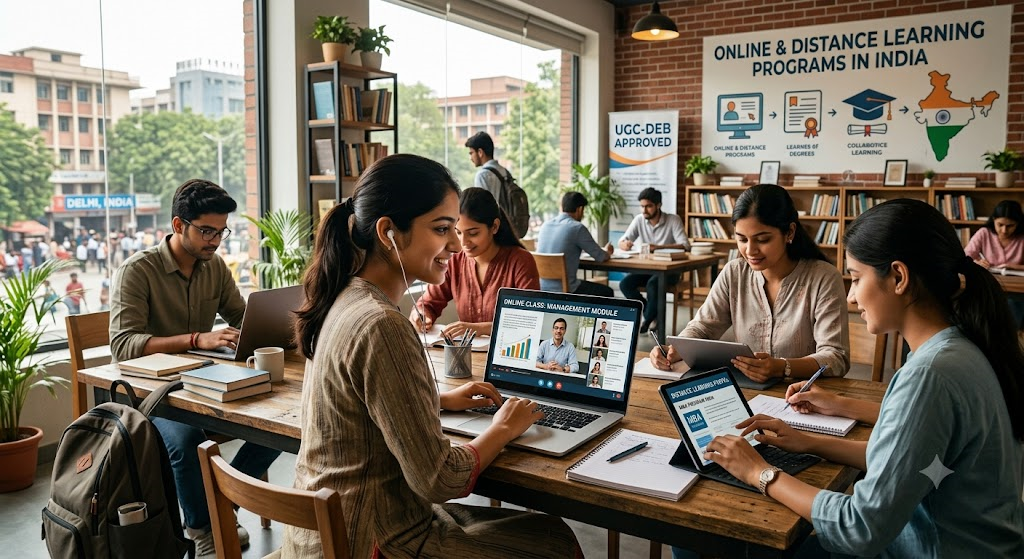

Online and distance learning have transformed the higher education landscape in India. Students no longer need to relocate or leave their jobs to earn a recognized degree. With advancements in digital technology and the growing availability of flexible learning options, thousands of students are choosing online and distance education programs to achieve their academic and professional goals.
In 2026, universities across India offer a wide range of undergraduate, postgraduate, diploma, and certificate programs through online and distance learning modes. These programs are designed to provide quality education while allowing students to balance work, family, and other responsibilities. Whether you are a working professional, a recent school graduate, or someone looking to upgrade your skills, online and distance learning can provide a convenient path to higher education.
What Is Online Learning?
Online learning is a mode of education where students attend classes through digital platforms. Lectures, assignments, study materials, quizzes, and examinations are conducted online, allowing students to study from anywhere with an internet connection.
Students can access recorded lectures, participate in live classes, submit assignments digitally, and communicate with faculty through learning management systems. Online learning provides flexibility without compromising academic quality.
What Is Distance Learning?
Distance learning allows students to pursue education without attending regular classroom sessions. Universities provide printed or digital study materials, and students study independently according to their own schedules.
Although distance education may have fewer live classes compared to online programs, students receive academic support through study centers, online portals, webinars, and examinations conducted according to university guidelines.
Why Online & Distance Learning Is Growing in India
The popularity of online and distance education continues to increase because it offers flexibility, affordability, and accessibility.
Major reasons include:
- Flexible learning schedules
- Lower tuition fees
- No relocation expenses
- Better work-life balance
- Access to quality education from anywhere
- Industry-oriented curriculum
- Digital learning platforms
- Career advancement opportunities
These advantages make online education an attractive choice for students across India.
Benefits of Online & Distance Learning Programs
Learn from Anywhere
Students can attend lectures and access study materials from home, the workplace, or while traveling. This flexibility removes geographical barriers.
Flexible Study Schedule
Most online programs allow students to study according to their own timetable, making them ideal for working professionals and homemakers.
Affordable Education
Compared to traditional campus education, online and distance programs generally involve lower tuition fees and reduced expenses related to travel, accommodation, and textbooks.
Continue Working While Studying
Professionals can upgrade their qualifications without leaving their jobs, allowing them to gain both work experience and academic credentials simultaneously.
Wide Choice of Courses
Universities offer numerous specializations in management, commerce, computer applications, arts, science, education, and more.
Better Career Opportunities
Earning an additional qualification can improve employability, support career advancement, and open opportunities in new industries.
Who Should Choose Online or Distance Education?
These programs are suitable for:
- Working professionals
- Entrepreneurs
- Business owners
- Homemakers
- Students living in remote areas
- Government employees
- Career changers
- Individuals preparing for competitive exams
- Professionals seeking promotions
- Lifelong learners interested in upskilling
Popular Online & Distance Learning Courses in India
Undergraduate Programs
- Bachelor of Business Administration (BBA)
- Bachelor of Computer Applications (BCA)
- Bachelor of Commerce (B.Com)
- Bachelor of Arts (BA)
- Bachelor of Science (B.Sc.)
These programs build foundational knowledge and prepare students for higher studies or entry-level careers.
Postgraduate Programs
Students who have completed a bachelor’s degree can choose programs such as:
- Master of Business Administration (MBA)
- Master of Computer Applications (MCA)
- Master of Commerce (M.Com)
- Master of Arts (MA)
- Master of Science (M.Sc.)
These degrees help develop specialized knowledge and enhance career prospects.
Diploma & Certificate Programs
Many universities also offer short-term programs in:
- Digital Marketing
- Data Analytics
- Artificial Intelligence
- Cybersecurity
- Finance
- Human Resource Management
- Supply Chain Management
- Business Analytics
- Project Management
These programs are useful for professionals looking to gain job-ready skills.
Eligibility Criteria
Eligibility varies depending on the course and university.
Undergraduate Programs
- Completion of Class 12 from a recognized board.
Postgraduate Programs
- A bachelor’s degree from a recognized university.
Diploma Courses
- Eligibility depends on the specific program and institution.
Students should always review the latest admission guidelines issued by the university before applying.
Admission Process
The admission process generally includes the following steps:
- Select the preferred course and university.
- Complete the online application form.
- Upload academic documents.
- Submit identity proof and photographs.
- Pay the application or admission fee.
- Wait for document verification.
- Receive admission confirmation.
- Access the student portal and begin learning.
Many universities offer fully online admissions, making the process simple and convenient.
How to Choose the Right University
Before enrolling, consider these factors:
- Recognition by relevant regulatory authorities
- Course curriculum
- Faculty expertise
- Learning platform
- Student support services
- Examination process
- Placement assistance
- Alumni reviews
- Fee structure
- Industry reputation
Choosing the right university can significantly influence your learning experience and future career opportunities.
Career Opportunities
Graduates from online and distance programs can pursue careers in various industries, including:
- Information Technology
- Banking
- Finance
- Marketing
- Human Resources
- Healthcare Administration
- Retail
- Manufacturing
- Government Services
- Education
- Consulting
- Entrepreneurship
Career opportunities depend on the student’s skills, experience, and qualifications.
Skills You Develop
Online learning helps students build valuable professional skills such as:
- Time management
- Self-discipline
- Digital literacy
- Communication
- Leadership
- Critical thinking
- Problem-solving
- Team collaboration
- Project management
- Research and analytical skills
These competencies are valuable across industries.
Challenges of Online Learning
While online education offers numerous advantages, students should also be prepared for certain challenges.
These may include:
- Maintaining self-motivation
- Managing study schedules
- Reliable internet connectivity
- Limited face-to-face interaction
- Balancing work and academics
Creating a study plan and maintaining discipline can help overcome these challenges.
Tips for Success in Online Learning
To maximize your learning experience:
- Create a dedicated study schedule.
- Attend live classes regularly.
- Complete assignments on time.
- Participate in discussions.
- Revise consistently.
- Use digital learning resources.
- Stay connected with faculty and classmates.
- Set short-term academic goals.
- Practice effective time management.
- Continuously upgrade your technical skills.
Future of Online Education in India
The future of online education in India looks promising. Universities continue to invest in advanced learning technologies, virtual classrooms, artificial intelligence, and interactive digital platforms. Employers are increasingly recognizing the value of online education when combined with relevant skills and practical experience.
As internet access expands and digital infrastructure improves, online learning is expected to become even more accessible and learner-focused. Students can expect greater flexibility, personalized learning experiences, and a wider variety of specialized programs in the coming years.
Conclusion
Online and distance learning programs have made higher education more accessible than ever before. They offer flexibility, affordability, and opportunities for students from diverse backgrounds to continue their education without disrupting their personal or professional commitments.
Whether you want to earn your first degree, pursue a master’s program, or develop specialized skills, online and distance education can help you achieve your goals. Before enrolling, compare universities, review the curriculum, understand the admission requirements, and choose a program that aligns with your career aspirations. With the right planning and dedication, an online or distance learning program can be a valuable investment in your future.