
Why a 10 Kg Pack of Multigrain Atta Serves Every Member of Your Family Differently
Most nutrition conversations treat a household as a single unit with identical needs. In reality, a family of four typically includes people at very different life stages — a parent managing blood sugar, a teenager in a growth phase, a child building bone density, and another adult trying to maintain energy through a demanding work schedule. A single flour that genuinely works for all of these profiles simultaneously is harder to find than it sounds. Multigrain atta comes close, and understanding why requires looking at what each person in a household actually needs from their daily food.
What a Multigrain Blend Actually Contains and Why It Matters
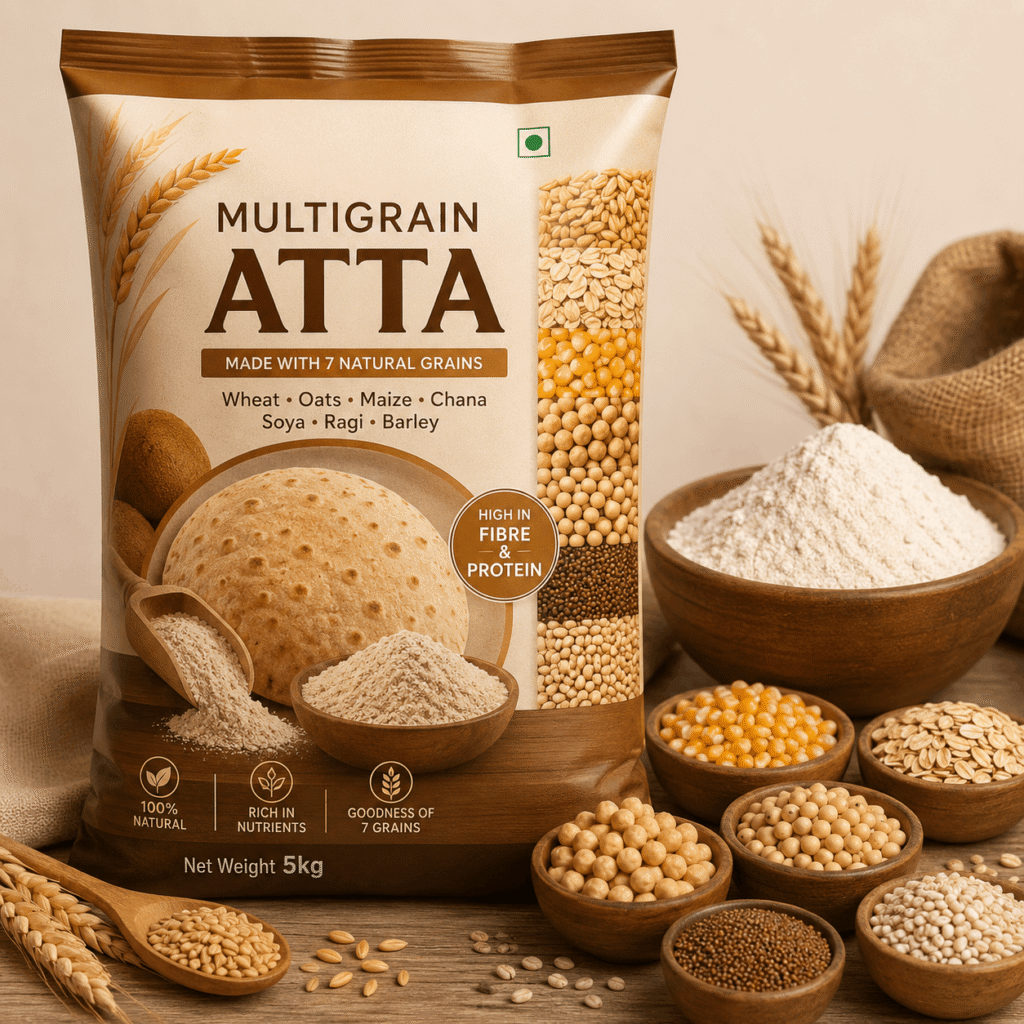
A well-formulated multigrain atta brings together several grains — typically wheat as the base, combined with millets like jowar and bajra, oats, and often a legume component like soybean or chickpea. Each of these contributes something specific. Wheat provides the gluten structure needed for rotis that hold together properly. Millets extend the glycemic response and add fibre. Oats contribute soluble fibre that supports cholesterol management and digestion. The legume component boosts plant-based protein content.
Together, an eight-grain blend produces a flour that covers nutritional ground that no single grain manages alone — which is precisely what makes it functional across different family members with different nutritional priorities.
For Adults Managing Blood Sugar
India has one of the world’s largest populations of people managing diabetes or pre-diabetic conditions, and a significant share of them are in households where food is cooked for the whole family rather than prepared individually. The challenge for this group is finding food that fits a blood sugar management approach without requiring completely separate meal preparation.
Multigrain atta addresses this directly. The combination of millets and whole grain components slows the digestion of carbohydrates compared to refined wheat flour, producing a lower and more gradual blood sugar response after meals. A roti made from a well-formulated multigrain blend does not spike blood sugar the way a refined atta roti does — and because the flour works in standard recipes, it doesn’t require the person managing blood sugar to eat separately from the rest of the household.
For Growing Children and Teenagers
Children in active growth phases need more than just carbohydrate energy. Calcium for bone development, iron for cognitive function and energy, and adequate protein for muscle and tissue growth are all genuinely important during childhood and adolescence — and all of them tend to be present in better quantities in a multigrain blend than in refined single-grain flour.
The practical advantage here is that the delivery mechanism — roti — is already familiar and accepted by most children. Switching the flour doesn’t require introducing an unfamiliar food category. The taste and texture of multigrain roti is close enough to regular roti that most children adapt without significant resistance, particularly when the switch happens gradually rather than overnight.
For Working Professionals Managing Energy Through the Day
Desk-based work creates a specific nutritional challenge — the body isn’t burning much physical energy, but the brain needs consistent fuel to maintain focus across a long working day. Refined carbohydrates produce energy quickly and drop off quickly, which contributes to the mid-afternoon energy slump that many professionals experience. High-fibre, slower-digesting grains produce a more consistent energy release that extends focus without the crash.
A multigrain atta 10 kg pack as the household’s daily flour means every roti eaten at lunch contributes to this steadier energy profile — not just for one family member but for everyone at the table. Over the course of a working week, this difference accumulates into a noticeable improvement in afternoon performance for professionals who previously relied on refined flour or processed food at lunch.
For Older Adults Focusing on Digestive Health and Nutrition Density
Adults over fifty often face a combination of nutritional challenges — reduced appetite means fewer total meals, which makes each meal’s nutritional contribution more important. Digestive systems that become more sensitive with age benefit from adequate fibre. And the risk of nutrient deficiencies — iron, B vitamins, magnesium — increases as absorption efficiency changes.
Multigrain atta works well for this demographic because it delivers more nutritional value per roti without requiring larger portions or additional supplements. The fibre content supports digestive regularity. The mineral profile from whole grain components covers gaps that refined flour doesn’t address. And because it’s the same roti that the rest of the family is eating, it doesn’t create a separate meal-planning burden for whoever is cooking.
Why the 10 Kg Format Makes Sense for All of This
A household where multigrain atta genuinely serves all of these different needs simultaneously is a household that will use it consistently rather than occasionally. The 10 kg pack is the format that enables consistent use — it’s enough flour to be the default kitchen staple rather than an addition sitting alongside the regular atta. 10on10foods offers this format in an eight-grain blend specifically because households that commit to multigrain atta 10 kg fully tend to see better outcomes than those who use it as an occasional supplement.
The Practical Bottom Line
A family doesn’t need five different flours for five different nutritional profiles. A well-formulated multigrain atta 10 kg pack handles the range of what most Indian households actually need — blood sugar management, childhood nutrition, sustained professional energy, and age-appropriate digestive support — through the same daily roti that the household was already making. That’s the practical case, and it holds up regardless of which family member you’re thinking about.