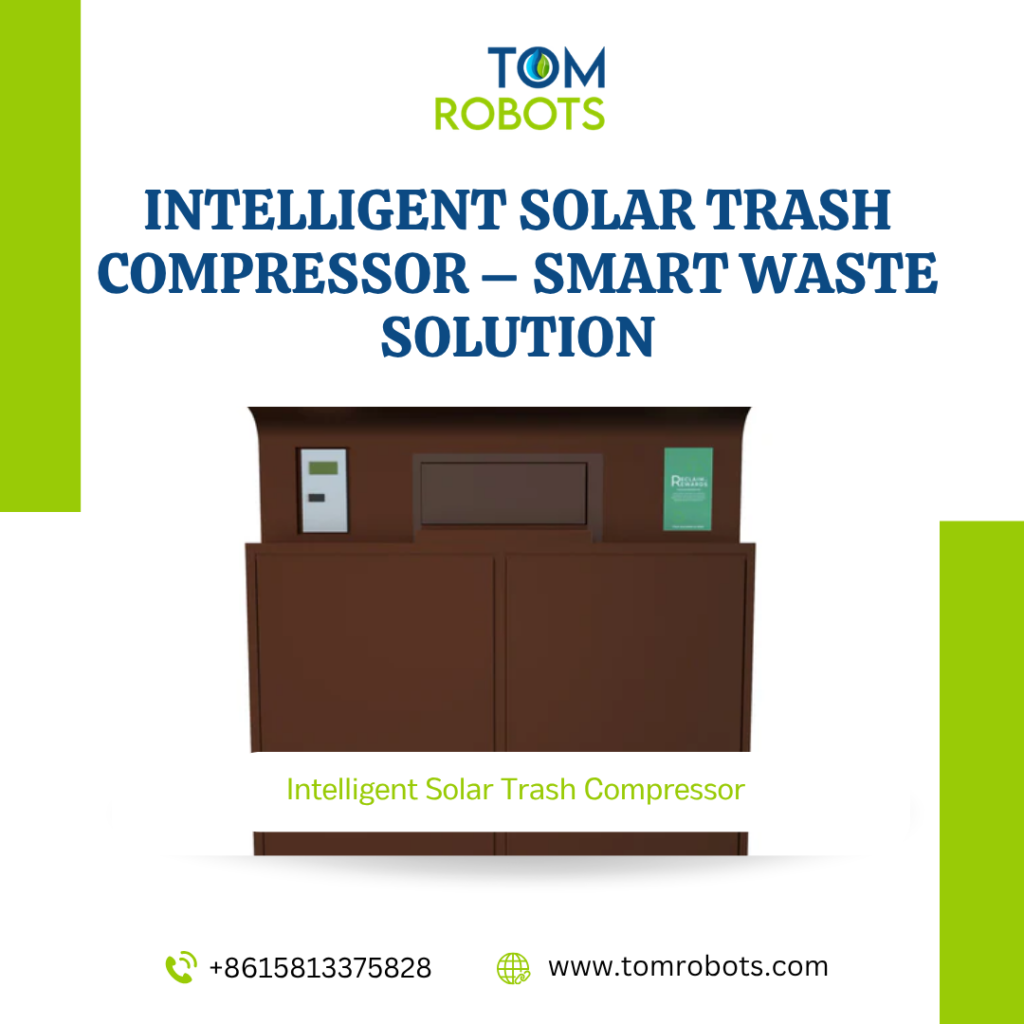

Anyone who’s managed waste in a busy public space knows it’s rarely as simple as just placing a few bins around. They fill up faster than you’d think, staff end up spending hours on pickup rounds that could go toward better things, and an overflowing bin makes the whole area look neglected, even when everything else is well kept. That’s usually the point where an Intelligent Solar Trash Compressor starts looking like the obvious answer. Still, before any organization commits to buying one, there’s a handful of things worth figuring out first. Can it keep up with how much trash actually gets generated? Will it survive outdoors through every season? Does the price make sense given what it saves down the line? A decent compactor should hold its own in parks, campuses, city sidewalks, offices, or basically any outdoor spot that sees a steady flow of foot traffic.
1. How Much Waste Are You Actually Dealing With?
This is where you start, and it helps to be honest about the real numbers rather than a rough guess. A quiet office courtyard just doesn’t produce the same amount of trash as a train station or a park packed on a Saturday afternoon. Some places see a steady trickle of waste spread across the day. Others get hit all at once, usually around lunchtime or during events.
For lighter foot traffic, a smaller unit is often enough. Busier areas call for something bigger, since it can hold far more before anyone needs to come empty it. Either way, what you’re aiming for is a match between the unit and the actual volume coming through, not a number pulled out of thin air.
Worth checking before settling on a size:
- Look at your busiest days, not the average
- Find out how often the area gets cleared right now
- Think about whether traffic shifts by season or during events
- Choose a size based on real patterns, not a guess
2. Can It Actually Handle Outdoor Conditions?
This one gets overlooked more than it should. Anything sitting outside has to deal with rain, sun beating down, wind, dust, and swings in temperature all year round. Materials that are cheaply made just don’t hold up under that kind of wear, and a compactor that starts rusting or cracking within a year isn’t really saving anyone money.
What you want is solid, weatherproof construction — built for the outdoors from the start, not something repurposed from an indoor design. Take a close look at how it seals around openings and joints, since that’s usually where moisture gets in first. Solid Outdoor Waste Compression With Solar depends entirely on this kind of build quality holding up through storms and heat without needing constant fixes.
3. Is the Solar Panel Actually Enough to Power It?
The solar panel is really the whole reason this technology works, so it has to pull its weight. A panel that’s too weak will struggle on overcast days or in areas that don’t get much direct light, which kind of defeats the purpose of going solar in the first place. It’s worth checking how much sun the actual location gets across the day, and whether there’s a battery backup for the darker stretches.
Most units under the Intelligent Solar Trash Compressor category adjust their compacting cycles based on how full the bin is, rather than running on a fixed schedule and wasting power. That efficiency ends up mattering a lot in places that don’t get consistent sunlight.
4. Does It Reduce Pickup Frequency in a Meaningful Way?
This is basically the whole reason organizations look into compactors to begin with. A regular bin fills up constantly and needs emptying several times a day in high-traffic spots. A compactor needs to actually cut that down in a real way, not just trim it slightly.
Ask directly how much waste the unit can hold before it needs emptying. Some manage five times what a standard bin holds, sometimes more. That translates into fewer pickup runs, less fuel burned on collection routes, and staff freed up for other tasks. If the difference isn’t substantial, it’s probably not worth the investment.
5. Does It Include Smart Monitoring Features?
A lot of these systems now come with sensors that track fill levels as they happen, and honestly, that’s one of the more useful additions. It means staff aren’t wasting time checking bins that are still half empty, or missing ones that are already overflowing.
Look for something that sends an alert once a bin reaches a set capacity. That kind of monitoring turns collection into a planned route rather than a guessing exercise, and that saves real time and labor over the long haul.
6. Is It Built to Handle Heavy, Repeated Use?
The small mechanical parts matter more than people usually assume. Hinges, locking systems, and the compacting mechanism itself need to survive constant use — sometimes dozens of times a day in a busy location. A weak mechanism gives out fast, and then you’re stuck dealing with repairs within months of installing it.
Ask how the compacting mechanism is actually built and what kind of lifespan to expect under heavy daily use. Solid hardware and a well-built frame usually mean years of reliable service, instead of a constant cycle of fixes and replacement parts.
7. Is the Investment, Actually Worth It Long-Term?
Cost matters, obviously, but it shouldn’t be the deciding factor on its own. A cheap unit that falls apart within a year, or barely makes a dent in pickup frequency, isn’t actually saving money — it’s just pushing the expense further down the road. A well-made solar compactor tends to pay for itself over time through less labor, fewer collection trips and lower fuel costs.
Weigh the build quality, solar efficiency, compacting capacity, and monitoring features together, rather than fixating on the price tag alone. For spaces with heavy foot traffic, the long-term savings usually make the upfront cost worth it.
Conclusion
Deciding on a solar trash compressor gets a lot more straightforward once you’ve thought through waste volume, weatherproofing, solar efficiency, pickup reduction, smart monitoring, build quality, and cost. A good unit should suit the specific demands of the space while genuinely cutting down on maintenance and collection work. It needs to hold up outdoors for years, not just a season or two, and actually lighten the load for whoever’s in charge of waste management there. Working through these questions ahead of time helps organizations land on a compactor that actually performs, instead of one that ends up broken and forgotten within a year. Tom Robots builds Outdoor Waste Compression With Solar systems around exactly this kind of reliability — solid outdoor performance, smart monitoring, and long-term value for spaces that see heavy public use.