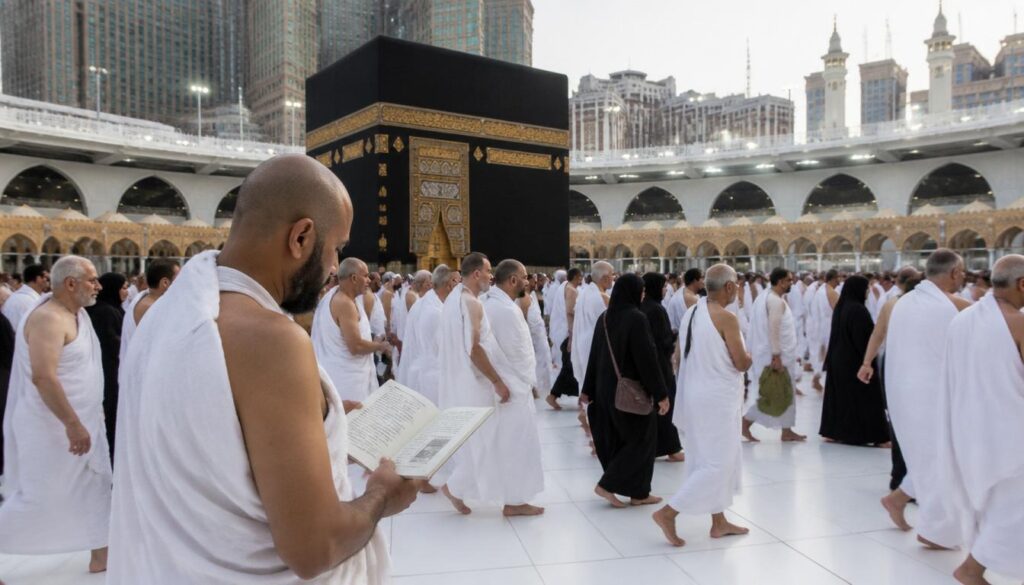

Hajj is one of the energizing and powerful pilgrimage that every Muslims must experience at-least one time in their life. It is spiritual journey that promotes brotherhood and unity by bringing millions of the Muslims from all over the world in Makkah. There is more to the Hajj than a collection of rituals. In order to focus on worshiping Allah, Muslims come together in Makkah every year pushing beyond their daily life. Hajj serve as a powerful reminder that everyone is equal before Allah. Wearing same dress and performing the same rituals, Pilgrims of all social classes, nationalities and cultures create a deep sense of equality in front of Allah. This experience is creating an atmosphere of peace, humility and a deep connection with the belief of Islam.
Islamic travel agency offers affordable 2027 Hajj packages with flights, accommodation, transportation, guided tours and sometimes meal also to the UK pilgrims.
Difference between Hajj and Umrah
Both Hajj and Umrah are sacred pilgrimages performed by Muslims in Makkah but they differ in timing, rituals and religious obligations.
- Hajj is compulsory upon every believer and perform at specific days of the years. On the other hand Umrah is an optional pilgrimage and can be performed at any time of the year.
- Hajj includes rituals which take place during specific days of Dhul Hijjah, while Umrah involves fewer acts of worship and is completed within few hours.
- Hajj, being one of the five pillars of Islam, gives it a unique status. On the other side, Umrah is an additional act of devotion carrying great reward through its own accord.
Why do Muslims go on Hajj?
- Fulfill a religious duty
- To purify the soul and seek forgiveness
- To demonstrate unity among Muslims
- Follow the path of the Prophets
- Participate in the global act of worship
- To experience a spiritual transformation
Who must perform Hajj?
Hajj becomes obligatory only once in a Muslim’s lifetime if they meet certain conditions.
To perform Hajj:
- A person must be Muslim
- Person must be an adult, means compulsory for those who have reached adulthood according to Islamic teachings
- A person must be mentally capable of understanding the purpose and rituals of Hajj
- Muslim must be physically fit to complete the rituals safely.
- Elderly people or those with serious medical conditions may postpone Hajj or appoint another person to perform on their behalf if travelling could harm their health.
- Person must have enough money to cover Hajj expense. Islam does not require a person to borrow money or place themselves under financial hardship to perform Hajj.
- There must be safety and security for the journey, if travel is dangerous for life, Hajj is not obligatory
Preparation before Hajj
Good and smart preparation help pilgrims focus on worship and ensures a soother, safer and more meaningful experience.
Things to do:
- Learn about the importance and the Hajj stages
- Attend Hajj seminars or workshops for a better understandings
- Make sure you are physically fit to meet the Hajj’s challenges
- Pack basics including first-aid, toiletries and Ihram attire
- Prepare spiritually using prayers, repentance an resolution of disputes
- Make arrangements for family and work obligations during the absence
Complete guide: Stages of Hajj
Ihram
Pilgrims begins the holy pilgrimage by entering the sacred state of Ihram at designated Miqat points.
Men wear two unstitched white clothes while women dress modestly according to Islamic teachings.
- Make the sincere and pure Niyyah
- Refrain from certain activities (Cutting nails, using perfumes, marital relations)
- Recite the Talbiyah continuously
Tawaf and Sa’i
- Pilgrims perform Tawaf after reaching the Holy Kaaba.
- Then perform Sa’i by walking seven times between the mounts of Safa and Marwah
Mina – Day of Tarwiyah (8th Dhul Hijjah)
Pilgrims travel from Makkah to Mina. Tent are or building is assigned to each pilgrims. Each camp is identified by a maktab number and this number should kept safe as it is essential for locating the camp. They spend the time here in prayer.
- Perform obligatory prayers
- Reflect an rest in preparation for Arafat
- Use the time to read Quran and engage in Dhikr
Wuquf at Arafat – The Day of Hajj
Standing at Arafat on the 9th Dhul Hijjah is the central obligatory of Hajj. If it is missed, Hajj is invalid and must be repeated.
- Standing at Arafat is known as Wuquf
- Make dua and seek mercy from Allah
- Perform Dhukr and Asr together
- This day holds great reward
Stay at Muzdalifah
After sunset, pilgrims travel to Muzdalifah.
- Pray Maghrib and Isha combined
- Sleep with millions of others under the open sky
- This is where pebbles for the stoning of Evil rituals is collected
- Engage in remembrance of Allah during the night
Collect enough quantity, it is wise to collect few extra as pebbles can be easily dropped or lost in the crowds during Rami.
Rami al Jamarat: stoning the pillars
It is a custom of stoning the devil that means the refusal of evil. Next morning, it will take place in Jamarat, Mina.
- Day 10: 7 pebbles for Jamarat al-Aqabah only
- Days 11 – 13: all three pillars are stoned in order:
- Sughra → Wusta → Kubra
Hady: the sacrifice obligation
It is referred to the animal sacrifice offered by pilgrims. Sacrifice an animal is a key obligation of Hajj.
Halq or Taqsir
Pilgrims should wait for their Hady to be completed before performing Halq or Taqsir. These acts are done after the sacrifice.
Once the hair is cut, pilgrims exit the state of Ihram and can put on regular clothes. But marital relations remain prohibited until Tawaf al Ziyaah is completed.
Tawaf al-Ifadah and farewell Tawaf
After exited the state of Ihram, pilgrims travel to Makkah to perform Tawaf al-Ziyarah. It is a major pillar of Hajj. Without it, Hajj is invalid.
The Hajj timeline (5 days)
| Day | Date | station | Main Act |
| Day 1 | 8 Dhul Hijjah
(Day of Tarwiyah) |
Mina | · Enter Mina
· pray Dhuhr to Fajr (4 prayers shortened) |
| Day 2 | 9 Dhul Hijjah
(Day od Arafat) |
Arafat | · Standing at Arafat, the heart of Hajj |
| Day 2 night | 9 – 10 Dhul Hijjah | Muzdalifah | · Sleep at Muzdalifah
· collect pebbles |
| Day 3 | 10 Dhul Hijjah
(Eid) |
Mina | · Stoning of Jamarat al-Aqaba
· Qurani; Tahallul · Tawaf and Sa’i if returning to Masjid al-Haram |
| Day 4 – 5 | 11 – 12 Dhul Hijjah
(Tashreeq) |
Mina | · Stoning of all three Jamarat each day |
| Day 6 (optional) | 13 Dhul Hijjah | Mina | · Stoning if staying for Tashreeq Day 3 |
Experts of Islamic travel agency guide about the each rituals of Hajj and gives many beneficial tips to their valued customers.