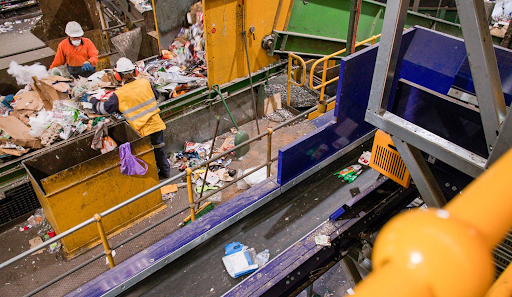

Waste management is no longer only about collecting rubbish and moving it out of sight. Modern operations are increasingly focused on recovering materials, reducing landfill dependence, improving processing efficiency, and creating cleaner streams of reusable resources. In this wider shift, recycling sorting systems have become one of the most important parts of a well-organised waste management process. They help separate mixed waste into usable categories, improve recovery rates, and support facilities that need more reliable and efficient material handling.
Why Sorting Matters in Modern Recycling
One of the biggest challenges in recycling is that waste rarely arrives neatly separated. Paper, plastics, metals, organics, and general waste are often mixed together, especially when materials come from commercial, industrial, or municipal sources. Without an effective way to separate those streams, valuable recyclables can become contaminated and much harder to process.
This is exactly why recycling sorting systems are so important. They help facilities divide mixed waste into categories based on size, weight, density, shape, or material type. Once materials are sorted more effectively, they can move into the correct downstream process instead of being lost in a mixed waste stream.
Better sorting also improves the quality of recovered materials. Clean and well-separated output is far more useful for recycling operations than mixed or contaminated material. In simple terms, the better the sorting stage, the more useful the final recovered material becomes.
What Recycling Sorting Systems Usually Include
A sorting system is rarely a single machine working alone. In most operations, it is part of a larger line made up of several pieces of equipment designed to work together. These can include conveyors, vibrating screens, magnets, air separators, manual picking stations, optical systems, shredders, balers, and other processing units.
The job of recycling sorting systems is to move waste through a planned sequence so that each type of material can be identified and separated as efficiently as possible. Larger items may be screened first, lighter materials may be separated by airflow, metals may be extracted magnetically, and specific recyclable materials may be identified later in the process.
The exact configuration depends on the type of waste being handled. A system designed for mixed municipal waste may look very different from one set up for commercial packaging waste or construction debris. This is why no single sorting layout suits every facility.
Key Benefits for Waste Operations
The biggest benefit of sorting systems is improved recovery. When more recyclable material can be separated from mixed waste, less material ends up going to landfill. That helps both the environment and the overall efficiency of the operation.
Another major benefit is better throughput. Facilities handling high waste volumes need systems that keep materials moving while reducing bottlenecks. Recycling sorting systems make this possible by creating a more organised processing flow instead of relying on slow and inconsistent handling methods.
They also help reduce contamination. A recycling stream that contains too much mixed material often becomes difficult or expensive to process. Better separation early in the system helps improve the quality of output and reduces the amount of unusable waste left behind.
There is also a labour efficiency advantage. While manual sorting still plays a role in some operations, well-designed systems help reduce dependence on slow, repetitive, and less precise manual handling alone.
Why System Integration Matters
It is important to understand that sorting equipment works best when it is part of a broader waste handling strategy. A facility may need collection points, loading systems, transfer conveyors, compaction units, shredding stages, and baling equipment in addition to the sorting line itself. This is where commercial waste equipment becomes highly relevant.
Sorting systems do not operate in isolation. They work alongside a wider group of machines and infrastructure that help waste move from arrival to separation and then to storage, compaction, or onward transport. If one part of that chain is weak, the whole process can become less efficient.
For example, even a strong sorting line may underperform if the incoming material is not fed consistently, if oversized waste is not managed properly, or if recovered materials are not compacted and stored efficiently after separation. That is why planning for waste operations should focus on the full system rather than on only one machine or one stage.
Choosing the Right Sorting Approach
Not every facility needs the same level of sorting complexity. The best setup depends on the type of waste, the volume being processed, the available floor space, staffing levels, and the purity required in the final output. Some operations need only a simple line for basic separation, while others require advanced systems capable of managing multiple waste streams at high speed.
When evaluating recycling sorting systems, it helps to think about current needs and future growth together. A system should not only handle today’s waste stream but also remain practical if volumes increase or recovery targets become more demanding over time.
Material type is another important factor. Commercial waste, mixed dry recyclables, industrial by-products, and construction waste all place different demands on equipment. Selecting the right system means understanding what is entering the line, what needs to be recovered, and how the recovered material will be used afterward.
Long-Term Value of Better Sorting
Effective sorting does more than improve day-to-day operations. Over time, it can support lower disposal costs, better recovery outcomes, and a more sustainable approach to waste handling. As environmental expectations rise and businesses become more focused on resource recovery, efficient sorting becomes even more important.
This is one reason recycling sorting systems are increasingly seen as essential rather than optional. They help facilities move away from basic disposal models and toward smarter waste management practices built around recovery, efficiency, and material value.
Conclusion
Commercial waste equipment plays a vital role in creating complete waste handling operations that move materials efficiently from collection through separation and onward processing. At the centre of that process, recycling sorting systems help improve recovery, reduce contamination, and support a more organised and effective approach to modern waste management.