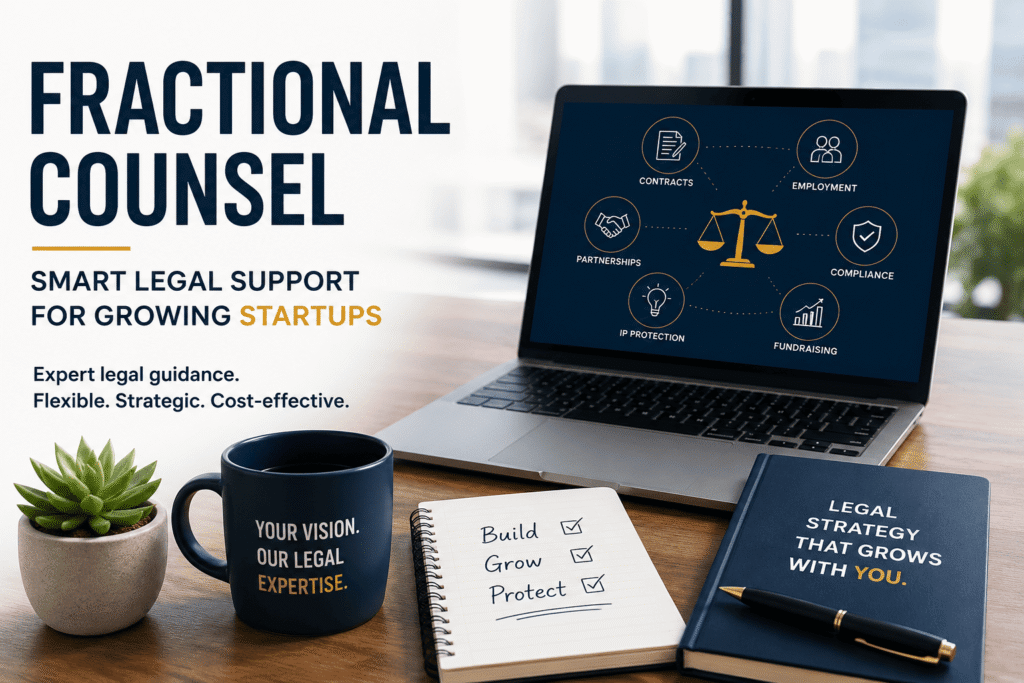

Launching a startup is exciting. Every week brings new customers, new hires, new partnerships, and new opportunities. It also brings legal decisions that can shape the future of the business.
Many founders wait until a problem appears before speaking with a lawyer. By then, fixing the issue often costs more than preventing it in the first place. That is why more founders now choose fractional counsel instead of hiring a full-time legal executive too early.
A fractional counsel provides experienced legal leadership on a flexible basis. Your business gains strategic legal guidance without taking on the salary and overhead of a permanent executive. Whether you are negotiating investment terms, reviewing customer contracts, protecting intellectual property, or preparing for expansion, the right legal partner helps you move forward with confidence.
This guide explains what fractional counsel is, when startups should hire one, how pricing works, and how to choose the right legal partner for your business.
What Is Fractional General Counsel?
Many founders ask, what is fractional general counsel?
A fractional general counsel is an experienced attorney who serves as a company’s legal advisor on a part-time or flexible basis. Instead of joining the business as a full-time employee, they work according to the company’s needs while providing strategic legal oversight.
Unlike hiring different law firms for isolated projects, a fractional counsel develops a deep understanding of your business. They learn your goals, identify legal risks before they become expensive problems, and help leadership make better business decisions.
This approach has become increasingly popular among startups and scaling businesses because it delivers executive-level legal support at a cost that matches a growing company’s budget.
Why Startups Are Choosing Fractional Counsel
Early-stage companies usually face a difficult choice.
Hiring a full-time General Counsel may be too expensive. Relying only on outside law firms can become reactive, inconsistent, and costly.
Fractional counsel fills that gap.
Instead of paying for legal advice only after problems arise, founders receive proactive guidance throughout the growth journey.
Common areas where startups benefit include:
- Commercial contracts
- Employment policies
- Customer agreements
- Vendor negotiations
- Privacy compliance
- Intellectual property protection
- Fundraising support
- Corporate governance
- Risk management
Think of it like hiring an experienced navigator before sailing into unfamiliar waters. You still captain the ship, but someone helps you avoid the rocks.
Why Fractional Counsel for Startups Makes Sense
Every startup wants to grow quickly. Speed matters.
Legal mistakes, however, have a habit of slowing everything down.
A poorly written customer agreement can delay revenue. Missing intellectual property assignments can create ownership disputes. Weak employment documentation may cause compliance issues later.
That is why fractional counsel for startups has become an attractive option.
Instead of waiting until legal issues become emergencies, startups receive ongoing guidance that keeps growth moving in the right direction.
Some of the biggest advantages include:
Better Decision Making
Founders often make legal decisions while wearing five different hats. Fractional counsel provides experienced guidance before important decisions become expensive mistakes.
Faster Contract Reviews
Sales teams hate waiting weeks for contracts.
An embedded legal advisor helps streamline contract reviews, making it easier to close deals without unnecessary delays.
Lower Risk
Good legal planning reduces surprises. Fractional counsel helps identify potential issues before they become disputes.
Business-Focused Advice
A good fractional counsel understands business priorities, not just legal rules. Their advice balances risk with practical commercial outcomes.
When Should a Startup Hire Fractional Counsel?
There is no universal timeline.
However, many businesses benefit from legal leadership once they begin experiencing consistent growth.
You should consider hiring fractional counsel if your startup is:
- Signing commercial contracts regularly
- Hiring employees
- Raising investment
- Launching new products
- Collecting customer data
- Expanding internationally
- Negotiating strategic partnerships
- Managing intellectual property
If your founder spends hours every week reviewing contracts instead of building the business, it may already be time.
Fractional General Counsel Startup California: Why Demand Continues to Grow
The phrase fractional general counsel startup California appears frequently because California remains one of the world’s largest startup ecosystems.
Technology companies in California operate in a fast-moving legal environment that includes:
- Privacy regulations
- Employment laws
- Software licensing
- Venture financing
- Intellectual property protection
Growing businesses often need sophisticated legal guidance but may not yet require a permanent in-house legal executive.
Fractional general counsel services allow these companies to access experienced commercial legal support while remaining financially flexible.
Although California is a leading market, startups across the United States increasingly adopt the same model as remote legal services become more common.
Startup General Counsel vs Fractional Counsel
Many founders wonder whether they should hire a startup general counsel or use a fractional arrangement.
The answer depends on your stage of growth.
| Startup General Counsel | Fractional Counsel |
|---|---|
| Full-time executive | Part-time strategic advisor |
| Higher annual employment cost | Flexible monthly engagement |
| Best for mature businesses | Ideal for growing startups |
| Dedicated internal resource | Executive expertise when needed |
| Long-term employment commitment | Scalable legal support |
For many early-stage companies, fractional counsel provides nearly all the strategic value without requiring a full executive salary.
As the business grows, companies may later transition to a permanent General Counsel.
Fractional General Counsel Cost: What Should You Expect?
One of the most common questions founders ask concerns fractional general counsel cost.
There is no standard price because every engagement differs.
Several factors influence pricing:
- Company size
- Industry
- Legal complexity
- Number of contracts
- Regulatory requirements
- Hours of support needed
- Experience of the attorney
Some providers charge hourly rates, while others offer predictable monthly retainers.
Many startups prefer monthly arrangements because budgeting becomes easier and founders are more likely to seek legal advice early rather than waiting until issues become urgent.
The important comparison is not simply legal fees. It is the cost of preventing problems versus solving them after they occur.
What’s the Best Fractional GC Service for Early-Stage Startups?
Founders often ask, what’s the best fractional GC service for early-stage startups?
There is no universal answer because every startup has different goals.
However, strong providers usually share several characteristics.
Industry Experience
Look for lawyers who understand startups, SaaS businesses, technology companies, or your specific industry.
Commercial Mindset
Great legal advice should support growth, not create unnecessary roadblocks.
Responsive Communication
Business moves quickly. Your legal partner should respond promptly and communicate clearly.
Transparent Pricing
Predictable billing helps founders budget more effectively.
Long-Term Partnership
The best fractional counsel becomes part of your leadership team rather than simply reviewing documents.
What Fractional Counsel Can Help You With
Legal work extends far beyond contracts.
Depending on your business, fractional counsel may assist with:
Commercial Agreements
Reviewing customer contracts, supplier agreements, licensing terms, and partnership arrangements.
Employment Matters
Preparing employment agreements, contractor documentation, workplace policies, and compliance guidance.
Corporate Governance
Supporting board meetings, shareholder matters, and corporate record keeping.
Privacy and Compliance
Helping businesses understand evolving privacy requirements and reduce regulatory risks.
Intellectual Property
Protecting trademarks, copyrights, confidential information, and ownership of company-created assets.
Fundraising Support
Reviewing investment documents and helping founders understand legal obligations during financing rounds.
Common Misconceptions About Fractional Counsel
Several myths still prevent startups from seeking legal support early.
“Legal advice is only needed after problems appear.”
Good legal guidance focuses on prevention.
“Only large companies need General Counsel.”
Growing startups often face complex legal decisions long before they become enterprise businesses.
“Outside law firms are enough.”
Traditional firms remain valuable for specialist work. Fractional counsel often coordinates that work while providing consistent strategic oversight.
“Legal support slows business.”
Experienced fractional counsel helps businesses make faster, better-informed decisions by reducing uncertainty.
How to Choose the Right Fractional Counsel
Before signing an engagement, ask practical questions.
- Have you worked with startups similar to ours?
- How do you structure pricing?
- How quickly do you respond?
- What industries do you specialise in?
- Will you coordinate with outside law firms if needed?
- How do you help founders manage legal risk?
The answers will reveal whether the relationship will feel collaborative or purely transactional.
Final Thoughts
Every growing startup eventually reaches a point where legal decisions become business decisions.
Waiting until disputes arise often costs more than building a strong legal foundation early.
Fractional counsel gives founders access to experienced legal leadership without the commitment of hiring a full-time executive. From contract negotiations and fundraising to compliance and strategic planning, the right legal advisor helps businesses grow with greater confidence.
If your company regularly signs contracts, hires employees, raises investment, or expands into new markets, it may be the right time to consider fractional counsel. A proactive legal strategy protects your business today while supporting sustainable growth tomorrow.