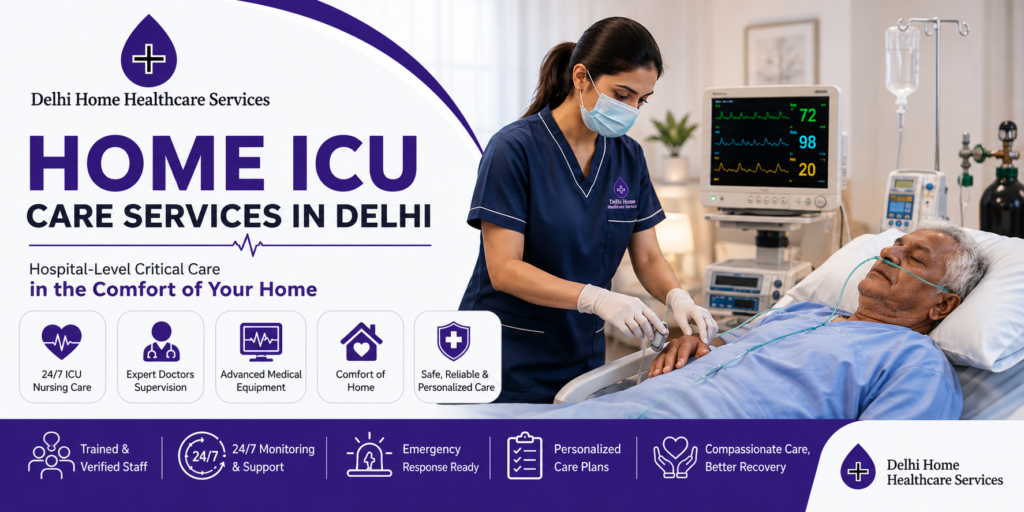

When a loved one requires intensive medical attention, families often face a difficult decision between prolonged hospital stays and quality care at home. Thanks to modern healthcare advancements, Home ICU Care Services in Delhi now make it possible to receive hospital-level critical care without leaving the comfort of home.
A professionally managed home ICU setup combines advanced medical equipment, ICU-trained nurses, experienced doctors, and personalized treatment plans to ensure patients receive continuous monitoring and expert care. For many patients recovering from major surgeries, strokes, respiratory illnesses, neurological disorders, or chronic diseases, home ICU care offers a safer, more comfortable, and emotionally supportive healing environment.
This guide explains everything you need to know about home ICU care, its benefits, who can benefit, and why families across Delhi NCR are increasingly choosing this healthcare solution.
What Are Home ICU Care Services?
Home ICU Care Services refer to the complete setup of an Intensive Care Unit inside a patient’s home. The objective is to provide the same level of clinical monitoring, nursing support, and medical equipment typically available in a hospital ICU while allowing the patient to remain in familiar surroundings.
A professionally organized home ICU generally includes:
- ICU-trained nurses available 24/7
- Regular doctor supervision
- Continuous vital sign monitoring
- Oxygen therapy
- Ventilator support (when prescribed)
- Cardiac monitoring
- Infusion pumps
- Suction machines
- Hospital beds
- Emergency response planning
With proper medical supervision, many critically ill patients can safely continue treatment at home after hospital discharge. Home-based critical care is increasingly used for patients who need long-term intensive monitoring but no longer require full-time hospitalization.
Why Families in Delhi Prefer Home ICU Care
Hospital stays can be physically exhausting and emotionally stressful for both patients and caregivers. Home ICU care offers several advantages that improve the overall recovery experience.
Familiar Environment
Patients often recover better when surrounded by family members and familiar surroundings. Being at home reduces stress and anxiety, contributing to emotional well-being.
Reduced Risk of Hospital-Acquired Infections
Extended hospital admissions increase exposure to infections. Home ICU care minimizes this risk while maintaining high clinical standards under trained medical professionals.
Personalized One-to-One Care
Unlike busy hospital ICUs where nurses care for multiple patients, home ICU care often provides dedicated nursing attention based on the patient’s medical condition.
Better Family Participation
Family members remain closely involved in the patient’s daily care, treatment decisions, and emotional support.
Cost-Effective Long-Term Care
For patients requiring prolonged ICU-level monitoring, home care may reduce several hospitalization-related expenses while maintaining quality treatment.
Who Needs Home ICU Care Services?
Home ICU care is suitable for patients with complex medical conditions requiring continuous observation but who are medically stable enough to receive treatment outside a hospital.
Common conditions include:
- Stroke recovery
- Brain injury rehabilitation
- Paralysis
- Cancer patients requiring intensive support
- COPD and chronic respiratory diseases
- Pneumonia recovery
- Ventilator-dependent patients
- Tracheostomy care
- Cardiac patients
- Organ failure recovery
- Neurological disorders
- Elderly patients requiring continuous monitoring
- Post-operative critical care
- Sepsis recovery under medical supervision
Every patient undergoes an assessment before determining whether home ICU care is clinically appropriate.
Services Included in Home ICU Care
Professional Home ICU Care Services in Delhi typically provide comprehensive medical support.
24/7 ICU Nursing Care
ICU-trained nurses continuously monitor:
- Heart rate
- Blood pressure
- Oxygen saturation
- Temperature
- Respiratory rate
- Medication schedules
- Fluid balance
They are trained to identify early warning signs and coordinate with doctors whenever immediate intervention is required.
Doctor Visits and Medical Supervision
Qualified physicians regularly review the patient’s progress, modify treatment plans, evaluate reports, and ensure that recovery remains on track.
Teleconsultations may also be arranged whenever necessary.
Advanced Medical Equipment
Depending on the patient’s condition, equipment may include:
- Multi-parameter patient monitors
- Oxygen concentrators
- Oxygen cylinders
- Ventilators
- BiPAP and CPAP machines
- Suction machines
- Nebulizers
- Infusion pumps
- Syringe pumps
- Cardiac monitors
- Hospital beds with air mattresses
These devices help replicate a hospital ICU environment safely at home.
Medication Management
Professional nurses administer medications exactly as prescribed.
This includes:
- IV medications
- Antibiotics
- Pain management
- Feeding support
- Catheter care
- Wound dressing
- Injection administration
Proper medication management significantly reduces complications during recovery.
Respiratory Care
Patients with respiratory illnesses often require specialized respiratory management.
Services include:
- Oxygen therapy
- Ventilator monitoring
- Tracheostomy care
- Airway suctioning
- Nebulization
- Respiratory physiotherapy
Nutritional Support
Recovery depends heavily on proper nutrition.
Healthcare professionals coordinate with doctors and dietitians to ensure patients receive balanced nutritional support through oral feeding, feeding tubes, or specialized diets when required.
Benefits of Professional Home ICU Care
Choosing expert home ICU services provides several long-term advantages.
Faster Recovery
Patients often feel more relaxed and comfortable at home, supporting better emotional and physical healing.
Continuous Monitoring
Round-the-clock observation allows healthcare professionals to detect changes early and respond promptly.
Improved Quality of Life
Patients maintain privacy while spending valuable time with loved ones instead of remaining isolated in hospital settings.
Personalized Treatment
Every care plan is tailored according to the patient’s diagnosis, age, medical history, and recovery goals.
Better Care Coordination
Doctors, nurses, physiotherapists, and caregivers work together to deliver integrated healthcare at home.
Conditions Managed Through Home ICU Care
Professional teams commonly manage patients with:
- Stroke rehabilitation
- Neurological disorders
- Cancer recovery
- Respiratory failure
- COPD
- Pneumonia
- Heart disease
- Kidney disorders
- Parkinson’s disease
- Alzheimer’s disease
- Trauma recovery
- Post-surgical complications
- Ventilator dependency
- Advanced elderly care
Every treatment plan is customized according to medical requirements and physician recommendations.
Why Choose Professional Home ICU Care Services in Delhi?
Selecting an experienced healthcare provider is essential for patient safety.
Look for providers that offer:
- ICU-trained nurses
- Qualified doctors
- Verified caregivers
- Hospital-grade equipment
- Emergency response support
- Transparent pricing
- Infection control protocols
- Customized treatment plans
- 24/7 patient monitoring
- Regular medical reporting
Reliable providers also ensure proper equipment installation, ongoing maintenance, and continuous communication with family members throughout the treatment period.
Safety Standards in Home ICU Care
Professional home ICU providers follow strict clinical protocols to maintain patient safety.
These include:
- Infection prevention practices
- Equipment sterilization
- Medication verification
- Continuous documentation
- Emergency escalation procedures
- Regular physician reviews
- Vital sign monitoring
- Caregiver education
Following hospital-level protocols helps maintain high-quality critical care outside traditional hospital settings.
Home ICU Care vs Hospital ICU
| Home ICU Care | Hospital ICU |
|---|---|
| Comfortable home environment | Clinical hospital setting |
| Family involvement | Limited visitation |
| Personalized one-to-one attention | Shared nursing responsibilities |
| Lower infection exposure | Higher hospital infection risk |
| Customized daily routine | Fixed hospital schedules |
| Greater emotional comfort | Higher stress for many patients |
While emergency and unstable patients still require hospital ICUs, medically suitable patients often benefit significantly from structured home ICU care under professional supervision.
Tips Before Choosing Home ICU Care
Before finalizing a provider, ask these important questions:
- Are the nurses ICU certified?
- Is medical supervision available 24/7?
- What emergency protocols are followed?
- Which medical equipment is included?
- How quickly can the ICU setup be installed?
- Are doctors available for home visits?
- Is patient progress documented regularly?
- Are caregivers background verified?
A trustworthy provider should answer these questions transparently and develop a personalized care plan before starting treatment.
Conclusion
Recovering from a critical illness requires expert medical attention, continuous monitoring, and compassionate support. Home ICU Care Services in Delhi offer families the opportunity to receive hospital-quality intensive care while allowing patients to remain in the comfort of their own homes.
With ICU-trained nurses, experienced physicians, advanced medical equipment, personalized care plans, and round-the-clock monitoring, home ICU care has become a reliable solution for many critically ill patients across Delhi NCR. By choosing a professional healthcare provider, families can ensure safety, dignity, and better recovery outcomes while reducing the emotional burden of prolonged hospital stays.
Frequently Asked Questions (FAQs)
1. What are Home ICU Care Services?
Home ICU Care Services provide hospital-level intensive medical care at home using advanced equipment, ICU-trained nurses, and doctor supervision.
2. Who can benefit from Home ICU Care Services in Delhi?
Patients recovering from stroke, surgery, respiratory illnesses, neurological disorders, cancer, or requiring ventilator support may benefit, depending on their doctor’s assessment.
3. Is home ICU care safe?
Yes. When managed by qualified healthcare professionals with proper equipment and physician supervision, home ICU care can be a safe option for medically suitable patients.
4. What equipment is included in a home ICU setup?
Equipment may include ventilators, oxygen concentrators, cardiac monitors, infusion pumps, suction machines, hospital beds, nebulizers, and multi-parameter monitors.
5. Are doctors available for home visits?
Most professional home ICU providers arrange scheduled doctor visits along with teleconsultation support when required.
6. Can ventilator patients receive care at home?
Yes. Patients requiring ventilator support may receive home ICU care if prescribed and supervised by qualified critical care specialists.
7. Is 24/7 nursing available?
Yes. Home ICU services generally include round-the-clock ICU-trained nursing support based on the patient’s medical condition.
8. How quickly can a home ICU be arranged?
Many providers can install a complete ICU setup within a few hours after medical assessment and confirmation.
9. Is home ICU care suitable for elderly patients?
Yes. Elderly patients with chronic illnesses or requiring continuous monitoring often benefit from personalized home ICU care.
10. How do I choose the best Home ICU Care Services in Delhi?
Select a provider with experienced ICU nurses, qualified doctors, hospital-grade equipment, transparent pricing, emergency support, and personalized treatment plans.
For more information about Home Nursing Services in Delhi and patient care services in delhi Please Visit : Delhi Home Health Care.