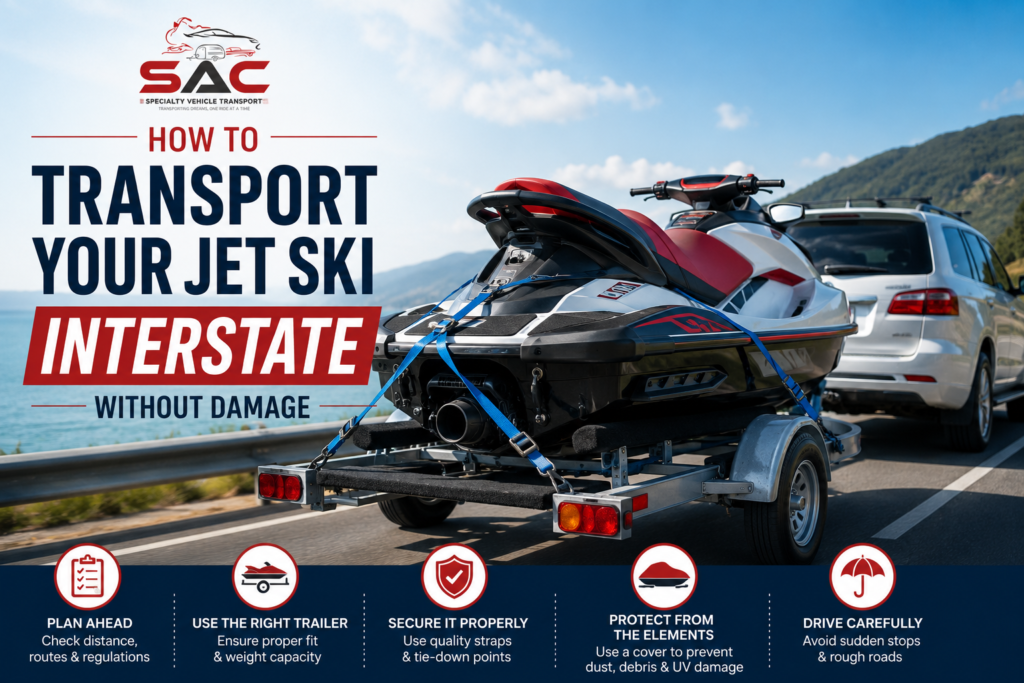

We all know jet skis don’t come at a small price. Most sit between $10,000 and $40,000+ AUD. So, when it comes to moving it from one interstate to another, you need to choose your carrier very carefully. Most damage that happens during interstate jetski transport isn’t from accidents, but actually it’s from poor loading, loose tie-downs, and using covers that weren’t properly secured at highway speeds. Getting these basics right before the carrier arrives makes the difference between a smooth delivery and a damage claim.
Drain It Before It Goes Anywhere
This is the step most people either forget or don’t know about. Fuel and water sitting inside a jet ski during transport creates two separate problems.
That residual water in the hull, maybe the engine compartment, or even the exhaust system can shift around and slosh during transit, and then you get extra, unnecessary stress as well as moisture in spots that really should stay dry. And more importantly, a lot of carriers, plus the insurance policies they use, require that the fuel tanks be empty or at least near-empty before loading. A fuel tank that’s still full on a long interstate run, that can become a compliance issue. If anything goes wrong during jetski transport and the carrier checks the situation and the tank is still full, it can mess with how a claim gets handled.
Drain the fuel to near-empty, flush the engine with fresh water if it’s been used in salt water recently, and let it dry properly before it goes on the trailer.
Secure the Cover and Check It’s Actually Fitted
A jet ski cover that’s loose or improperly fitted is worse than no cover at all during transport. Wind resistance at highway speeds can turn a loose cover into something that whips against the paintwork repeatedly over hundreds of kilometres.
If the cover fits properly and has tie-down points or straps built in, use them. If it doesn’t, secure it with additional straps rather than relying on the fit alone. A well-fitted, properly secured cover keeps road grime, debris, and UV exposure off the hull for the duration of the trip.
Understand How It’s Being Secured on the Trailer
Not all jetski transport setups are equal. A jet ski sitting on its trailer attached to an open car carrier with a couple of ratchet straps is very different from one loaded onto a purpose-built cradle inside an enclosed transporter.
The questions worth asking before booking:
- Is the transport enclosed or open?
- Is the jet ski transported on its own trailer or loaded onto the carrier directly?
- What tie-down system is used, and does it contact the hull or work through the trailer frame?
- Is comprehensive transit insurance included, or is it an optional extra?
Enclosed transport protects against road debris, weather, and the kind of minor impact damage that can happen on long interstate routes. An experienced carrier will also know how to load and secure a jet ski without the straps putting pressure on the hull or fibreglass.
Document Everything Before Pickup
Take photos from every angle like the hull, deck, seats, and the trailer itself, before the carrier arrives. Any existing scratches, chips, or stress marks should be clearly visible in the pre-transport photos.
This isn’t about distrust – it’s just good practice for any high-value item being transported interstate, like jetski transport. If something does happen in transit, clear documentation of the pre-transport condition makes the process significantly smoother.
Choose a Carrier That Handles Watercraft Regularly
A general freight carrier that occasionally takes a jet ski when nothing else fills the load is not the same as a specialist vehicle transport company with experience in recreational watercraft. The difference shows in how the equipment is loaded, how it’s secured, and what happens if something goes wrong.
SAC Transport has been moving jet skis, motorcycles, cars, and recreational vehicles across all Australian states for over 15 years – with fully enclosed carriers, comprehensive transit insurance included as standard, and door-to-door service that removes the hassle of depot coordination from the process entirely.