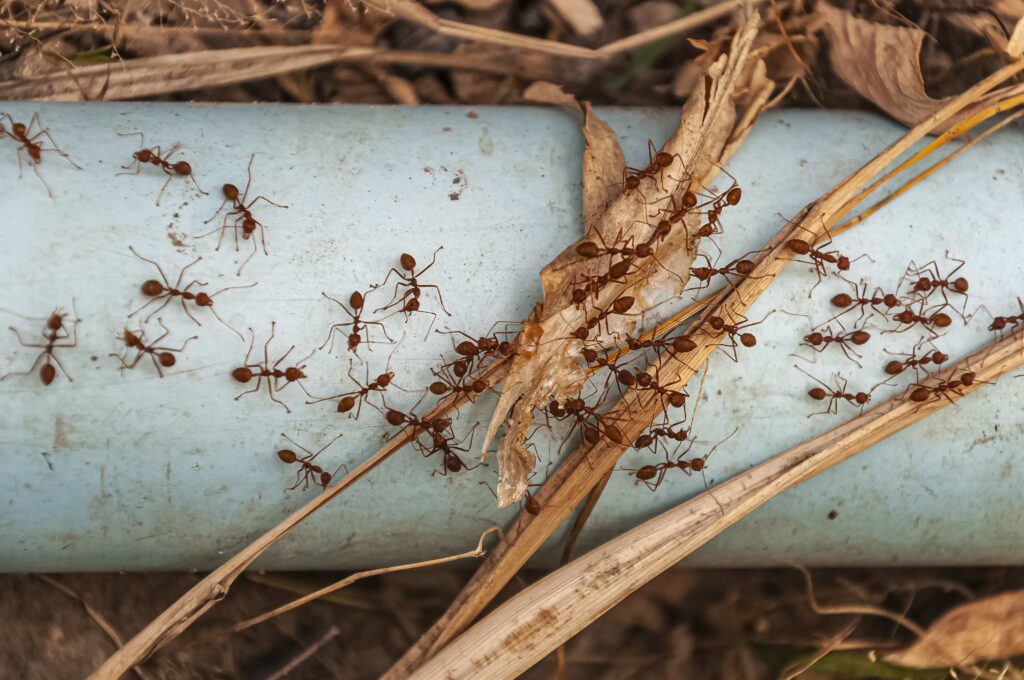

Ants rarely appear indoors by accident. In most cases, the colony is already thriving somewhere outside your home long before you spot a trail in the kitchen. Yet many homeowners blame their ant problem on crumbs, open food containers, or a dirty kitchen. The counters get wiped down, the floors get cleaned, and the ants keep returning.
Ant control professionals in Orange County consistently trace indoor infestations back to outdoor conditions that were never addressed. The yard is where the problem starts. The kitchen is just where you finally notice it.
The One Landscaping Feature That Creates the Most Ant Traffic
Mulch is the single biggest landscaping contributor to ant infestations, and most homeowners have no idea. It looks clean, it keeps weeds down, and garden centers sell it by the truckload every spring. The problem is that mulch holds moisture, stays cool, and creates exactly the kind of dark, damp environment that ants build colonies in.
Wood chip mulch pressed directly against your home’s foundation is especially problematic. Ants nest inside it, establish a colony just inches from your exterior wall, and then find the nearest gap or crack to push through.
The shorter the distance between the mulch and your foundation, the faster they get inside. Most pest professionals recommend keeping mulch at least twelve inches away from any foundation wall, but very few homeowners actually follow that rule.
Tree Branches and Shrubs Touching Your Home Are Not Just a Trimming Issue
A tree branch that rests against your roofline is not just an aesthetic problem. It is a bridge. Ants are excellent climbers, and they will travel an entire tree trunk, cross a branch, and walk straight onto your roof or into a gap near your eaves without ever touching the ground near your foundation.
Shrubs and hedges planted close to exterior walls create the same issue. They provide cover, retain moisture at the soil level, and give ants a layered, protected path to travel along your wall without exposure. When someone is trying to exterminate sugar ants and the infestation keeps returning despite indoor treatments, overgrown shrubs along the exterior are often part of the reason nobody caught.
Ground Cover Plants Are a Hidden Nesting Ground
Low-growing ground cover plants like ivy, vinca, and creeping thyme look attractive along borders and slopes. They also create one of the most ant-friendly environments possible. The dense, low canopy traps moisture underneath, blocks sunlight from drying the soil, and creates a protected layer where ant colonies can grow undisturbed for months.
The issue compounds when ground cover runs along the side of a house. Ants nest in the soil underneath, forage along the plant stems, and reach the foundation without ever crossing open ground where they would be exposed. Homeowners rarely connect the ivy bed outside to the ant trail inside, but the two are almost always related.
The Firewood Stack Problem That Comes Up Every Season
Firewood stacked against the side of a house is one of the most common ant entry contributors professionals see. It is also one of the most fixable. Wood piles create a layered, sheltered environment that holds moisture and decays slowly over time. That combination attracts carpenter ants specifically, which are larger than most species and capable of causing real structural damage as they tunnel through softened wood.
The issue is not just the wood itself. It is the location. A stack sitting directly against the exterior wall gives ants a ready-made nesting site that is already touching your home. Moving firewood at least twenty feet from the house and storing it elevated off the ground removes one of the most reliable ant entry points in residential properties.
Soil and Mulch Grading That Traps Moisture Against Your Foundation
The way your yard slopes around your home matters more than most people realize. Soil that grades toward the house, instead of away from it, channels rainwater directly against the foundation. That moisture saturates the soil, softens any wood near the base of the structure, and creates ideal conditions for ant colonies to establish close to entry points.
Professionals focused on ant exterminator services in Irvine, CA regularly identify poor grading as a contributing factor in persistent infestations. Fixing the grade is a landscaping task, not a pest control task, but it directly affects how severe and how frequent ant problems become. Here are a few grading and drainage issues that consistently make ant problems worse:
- Flower beds built up against the foundation that sit higher than the bottom of the siding, trapping moisture where wood meets soil
- Decorative rock or gravel borders placed directly against the wall, which hold heat and moisture at the base while giving ants covered travel lanes
- Downspouts that discharge water close to the foundation, keeping soil consistently wet in spots that are already near entry points
- Sunken pavers or walkways right next to the house that pool water after rain and keep the surrounding soil damp for days
Each of these conditions on its own is a minor issue. Combined, they turn the perimeter of your home into a near-perfect ant habitat.
What the Yard Is Telling You That Indoor Treatments Cannot Fix
Here is the core issue. Indoor ant treatments address what is happening inside the home. They do not change anything about why ants keep choosing your property in the first place. A yard that offers nesting sites, moisture, food sources from plants and decaying organic material, and direct physical access to the structure will keep sending ants inside regardless of how many times the interior gets treated.
This is exactly why ant control in Orange County professionals always assess the exterior before treating the interior. The yard is not a separate issue from the ant infestation. It is the source of it.
Your Yard Might Be the Reason Indoor Treatments Keep Failing
If ants keep coming back every season despite indoor treatments, stop looking at your kitchen and start looking at your landscaping. Pull mulch away from the foundation. Trim branches and shrubs that touch the exterior. Move the firewood stack. Check the grading around your home and fix anything that channels water toward the structure.
And if you have been trying to exterminate sugar ants for more than one season without results, bring in a professional who will inspect the yard, not just the inside of the house. The ant highway into your home was probably built from the outside, and that is exactly where it needs to be shut down.