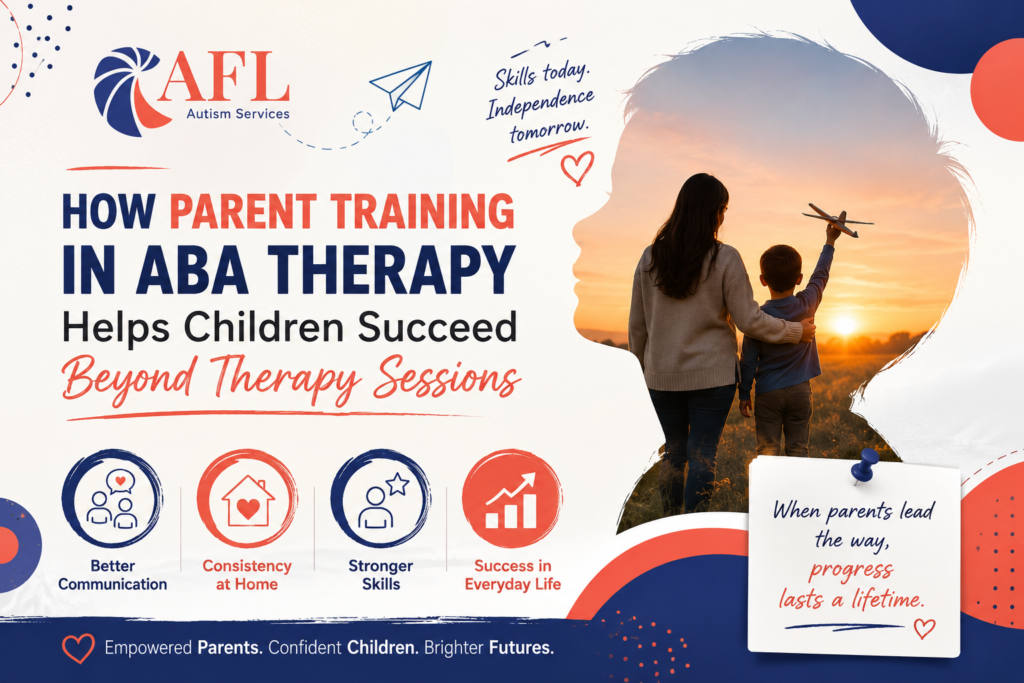

ABA therapy works best when it doesn’t stop at the end of a session. A child might learn to ask for a snack using words instead of pointing, or sit calmly through a transition, during a 45-minute visit with their therapist. But the real test comes later: at the dinner table, in the car, at a birthday party. That’s where parent training comes in.
Parent training is one of the most underrated parts of ABA therapy. It’s the bridge between what happens in a clinic and what happens in real life. When parents understand the strategies their child’s team is using, they can reinforce the same skills at home, and progress sticks.
This article breaks down what parent training actually involves, why it matters so much, and how families can use it to help their child thrive well beyond therapy sessions.
What Is Parent Training in ABA Therapy?
Parent training is a structured part of ABA therapy where a Board Certified Behavior Analyst (BCBA) teaches parents and caregivers the same strategies being used in their child’s sessions. It’s not a lecture. It’s hands-on coaching, usually built around real situations the family is already dealing with.
The purpose is simple: therapy shouldn’t live in a bubble. A child spends far more hours at home, at school, and in the community than they do in a clinic-based therapy setting. If the skills learned in therapy aren’t practiced everywhere else, progress slows down or doesn’t transfer at all.
Parents play a central role here. They’re not passive observers of their child’s treatment plan. They’re active participants who apply positive reinforcement, respond consistently to behaviors, and help their child practice communication and daily living skills in the moments that matter most.
Parent training directly supports therapy goals by making sure everyone, therapist and family alike, is using the same language and the same approach. That consistency is what turns a skill learned in a session into a skill a child actually uses.
Why Parent Involvement Matters in ABA Therapy
Creates Consistency Across Environments
Children learn faster when the response to their behavior is the same no matter who they’re with. If a therapist reinforces a calm request for help but a parent responds differently at home, the child gets mixed signals. Parent training closes that gap.
For example, if a child is learning to ask “Can I have a break?” instead of having a meltdown, that phrase needs to work at home, at grandma’s house, and at school. Parent training makes sure it does.
Strengthens Skill Development
Repetition is how skills become second nature. A BCBA might introduce a skill once or twice a week, but a parent has dozens of opportunities every day to reinforce it. That volume of practice is what turns a new skill into a lasting one.
Improves Communication
Many families come to ABA therapy specifically because communication has been a struggle. Some of these children also benefit from speech therapy alongside ABA. Parent training gives caregivers tools to understand what their child is trying to communicate, even before verbal language develops, and how to respond in ways that encourage more communication, not less.
Supports Long-Term Success
Therapy is temporary. Parenting isn’t. Kids who see the most durable progress are usually the ones whose parents kept using ABA strategies long after formal sessions ended, or reduced in frequency. Parent training is what makes that possible.
What Parents Learn During ABA Therapy Training
Positive Reinforcement Strategies
Parents learn how to notice and reward the behaviors they want to see more of, whether that’s a child using words, following instructions, or trying something new. This isn’t about bribery. It’s about timing, consistency, and knowing what actually motivates a specific child.
Communication Support Techniques
This might include how to use visual supports, how to model language, or how to prompt a child toward a fuller request instead of jumping in to meet every need before the child asks. Small changes in how a parent talks to their child can make a big difference in how quickly communication skills grow.
Managing Challenging Behaviors
Challenging behaviors usually serve a purpose, whether it’s to escape a task, get attention, or express frustration. Parents learn how to identify what’s driving a behavior and how to respond in ways that don’t accidentally reinforce it. This takes pressure off parents who’ve been guessing at what works.
Building Daily Living Skills
Getting dressed, brushing teeth, following a morning routine, these are skills many kids on the spectrum need extra support to master. Parent training breaks these routines into manageable steps and teaches parents how to prompt and fade support over time so the child becomes more independent.
Supporting Social Development
Parents also learn how to create opportunities for social interaction, whether that’s a structured playdate or simply narrating social situations as they happen. Practicing these moments at home gives children more chances to build confidence before trying them in less predictable settings.
How BCBAs Work With Parents
The relationship between a BCBA and a family is collaborative, not one-directional. A BCBA doesn’t just hand parents a list of instructions and walk away.
Coaching sessions typically involve the BCBA modeling a strategy, then watching the parent try it, then giving feedback. This kind of real-time practice helps parents feel confident rather than just informed.
Goal setting is done together. Parents know their child’s daily life better than anyone, so their input shapes which skills get prioritized. A BCBA might notice a behavior pattern in clinic data, but a parent might be the one who says “this is what’s making mornings so hard.”
Progress reviews happen regularly, giving parents a clear picture of what’s working and what needs adjusting. Home-based recommendations are tailored to the family’s actual routines and environment, not a generic template. For families who prefer support in their own home, home and community-based ABA therapy is designed around exactly this kind of everyday practice.
This individualized, two-way relationship is what makes parent training effective. It respects that parents are experts on their own child, while giving them research-backed tools to support that expertise.
Real-Life Examples of Parent Training Success
Improving Communication at Home
A young child who previously communicated only through crying learned, with the help of parent-led practice, to use a simple picture exchange system to request items. Within a few weeks of consistent home practice, the family saw fewer frustration-driven outbursts simply because the child had a new way to be understood.
Reducing Challenging Behaviors During Daily Routines
One family struggled with getting their child through the morning routine without a meltdown. After parent training focused on visual schedules and reinforcement for each completed step, mornings became noticeably calmer within a month.
Increasing Independence With Self-Care Skills
Parents coached on task analysis, breaking a skill like handwashing into small steps, helped their child go from needing full physical assistance to completing the task independently with just a verbal reminder.
Supporting Positive Social Interactions
A parent who learned how to narrate and prompt during playdates helped their child build the confidence to initiate play with peers, something that had felt impossible just months earlier.
These are the kinds of everyday wins that make the biggest difference in a family’s life, and they happen because parents were equipped to reinforce therapy strategies outside the clinic. You can read more real parent experiences on our journals and articles page.
Common Challenges Parents Face
Parent training isn’t always easy to fit into daily life. Some common struggles include:
Busy family schedules. Between work, siblings, and other responsibilities, finding time to consistently practice strategies can feel overwhelming.
Maintaining consistency. It’s hard to respond the same way every time, especially on a tough day.
Managing stress and frustration. Parenting a child with additional needs comes with real emotional weight, and that can make it harder to stay consistent with new techniques.
Applying therapy techniques correctly. Strategies that look simple when a BCBA demonstrates them can feel harder to execute in the moment.
The solution isn’t perfection. BCBAs typically encourage parents to start small, focus on one or two strategies at a time, and lean on their support team when things feel hard. Progress doesn’t require flawless execution, just consistent effort.
How Parent Training Supports Skill Generalization
A skill isn’t truly learned until a child can use it in more than one setting. This is called generalization, and it’s one of the biggest goals of ABA therapy.
A child might learn to ask for help in a quiet therapy room, but can they do the same thing in a noisy classroom or a crowded store? Skills need to be practiced across home, school, and community environments before they’re considered mastered.
Parents are uniquely positioned to support this because they’re present in so many of these environments. A BCBA can’t be at every birthday party or grocery store trip, but a trained parent can reinforce the same strategies in those moments.
This is true for communication, behavior management, and social skills alike. The more environments a skill is practiced in, the more likely it is to become a lasting part of a child’s everyday life, supporting real independence over time.
Tips for Parents to Reinforce ABA Strategies Every Day
- Use positive reinforcement consistently. Catch your child doing well and acknowledge it right away.
- Follow established routines. Predictability helps children feel secure and makes new skills easier to practice.
- Celebrate small successes. Progress in ABA therapy often comes in small steps. Recognize them.
- Track progress. Simple notes on what’s working help both parents and BCBAs adjust strategies as needed.
- Communicate regularly with the BCBA. Share what’s happening at home so therapy goals stay aligned with real life.
- Stay patient and consistent. Change takes time, and setbacks are part of the process, not a sign of failure.
For more practical strategies, our ABA therapy resource hub has additional guidance parents can use between sessions.
Frequently Asked Questions
- What is parent training in ABA therapy?
It’s a structured process where a BCBA teaches parents the same strategies used in therapy sessions, so skills can be reinforced consistently at home and in daily life. - How often do parents participate in training sessions?
This varies by family and treatment plan, but many programs include regular coaching sessions, often weekly or biweekly, alongside ongoing check-ins. - Can parent training improve challenging behaviors?
Yes. When parents understand what drives a behavior and how to respond consistently, challenging behaviors often decrease because the child’s needs are being met in more appropriate ways. - Do parents need special qualifications?
No formal qualifications are needed. BCBAs teach strategies in a practical, accessible way designed for everyday caregivers, not clinicians. - How long does it take to see results?
This depends on the child and the specific skills being targeted, but many families notice small changes within weeks, with more significant progress building over months of consistent practice. If you’re unsure whether therapy is the right next step, our autism diagnostic services page can help clarify where to start.
Conclusion
ABA therapy creates the foundation, but parents are the ones who help that foundation hold up in real life. Parent training turns therapy strategies into everyday tools, ones that support communication, reduce challenging behaviors, and build independence across every environment a child moves through.
The families who see the strongest long-term outcomes are usually the ones who stay engaged, consistent, and connected with their child’s therapy team. It’s not about being perfect. It’s about showing up, practicing what works, and celebrating progress along the way.
If you’re looking for family-centered ABA therapy that empowers parents and supports meaningful progress, Adapt For Life – AFL Autism Services is here to help. Our experienced team partners with families to build communication, social, behavioral, and daily living skills that last beyond therapy sessions. Get started today at aflaba.com or call +1 502-965-1116 to learn more.