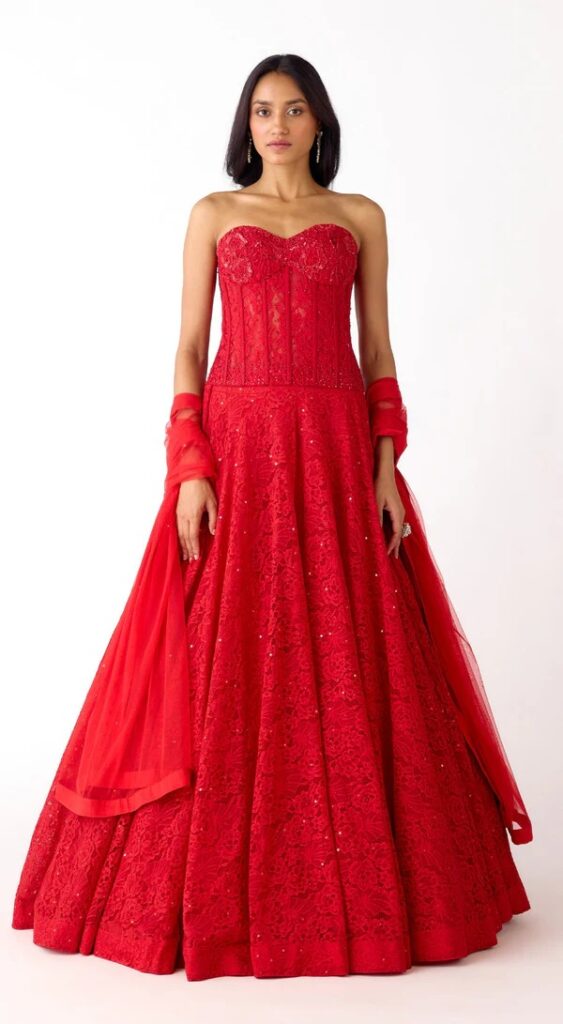

If you’ve started shopping for your wedding lehenga, you’ve likely noticed an enormous price range, from a few hundred dollars to several thousand for a single outfit. This wide spread can feel confusing, especially when two lehengas look superficially similar in photos but are priced dramatically differently. Understanding what actually drives the cost of a designer lehenga will help you budget wisely and recognize genuine value when you see it.
Fabric Quality Is the Foundation of the Price
The single biggest factor influencing the cost of any lehenga is the base fabric. Pure silk, raw silk, and high-quality velvet cost significantly more than synthetic blends like polyester georgette, both because of the raw material itself and because these fabrics require more skill to work with during construction. A designer lehenga made from genuine silk or velvet will naturally command a higher price than a similar-looking piece made from synthetic fabric, but it will also drape better, photograph more richly, and last considerably longer.
Hand Embroidery Versus Machine Work
This is often the single biggest price differentiator between two lehengas that look similar at first glance. Hand embroidery techniques like zardozi, aari work, and hand-applied sequins require skilled artisans working for days or even weeks on a single piece, while machine embroidery can replicate similar patterns in a fraction of the time. Hand-embroidered pieces command significantly higher prices because of the labor and skill involved, but they also tend to have more dimensional, textured detailing that’s difficult to replicate with machine work. If budget is a major concern, look for lehengas that combine machine-base embroidery with selective hand-finishing on focal areas like the blouse or border, which can offer a good middle ground between cost and craftsmanship.
The Complexity of the Design
A lehenga with dense, all-over embroidery covering the entire skirt, blouse, and dupatta will naturally cost more than one with embroidery concentrated only on the border and a few focal points. This isn’t just about the amount of thread and embellishment used, it’s also about the time and skill required to execute a complex, multi-layered design versus a simpler pattern. When comparing prices, consider whether you genuinely want or need maximum coverage, or whether a more strategically placed design would achieve the look you want at a lower cost.
Customization and Made-to-Measure Construction
Many designer boutiques offer fully custom, made-to-measure construction rather than standard sizing, and this naturally adds to the cost since each piece is individually cut and stitched rather than mass-produced. This is particularly relevant for styles like a corset lehenga, where the structured bodice requires precise measurements and skilled construction to fit properly. The added cost of true customization is often worth it for a bridal outfit specifically, since an ill-fitting lehenga on your wedding day is far more costly in terms of comfort and confidence than the price difference between custom and standard sizing.
Designer Reputation and Brand Value
Like any fashion category, established designers and boutiques with a strong reputation for quality and craftsmanship typically charge more than lesser-known sellers, even for pieces with similar materials and embroidery complexity. This isn’t purely about brand prestige; reputable designers have typically refined their construction techniques, quality control, and customer service over years of experience, which reduces your risk of receiving a poorly finished or inaccurately sized garment. When budget allows, working with an established designer boutique often provides more reliable peace of mind, especially when ordering internationally without the ability to inspect the piece in person beforehand.
Where You Can Reasonably Cut Costs
Not every event in your wedding weekend requires the same level of investment. It makes sense to allocate the largest portion of your budget to your main ceremony lehenga, since this is the outfit that will feature most prominently in your wedding album and carries the most cultural significance. For lighter functions like mehendi or the sangeet, you can reasonably choose less elaborate, lower-cost pieces without compromising your overall wedding aesthetic. Similarly, when outfitting your bridal party, a well-chosen bridesmaid lehenga collection at a more moderate price point allows your friends to coordinate beautifully with your look without requiring the same investment as your own bridal outfit.
Hidden Costs to Factor Into Your Budget
Beyond the listed price of the lehenga itself, factor in additional costs that often catch first-time buyers off guard: international shipping fees, potential customs duties when importing from India, alteration costs if the piece needs adjustment after arrival, and the cost of coordinating jewelry, footwear, and accessories. Building these into your budget from the start prevents unpleasant surprises later in the planning process.
How to Spot Genuine Value
When comparing lehengas across different price points, look closely at the finishing details rather than just the overall visual impact from a distance. Check the quality of the lining, whether seams are neatly finished, how securely embellishments are attached, and whether the embroidery pattern is consistent throughout. A higher price doesn’t automatically guarantee better quality, so always ask sellers for detailed close-up photos or videos before committing, particularly for higher-budget purchases.
Setting a Realistic Wedding Lehenga Budget
As a general guideline, most Indian-American brides allocate the largest single portion of their bridal wardrobe budget to their main ceremony outfit, with progressively smaller budgets for sangeet, mehendi, and reception looks if they’re choosing separate outfits for each. There’s no universally “correct” amount to spend, since the right budget depends entirely on your overall wedding budget and personal priorities, but understanding what drives lehenga pricing helps ensure you’re spending your money on factors that genuinely matter to you, whether that’s fabric quality, hand embroidery, or designer reputation.
Final Thoughts
The price of a designer lehenga reflects a combination of fabric quality, embroidery technique, design complexity, customization, and designer reputation. Understanding these factors empowers you to make informed decisions about where to invest more and where you can reasonably economize, ensuring your wedding wardrobe budget is spent thoughtfully rather than simply chasing the most expensive option available.