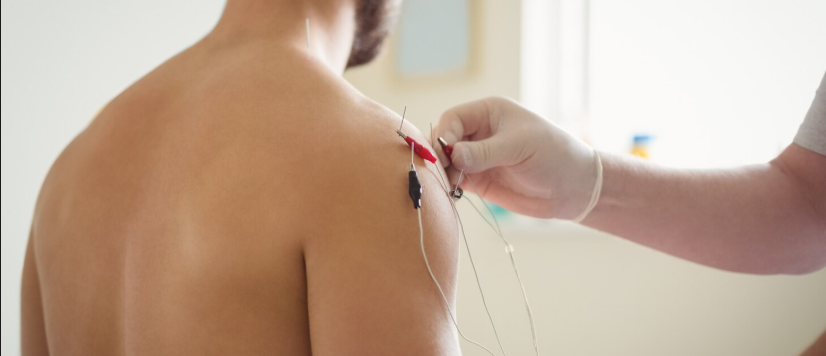

If you have ever felt a muscle “knot” that refuses to let go despite stretching, foam rolling, or massage, you are likely dealing with a myofascial trigger point. These focal points of hyper-irritability in the skeletal muscle can cause local pain, referred pain, and restricted mobility. While traditional methods address the surface, dry needling physiotherapy goes directly to the source of the mechanical dysfunction, providing a neurological “reset” for the affected tissue.
What is Dry Needling and How Does it Relieve Muscle Tension?
The Quick Answer: Dry needling is a clinical technique where thin filiform needles are inserted into myofascial trigger points to stimulate a local twitch response. This process deactivates the knot, improves local blood flow, and reduces chemical sensitivity, providing rapid relief from chronic muscle tightness and associated pain.
Many patients confuse dry needling with acupuncture because both use similar needles, but the philosophies are distinct. While acupuncture focuses on the flow of “Qi” along meridians based on Traditional Chinese Medicine, dry needling is rooted in Western anatomical and neurophysiological principles. We use it to target specific tissues that are palpably tight or causing functional deficits.
When a needle enters a trigger point, it often elicits a “local twitch response” an involuntary spinal cord reflex. This twitch is the “holy grail” of the treatment; it signifies that the muscle fiber is releasing its sustained contraction. This release allows for an immediate increase in range of motion and a significant reduction in the biochemical markers of inflammation that often pool around stagnant, tight muscle tissue.
The Primary Benefits of Targeted Dry Needling
1. Rapid Deactivation of Myofascial Trigger Points
The most immediate benefit is the mechanical disruption of the trigger point. Chronic muscle tightness is often a self-perpetuating cycle: the muscle stays contracted, which compresses local capillaries, leading to a lack of oxygen (hypoxia). This hypoxia makes the muscle even more irritable. By precisely targeting these points, we break the cycle, allowing the muscle to return to a neutral state of tension.
2. Improved Range of Motion and Flexibility
Muscle tightness isn’t just uncomfortable; it’s a thief of movement. If your hamstrings are chronically tight, your pelvis tilts, your low back compensates, and eventually, your gait changes. Dry needling removes the “brakes” on your movement. We often see patients gain significant degrees of rotation or flexion immediately following a session, which provides a window of opportunity to perform corrective exercises that were previously impossible.
3. Accelerated Recovery from Sports Injuries
For athletes, downtime is the enemy. Dry needling is frequently used to manage “overuse” injuries like tennis elbow, Achilles tendonitis, or iliotibial (IT) band syndrome. By stimulating the body’s natural healing response and increasing micro-circulation to the area, we can often shave days or weeks off a recovery timeline.
Dry Needling vs. Traditional Massage: Which is Better?
The Quick Answer: While massage therapy works “top-down” by applying pressure to surface layers of tissue, dry needling works “inside-out” by reaching deep muscular structures that manual pressure cannot access. Dry needling is often more effective for deep-seated, chronic knots, whereas massage is better for general relaxation.
| Feature | Dry Needling | Traditional Massage |
| Depth of Reach | Deep; can reach any muscle a needle can penetrate. | Limited to surface and mid-level tissue. |
| Primary Goal | Deactivating specific neurological trigger points. | Improving circulation and general tissue mobility. |
| Sensation | Brief “twitch” or dull ache; targeted. | Generalized pressure; often relaxing. |
| Recovery Time | 12–24 hours of potential “post-needle soreness.” | Minimal to no recovery time needed. |
| Precision | High; targets specific fibers within a muscle. | Moderate; treats muscle groups as a whole. |
Why “The Twitch” Matters: An Insider’s Perspective
Here is a piece of “insider” knowledge that most clinical brochures won’t tell you: The success of the treatment is often correlated with the intensity of the twitch, but the skill lies in the “quieting” of the nervous system afterward.
Many practitioners simply “poke and hope.” However, the real magic happens when we use the needle to map the referred pain pattern. Often, a patient will come in with a headache, and when we needle a specific spot in the upper trapezius, they exclaim, “That’s my headache!” That reproduction of symptoms confirms we have found the primary driver of their discomfort.
The Contrarian View: Most people think the goal is to use as many needles as possible. In our experience, “less is more.” Over-stimulating the nervous system can lead to significant fatigue. The goal isn’t to turn the patient into a pincushion; it’s to find the one master trigger point that is holding the entire kinetic chain hostage.
Addressing Chronic Pain Conditions
The Quick Answer: Dry needling is highly effective for chronic conditions like fibromyalgia, tension headaches, and chronic low back pain. It works by desensitizing the nervous system and reducing “peripheral sensitization,” where the nerves become hyper-reactive to even minor stimuli or movements.
When pain becomes chronic, the problem often shifts from the tissue to the nervous system. The brain begins to “protect” the area by keeping muscles in a state of constant, low-level contraction (guarding). This guarding creates a feedback loop of stiffness and pain.
By using dry needling physiotherapy, we provide a sensory input that is strong enough to interrupt that guarding signal. It’s essentially a “hard reboot” for your muscular system. For patients who have tried months of stretching with no luck, this shift in the neurological input is often the missing piece of the puzzle.
What to Expect During and After Your Session
If you are visiting a physiotherapy clinic in Beaumont, your session will begin with a comprehensive functional assessment. We don’t just needle where it hurts; we needle where the movement is broken.
The Procedure
- Palpation: We feel for the “taut band” in the muscle.
- Insertion: A sterile, single-use needle is inserted through the skin. Most patients feel a tiny pinch or nothing at all.
- The Response: As the needle reaches the trigger point, you may feel a deep ache or a sudden twitch. This lasts only a second.
- Post-Treatment: We often follow up with light stretching or heat to help the muscle settle.
Post-Needle Soreness
It is common to feel like you’ve done a heavy workout in the treated area for about 24 hours. This is a normal inflammatory response as the body begins to clear out the metabolic waste released from the muscle knot. Drinking plenty of water and staying mobile not sedentary is the best way to manage this.
Integrating Needling into a Total Care Plan
It is a mistake to view dry needling as a standalone “cure.” It is a powerful tool, but it is part of a larger toolkit. To ensure the muscle tightness doesn’t return, we must address the lifestyle factors or biomechanical flaws that caused the knot in the first place. This might involve ergonomic adjustments at your desk, strengthening weak antagonist muscles, or improving your hydration and sleep hygiene.
When searching for a physiotherapy clinic in Beaumont, look for providers who prioritize a “movement-first” philosophy. The needle creates the window of mobility, but the exercise you do afterward is what “saves” that progress in your brain’s movement map.
Is It Safe?
Dry needling is incredibly safe when performed by a licensed professional. Because the needles are solid and do not inject any substance, there are no risks of drug interactions or allergic reactions. The most common side effects are minor bruising or temporary soreness. For those with a needle phobia, we spend time desensitizing the area and ensuring the patient feels in total control of the pace of the treatment.
Summary of Key Benefits
- Immediate Pain Reduction: By clearing out the “chemical soup” of inflammatory markers in the muscle.
- Restored Muscle Length: Eliminating the permanent contraction of the sarcomeres.
- Neurological Regulation: Calming an overactive sympathetic nervous system.
- Improved Blood Flow: Allowing oxygen-rich blood to reach previously “choked” tissues.
- Functional Gains: Translating into better performance in the gym and daily life.
By choosing dry needling physiotherapy, you are opting for a science-based approach to musculoskeletal health. It moves beyond the “wait and see” method, offering a proactive, direct, and highly efficient way to reclaim your mobility and live without the constant nagging of muscle tightness.