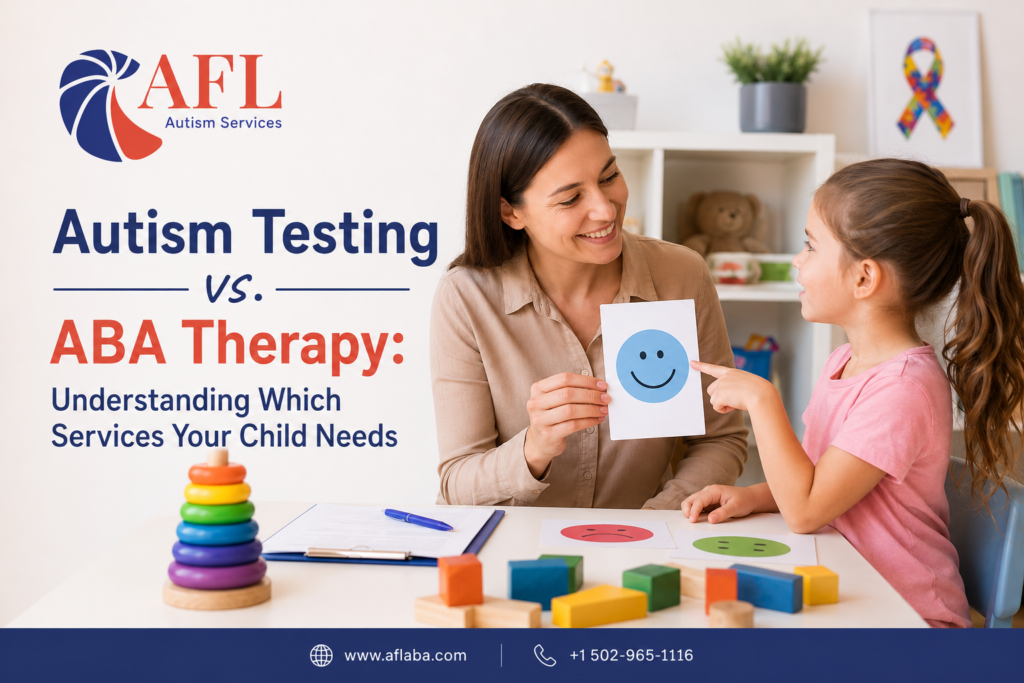

For parents navigating developmental concerns, understanding the difference between autism testing and ABA therapy can be confusing. Many families hear these terms during conversations with pediatricians, teachers, or specialists, but they serve very different purposes in a child’s care journey.
Autism testing helps identify whether a child meets the criteria for Autism Spectrum Disorder (ASD), while ABA therapy provides evidence-based support that helps children develop important life skills after concerns have been identified. Knowing when each service is needed can help families take the next step with confidence.
Whether you are seeking Autism Testing in Charlotte, Autism Testing in Wilmington, or ABA Therapy in Charlotte, Wilmington, or Orland Park, understanding these services can help you make informed decisions about your child’s future.
Understanding Autism Spectrum Disorder
Autism Spectrum Disorder (ASD) is a developmental condition that affects communication, social interaction, behavior, and learning. Autism presents differently in every child, which is why evaluations and individualized treatment plans are so important.
Some children may experience challenges with communication and social interaction, while others may have repetitive behaviors, sensory sensitivities, or difficulty adapting to changes in routine.
Early identification allows children to access support services that can help them build skills and increase independence over time.
What Is Autism Testing?
Autism testing is the process of evaluating a child’s development, behavior, communication abilities, and social skills to determine whether they meet diagnostic criteria for Autism Spectrum Disorder.
The goal of autism testing is not to provide treatment. Instead, it helps families understand what challenges their child may be experiencing and what services may be beneficial moving forward.
Why Families Seek Autism Testing
Parents often pursue an evaluation when they notice:
- Delayed speech development
- Limited eye contact
- Difficulty interacting with peers
- Repetitive behaviors
- Sensory sensitivities
- Challenges with communication
- Difficulty adapting to routine changes
While these signs do not automatically indicate autism, they may suggest the need for a professional assessment.
What Happens During an Autism Evaluation?
A comprehensive autism evaluation often includes several components designed to create a complete picture of a child’s development.
These may include:
Parent Interviews
Clinicians gather information about developmental milestones, behaviors, communication skills, and family concerns.
Behavioral Observations
Specialists observe how the child interacts, communicates, plays, and responds to different situations.
Developmental Assessments
Standardized tools help evaluate areas such as:
- Communication
- Social skills
- Cognitive abilities
- Adaptive functioning
- Behavioral patterns
Diagnostic Recommendations
Following the evaluation, families receive feedback, findings, and recommendations for next steps.
The results help determine whether autism is present and whether services such as ABA therapy may be beneficial.
Autism Testing Services in Charlotte and Wilmington
Families searching for Autism Testing Charlotte NC often want clear answers regarding their child’s development. A professional evaluation can provide valuable insights while helping parents understand available treatment options.
Similarly, families seeking Autism Testing Wilmington NC can access diagnostic services designed to identify developmental differences and guide future care decisions.
For many parents, receiving an evaluation is the first step toward obtaining the support their child needs to thrive.
Learn more about autism testing and support services:
Charlotte:
https://aflaba.com/charlotte/
Wilmington:
https://aflaba.com/wilmington-nc/
What Is ABA Therapy?
Applied Behavior Analysis (ABA) therapy is an evidence-based treatment approach commonly used to support children with autism.
Unlike autism testing, ABA therapy focuses on helping children learn and strengthen skills that improve their daily lives.
ABA therapy is highly individualized and based on each child’s unique strengths, challenges, and goals.
What Skills Does ABA Therapy Help Develop?
ABA therapy can support children in many areas, including:
Communication Skills
Children learn effective ways to express needs, wants, and emotions.
Social Skills
Therapy helps children develop appropriate social interactions with family members, peers, teachers, and community members.
Daily Living Skills
Programs may focus on:
- Dressing
- Eating independently
- Following routines
- Personal hygiene
- Organizational skills
Emotional Regulation
Children learn strategies to manage frustration, transitions, and challenging situations.
Academic Readiness
Many ABA programs help children build skills needed for success in educational settings.
ABA Therapy Services in Charlotte
Families seeking ABA Therapy Charlotte NC often look for personalized programs designed around their child’s specific developmental goals.
Therapy programs may focus on:
- Communication development
- Social engagement
- Daily living skills
- Emotional regulation
- School readiness
Experienced BCBAs oversee treatment plans and monitor progress to ensure therapy remains individualized and effective.
ABA Therapy Services in Wilmington
Families searching for ABA Therapy Wilmington NC benefit from access to both diagnostic services and therapeutic support.
This continuity allows families to move smoothly from evaluation to treatment while maintaining a coordinated approach to care.
ABA therapy can help children build meaningful skills that support success at home, school, and within the community.
ABA Therapy Services in Orland Park
Families seeking ABA Therapy Orland Park often want evidence-based support that focuses on practical skill development.
Children participating in therapy may work on:
- Communication
- Social interaction
- Independence
- Self-help routines
- Positive behavior support
Parents looking for ABA Therapy for Children Orland Park frequently value collaborative treatment approaches that include family involvement and ongoing progress reviews.
Learn more about Orland Park services:
https://aflaba.com/orland-park/
How Do Parents Know Which Service Their Child Needs?
Many families are unsure whether to pursue autism testing, ABA therapy, or both.
In general:
Autism Testing May Be Appropriate If:
- Developmental concerns are present
- No formal diagnosis exists
- Parents are seeking answers
- Teachers or healthcare providers recommend an evaluation
ABA Therapy May Be Appropriate If:
- A diagnosis has already been received
- Developmental challenges have been identified
- Children need support building specific skills
- Families want structured, evidence-based intervention
In many cases, autism testing is the first step, followed by ABA therapy based on evaluation results.
Why Early Action Matters
Research consistently shows that early intervention can improve outcomes for children with autism.
Benefits of early support may include:
- Improved communication
- Enhanced social skills
- Greater independence
- Better school readiness
- Increased confidence
- Stronger family routines
The sooner families access appropriate services, the more opportunities children have to develop important lifelong skills.
The Importance of Parent Involvement
Parents are essential members of the care team.
Parent training programs help families:
- Reinforce skills at home
- Support communication development
- Encourage independence
- Navigate challenging situations
- Maintain consistency across environments
When therapists and parents work together, children often experience stronger and more lasting progress.
Frequently Asked Questions
Is autism testing the same as ABA therapy?
No. Autism testing identifies whether developmental concerns are present, while ABA therapy provides treatment and skill-building support.
Can a child receive ABA therapy without autism testing?
Treatment recommendations depend on individual circumstances, but a professional evaluation is often the starting point.
How long does autism testing take?
The timeline varies depending on the assessment process and individual needs.
What age should a child be evaluated?
Parents should seek professional guidance whenever developmental concerns arise, regardless of age.
Is ABA therapy effective?
ABA therapy is one of the most researched and widely recognized interventions for children with autism.
Schedule a Consultation
Understanding the difference between autism testing and ABA therapy can help families make informed decisions about their child’s care. Whether you’re seeking diagnostic services in Charlotte or Wilmington or exploring ABA therapy options in Charlotte, Wilmington, or Orland Park, taking action early can make a meaningful difference.
AFL’s experienced team is committed to helping families access compassionate, individualized support every step of the way. Schedule a consultation to learn more about available services and the best path forward for your child.