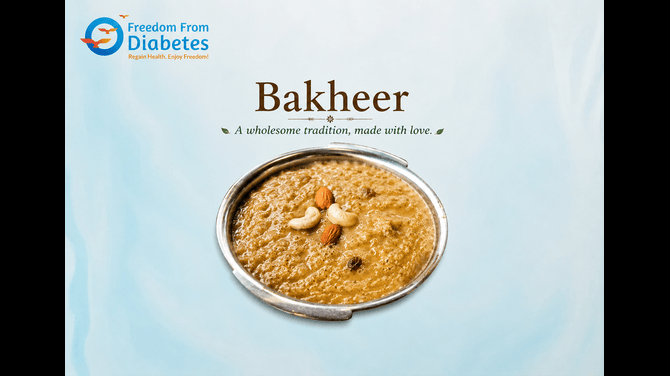

Bakheer, also known as Gud Chawal Ki Kheer, is a traditional North Indian dessert that holds a special place during festive celebrations such as Dussehra, Ram Navami, and other family gatherings. This comforting sweet dish is traditionally prepared using rice, jaggery, and milk, creating a rich, creamy texture and naturally sweet flavor that many people cherish.
However, if you are trying to manage diabetes or maintain healthy blood sugar levels, the traditional version may not always be the best choice. Since it contains jaggery and rice, it can contribute to a higher carbohydrate load and may cause blood sugar spikes when eaten in large portions.
The good news is that with a few thoughtful ingredient swaps, you can enjoy the same festive flavors in a healthier way. This FFD-style Bakheer recipe uses brown rice, vegan milk, dates paste, and stevia to create a delicious dessert that is more suitable for people who want to make mindful food choices without missing out on traditional treats.
Is Bakheer Good for Diabetes?
One of the most common questions during festive seasons is whether people with diabetes can enjoy traditional sweets. The answer depends on the ingredients used and portion size.
Traditional Bakheer is made with jaggery, which is often considered healthier than refined sugar. However, jaggery still contains carbohydrates that can increase blood glucose levels. Similarly, white rice has a relatively high glycemic impact, especially when consumed in larger quantities.
This healthier version aims to reduce that impact by making a few important modifications:
- Brown rice is used instead of polished white rice.
- Dates paste provides natural sweetness along with some fiber and nutrients.
- Stevia adds sweetness without adding sugar.
- Vegan milk serves as a dairy-free alternative.
- Dry fruits add texture and flavor while enhancing the nutritional profile.
While no dessert should be consumed excessively, this modified recipe can be a better option for individuals who are working toward improved blood sugar management.
Why This Healthy Bakheer Recipe Works
This recipe focuses on balancing taste and nutrition without compromising the traditional essence of the dish.
Brown rice contains more fiber than refined white rice because it retains its bran layer. Fiber helps slow digestion and may support a more gradual rise in blood sugar levels after meals.
Dates paste contributes natural sweetness and provides small amounts of minerals and antioxidants. When combined with stevia, it helps reduce the need for large quantities of added sweeteners.
Vegan milk makes the recipe suitable for those who prefer plant-based options or wish to reduce dairy consumption. Depending on the variety chosen, vegan milk can also be lower in saturated fat compared to full-fat dairy milk.
The addition of cardamom, raisins, and roasted cashews gives the dessert a rich aroma and festive flavor, making it feel indulgent while using healthier ingredients.
Recipe Details
| Information | Details |
|---|---|
| Course | Dessert |
| Cuisine | North Indian |
| Preparation Time | 15 minutes |
| Cooking Time | 25–30 minutes |
| Servings | 4 |
Ingredients
- 1 cup brown rice
- ¼ cup thick dates paste
- Few drops stevia
- ½ tsp green cardamom powder
- 1 tsp raisins
- 2 tbsp cashew nuts
- 2 cups vegan milk
- 1 cup water
Method
Step 1: Prepare the Rice
Wash the brown rice thoroughly and soak it in water for some time. Soaking helps improve texture and reduces cooking time.
Step 2: Pressure Cook
Drain the soaking water and transfer the rice to a pressure cooker. Add the dates paste and water. Cook for 4–5 whistles until the rice becomes soft and well-cooked.
Step 3: Mash the Rice
Allow the pressure to release naturally. Once cooled slightly, gently mash the rice using the back of a spoon. This helps create the creamy consistency associated with traditional kheer.
Step 4: Prepare the Milk Base
In a separate vessel, add the vegan milk and water. Bring the mixture to a gentle boil and then switch off the flame.
Step 5: Roast the Dry Fruits
Heat a kadhai and dry roast the cashews and raisins until they become lightly golden and aromatic.
Step 6: Combine Everything
Add the vegan milk mixture, roasted dry fruits, stevia, and cardamom powder to the cooked rice. Mix well until all ingredients are evenly combined.
Step 7: Final Cooking
Cook the mixture for a few minutes on low heat, stirring occasionally. This allows the flavors to blend beautifully and creates a smooth, rich texture.
Step 8: Serve
Serve warm and enjoy this comforting festive dessert. You may also chill it in the refrigerator and serve it cold if preferred.
Nutritional Benefits of Key Ingredients
Brown Rice
Brown rice contains fiber and essential nutrients that are largely removed during the processing of white rice. The additional fiber can help improve satiety and support digestive health.
Dates Paste
Dates offer natural sweetness along with small amounts of potassium, magnesium, and antioxidants. Using dates paste can reduce the need for refined sweeteners.
Vegan Milk
Plant-based milk provides a dairy-free option and can be incorporated into a variety of healthy dessert recipes.
Cardamom
Cardamom adds a distinctive aroma and flavor while enhancing the traditional taste of kheer without adding calories.
Summary: Healthy Bakheer Recipe for Diabetes
Bakheer is a beloved North Indian rice pudding traditionally made with jaggery and milk. This healthier version transforms the classic recipe by using brown rice, vegan milk, dates paste, and stevia, making it a more diabetes-friendly alternative. The result is a delicious, creamy, and festive dessert that allows you to enjoy traditional flavors while making healthier choices.
Whether you’re celebrating a festival or simply craving something sweet, this nutritious Bakheer recipe offers a balanced way to enjoy a classic Indian dessert without excessive sugar.
Want to try more delicious diabetes-friendly recipes? Explore our recipe blog for healthy desserts, snacks, and meal ideas designed to support better blood sugar management.
Want to try delicious diabetes-friendly recipes? Check out our recipe blog.
https://www.freedomfromdiabetes.org/blog/recipes