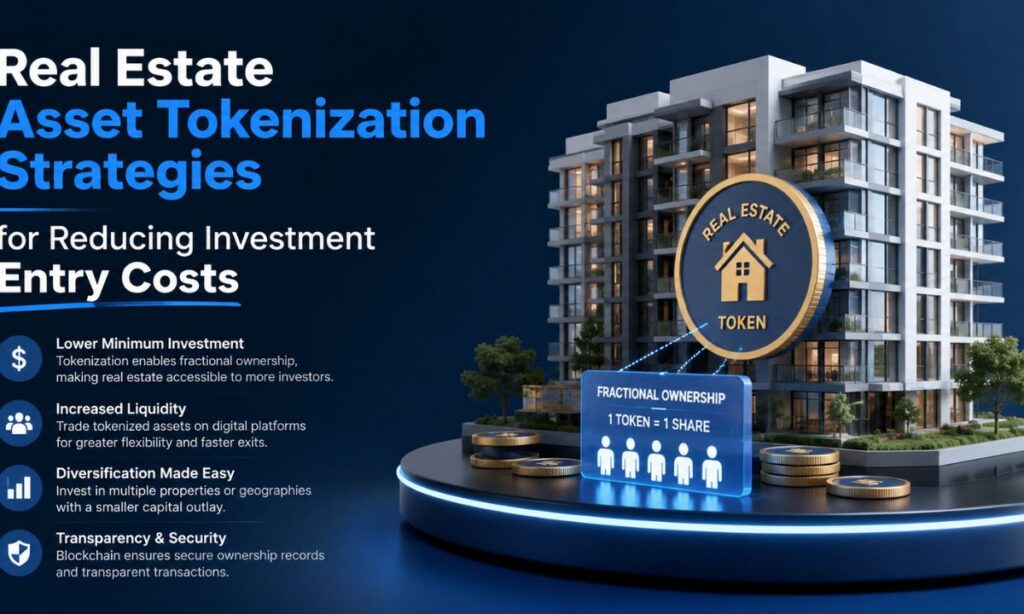

For decades, real estate has remained one of the most attractive investment sectors for wealth creation and portfolio diversification. Despite its popularity, property investment has often been limited to individuals and institutions with substantial financial resources. High property prices, large down payments, legal expenses, and transaction costs have traditionally prevented many potential investors from entering the market.
The emergence of real estate asset tokenization is changing this situation by introducing new ownership structures that divide property assets into smaller digital units. Instead of purchasing an entire building or a significant ownership share, investors can acquire fractions of real estate assets through blockchain-based tokens. This approach lowers financial barriers and broadens participation across different investor groups.
As property markets continue to evolve, businesses and developers are increasingly adopting Real Estate Tokenization models that make investments more accessible while creating new fundraising opportunities. These strategies are becoming particularly relevant in 2026 as investors seek efficient ways to participate in real estate markets without committing large amounts of capital.
Understanding Real Estate Asset Tokenization
Real estate asset tokenization refers to the process of converting ownership rights of a property into digital tokens recorded on a blockchain network. Each token represents a fractional interest in the underlying real estate asset.
Rather than requiring investors to purchase a complete property, tokenization divides ownership into multiple units that can be purchased individually. This fractional ownership approach significantly reduces minimum investment requirements.
For example, a commercial property valued at $10 million can be divided into thousands of tokens. Investors may purchase a small percentage of the asset rather than committing millions of dollars. This creates opportunities for broader market participation while providing property owners with access to a larger investor base.
Many organizations work with a Real Estate Tokenization company to establish compliant token structures, investor onboarding procedures, and digital asset management systems.
Why Traditional Real Estate Investments Have High Entry Costs
To understand how tokenization reduces investment costs, it is important to examine the factors contributing to traditional real estate investment barriers.
Property acquisition generally requires substantial upfront capital. Investors often need large down payments, legal consultation, due diligence expenses, registration fees, brokerage commissions, and financing costs.
Commercial properties typically demand even greater financial commitments. Participation is often restricted to institutional investors, private equity firms, or high-net-worth individuals capable of managing large transactions.
In addition, diversification becomes difficult when significant capital is concentrated in a single property. Investors with limited resources may struggle to spread risk across multiple real estate assets.
These challenges have historically limited access to real estate investment opportunities for a large segment of potential investors.
Fractional Ownership as a Cost Reduction Strategy
One of the most effective strategies within real estate asset tokenization is fractional ownership.
Fractional ownership divides a property into smaller investment units represented by digital tokens. Investors purchase only the number of tokens that align with their budgets and investment goals.
Instead of requiring $100,000 or more to participate in a property investment, tokenized structures may permit investments of a few hundred dollars or less, depending on regulatory requirements and project design.
This approach opens opportunities for retail investors who previously could not access premium real estate assets. It also allows investors to gradually increase their holdings over time rather than making a large one-time commitment.
Many Real Estate Tokenization Services focus specifically on creating fractional ownership frameworks that attract broader investor participation while maintaining regulatory compliance.
Reducing Intermediary Expenses
Traditional real estate transactions often involve multiple intermediaries, including brokers, escrow providers, legal representatives, title agencies, and administrative service providers.
Each participant contributes to the overall transaction cost. In large property transactions, these fees can become substantial.
Tokenized property structures introduce digital ownership records that simplify many administrative procedures. Automated ownership tracking and digital transaction management reduce operational complexity associated with traditional paper-based systems.
Although legal and compliance requirements remain important, certain administrative processes become more efficient. As a result, investors may face lower participation costs compared with conventional property investment structures.
Organizations specializing in real estate tokenization development frequently focus on reducing administrative burdens while maintaining proper governance and investor protections.
Expanding Access Through Smaller Investment Thresholds
Investment minimums often determine who can participate in a property offering. High thresholds limit participation and reduce market accessibility.
A practical strategy for lowering entry costs involves creating token structures with small investment denominations. This allows investors from different financial backgrounds to participate in opportunities that were previously unavailable.
Smaller investment thresholds encourage broader market engagement and increase liquidity potential within tokenized ecosystems. Property owners also benefit from access to larger pools of investors.
Many projects supported by a Real Estate Tokenization Development company are specifically designed to lower minimum investment requirements while complying with applicable securities regulations.
Portfolio Diversification With Limited Capital
Diversification remains one of the most important principles in investment management. However, traditional real estate often requires significant capital for each property acquisition.
Tokenized assets allow investors to allocate funds across multiple properties instead of concentrating resources in a single asset.
For example, an investor with $10,000 may spread capital across residential developments, commercial properties, hospitality assets, and industrial facilities located in different regions.
This diversification strategy reduces concentration risk and creates opportunities for balanced portfolio construction without requiring substantial investment capital.
As a result, investors gain exposure to various property sectors while maintaining manageable financial commitments.
Global Investor Participation
Geographical restrictions have historically limited access to many real estate opportunities. International investors often encounter complex legal procedures, banking challenges, and administrative hurdles when investing in foreign properties.
Real estate asset tokenization introduces digital ownership structures that simplify cross-border participation within applicable regulatory frameworks.
Property developers can reach investors from multiple countries without relying solely on local funding sources. Investors gain access to opportunities that may have previously been inaccessible due to location-based limitations.
This broader investor reach contributes to more competitive fundraising environments and increases opportunities for participation at lower investment levels.
Many firms offering Real Estate Tokenization Development Services focus on establishing compliant international investment frameworks that support broader market access.
Increasing Liquidity Opportunities
Real estate has traditionally been considered an illiquid asset class. Selling property ownership often requires lengthy processes involving negotiations, legal reviews, and transaction approvals.
Limited liquidity can increase investment risk because investors may struggle to access capital when needed.
Tokenized ownership structures introduce secondary market possibilities where eligible investors may buy and sell ownership interests more efficiently than traditional property transactions.
Improved liquidity encourages participation from investors who might otherwise avoid long-term capital commitments. Lower liquidity risk can make real estate investments more appealing to a wider audience.
Although liquidity levels vary depending on regulations and market conditions, tokenization provides new pathways for ownership transfer compared with conventional property markets.
Using Digital Platforms to Reduce Operational Costs
Technology infrastructure plays a significant role in reducing investment entry costs.
Real Estate Tokenization Platform Development focuses on creating digital environments where investor onboarding, ownership tracking, compliance monitoring, reporting, and transaction management occur within a unified system.
Centralized digital operations reduce paperwork and administrative overhead while improving accessibility for investors.
Digital platforms also simplify communication between issuers and investors, making investment participation more convenient and cost-effective.
As platform capabilities continue to improve, operational savings can contribute to lower participation costs for both property owners and investors.
Structuring Real Estate Investment Funds Through Tokenization
Investment funds have long been used to pool investor capital for property acquisitions. Tokenization introduces new approaches to fund structuring that reduce minimum participation requirements.
Rather than requiring large commitments, tokenized funds can distribute ownership through digital units that represent proportional interests in diversified property portfolios.
This strategy allows smaller investors to gain exposure to professionally managed real estate investments without substantial capital commitments.
Fund managers also benefit from broader investor participation and more efficient capital formation processes.
Many Real Estate Tokenization company providers support tokenized fund structures that appeal to both retail and institutional participants.
Democratizing Access to Premium Properties
Prime commercial buildings, luxury developments, and institutional-grade assets have traditionally been beyond the reach of average investors.
Tokenization creates opportunities for shared ownership of high-value properties through fractional investment structures.
Instead of purchasing an entire office building or luxury residential development, investors can acquire smaller ownership interests aligned with their financial capabilities.
This democratization of access helps reduce wealth concentration within real estate markets while creating broader participation opportunities.
As a result, investors gain exposure to premium assets without requiring extraordinary levels of capital.
Efficient Capital Formation for Developers
Property developers often face fundraising challenges when financing large projects. Traditional financing methods may involve lengthy negotiations with banks, private investors, or institutional funding sources.
Tokenized fundraising introduces alternative approaches that attract a wider range of participants.
By dividing ownership into digital tokens, developers can secure capital from numerous investors rather than relying on a limited number of funding partners.
This approach can reduce fundraising constraints while creating investment opportunities with lower entry costs.
The growing demand for real estate asset tokenization reflects increasing interest in more inclusive property financing models.
Regulatory Compliance and Investor Confidence
Lower investment thresholds must be supported by strong compliance frameworks. Regulatory oversight remains important for protecting investors and maintaining market integrity.
Successful tokenization projects incorporate identity verification procedures, investor qualification requirements, disclosure standards, and governance structures.
Compliance-focused strategies help build confidence among investors while supporting sustainable market growth.
Organizations providing Real Estate Tokenization Services often collaborate with legal experts and regulatory advisors to establish compliant investment environments that balance accessibility with investor protection.
Technology Infrastructure Supporting Cost Reduction
Blockchain networks provide the technological foundation for tokenized real estate ecosystems. Digital ownership records reduce duplication, simplify transaction tracking, and support efficient asset management.
Smart contract technology can automate specific administrative functions associated with ownership transfers, distributions, and investor communications.
While technology alone does not eliminate all costs, it contributes to more efficient operational processes that support lower investment barriers.
Businesses investing in real estate tokenization development continue to focus on improving platform usability, security, and compliance capabilities to support broader adoption.
Future Outlook for Affordable Real Estate Investing
The real estate industry continues to move toward more accessible investment models. Tokenization is becoming an important component of this transition by introducing ownership structures that accommodate investors with varying financial capacities.
As regulatory frameworks mature and technology platforms evolve, tokenized property investments are expected to attract increasing participation from retail investors, family offices, and institutions.
The ability to reduce minimum investment requirements while expanding diversification opportunities positions tokenization as an important development in modern real estate finance.
Developers, investors, and financial service providers are likely to continue adopting tokenized models that support broader market participation and more efficient capital allocation.
Conclusion
Real estate asset tokenization is creating new opportunities for reducing investment entry costs through fractional ownership, lower investment thresholds, diversified portfolios, digital transaction management, and broader investor participation. By converting property ownership into digital tokens, real estate markets become more accessible to individuals who may have previously been excluded due to high capital requirements. As adoption grows across global markets, businesses seeking efficient property fundraising and investment structures are increasingly turning toward Real Estate Tokenization solutions. Blockchain App Factory provides Real Estate Tokenization Services that help organizations develop compliant tokenized property ecosystems, establish digital ownership frameworks, and support modern real estate investment models suited for the evolving financial landscape.