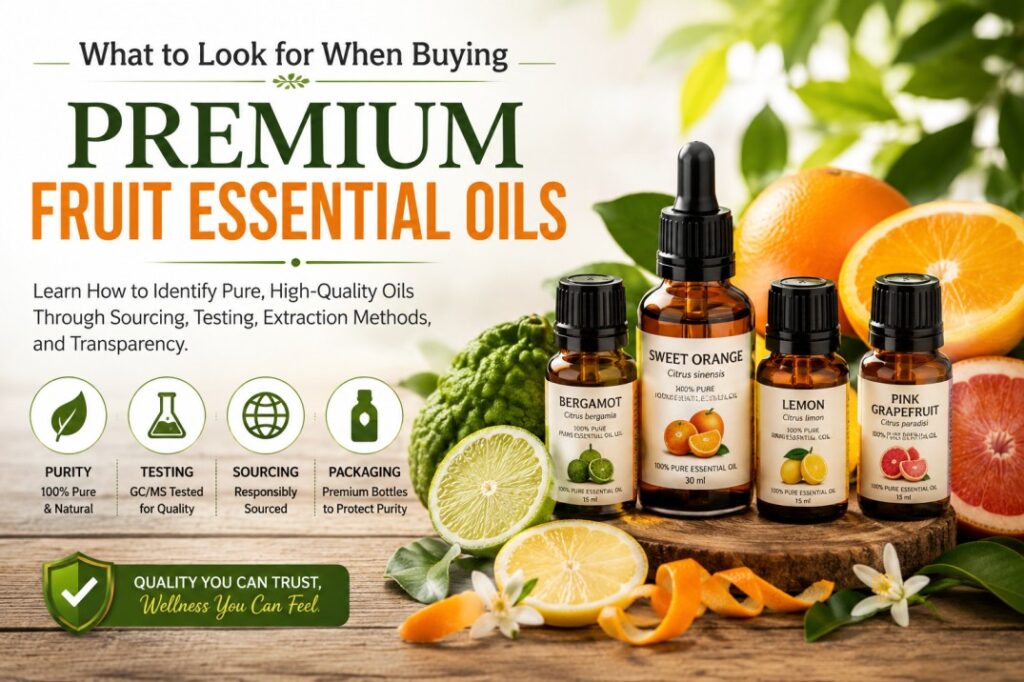

The demand for natural wellness products continues to grow, and essential oils remain among the most popular choices for aromatherapy, personal care, and home fragrance applications. Among the many varieties available, fruit-derived oils stand out for their bright, refreshing aromas and versatile uses. However, not all oils on the market are created equal. Understanding what distinguishes a premium product from a lower-quality alternative can help consumers make informed purchasing decisions.
This guide explores the most important factors to consider when selecting high-quality fruit essential oils and why sourcing, extraction methods, and transparency matter.
Understanding Fruit-Derived Essential Oils
Essential oils are concentrated aromatic compounds extracted from various plant parts, including fruits, peels, leaves, flowers, and resins. Many citrus-based oils are obtained through cold pressing or mechanical extraction of the fruit peel, preserving the natural aromatic profile of the plant.
Popular fruit-based varieties include lemon, lime, bergamot, orange, grapefruit, mandarin, tangerine, juniper berry, and other botanical oils sourced from fruit-bearing plants. Leading suppliers often offer a diverse selection sourced from multiple countries known for producing high-quality raw materials.
Verify the Botanical Name
One of the first indicators of quality is whether a supplier clearly lists the botanical name of the oil. Scientific names help identify the exact plant species used and reduce confusion caused by common names.
For example:
- Citrus Bergamia (Bergamot)
- Citrus Sinensis (Sweet Orange)
- Citrus Paradisi (Pink Grapefruit)
- Citrus Reticulata (Mandarin)
Without a botanical name, it becomes difficult to verify authenticity or compare products from different suppliers.
Check the Country of Origin
Growing conditions significantly influence the aroma and composition of essential oils. Climate, soil quality, altitude, and harvesting practices can all affect the final product.
Premium suppliers typically disclose where their oils originate. Many citrus oils are sourced from regions such as Italy, Brazil, Argentina, Belize, Mexico, and other countries known for cultivating aromatic fruit crops. Transparency regarding origin helps buyers understand the product’s background and quality standards.
Look for Appropriate Extraction Methods
Extraction methods play a major role in preserving the natural constituents of an essential oil.
Common extraction techniques include:
- Cold pressing
- Steam distillation
- CO2 extraction
Cold pressing is particularly common for citrus peels because it helps retain the fruit’s natural aromatic compounds. Steam distillation and CO2 extraction are often used for other botanical materials depending on the plant type.
Suppliers that openly disclose extraction methods demonstrate a higher level of transparency and product knowledge.
Review Third-Party Testing Information
Testing is one of the most reliable ways to evaluate purity. Reputable companies often provide access to GC/MS (Gas Chromatography-Mass Spectrometry) reports or similar quality-control documentation.
These reports help verify:
- Purity
- Chemical composition
- Authenticity
- Absence of adulteration
Industry discussions frequently highlight the importance of accessible testing information when evaluating essential oil suppliers. Consumers often view transparency regarding laboratory analysis as a positive indicator of quality.
Beware of Unrealistic Claims
A premium essential oil company focuses on quality, sourcing, and transparency rather than exaggerated promises.
Consumers should be cautious when encountering products that:
- Claim to cure diseases
- Promise instant results
- Use misleading marketing language
- Offer unusually low prices for rare oils
Responsible suppliers typically provide educational information while allowing customers to make informed decisions based on product specifications and testing data.
Evaluate Packaging Quality
Packaging serves an important role in protecting essential oils from environmental damage.
High-quality oils are commonly packaged in:
- Amber glass bottles
- Cobalt blue glass bottles
- UV-protective containers
These materials help reduce exposure to light, which can degrade aromatic compounds over time.
Buyers should also check for:
- Tamper-evident seals
- Secure caps
- Clear labeling
- Batch information
Proper packaging demonstrates attention to product preservation and customer safety.
Assess Ingredient Transparency
Premium oils should contain a single ingredient unless they are intentionally formulated blends.
The ingredient label should clearly identify the contents without vague descriptions such as:
- Fragrance oil
- Aroma oil
- Natural scent
Consumers looking for authentic products should ensure they are purchasing genuine essential oils rather than synthetic fragrance alternatives.
Online discussions within the aromatherapy community often emphasize the importance of distinguishing genuine oils from artificially scented products marketed under misleading labels.
Consider Product Selection and Specialization
A company that specializes in essential oils often invests more heavily in sourcing and quality control.
For example, Miracle Botanicals Essential Oils offers an extensive collection of fruit-based oils that includes citrus varieties, berry oils, and specialty botanical extracts sourced from multiple regions around the world. Their collection features numerous options that allow consumers to explore different aromatic profiles and origins.
A broad product selection may indicate strong supplier relationships and expertise within the industry.
Read Customer Reviews Carefully
Reviews can provide valuable insights into customer experiences. When evaluating feedback, focus on recurring themes such as:
- Aroma quality
- Packaging standards
- Product consistency
- Shipping reliability
- Customer service
Rather than relying solely on star ratings, read detailed reviews to identify patterns that may indicate overall product quality.
Compare Value Instead of Price Alone
Many consumers automatically gravitate toward the lowest-priced option. However, quality sourcing, testing, responsible harvesting, and proper packaging all contribute to production costs.
A premium oil may initially cost more but often delivers better aroma quality, consistency, and overall value. Comparing products based solely on price can sometimes lead to disappointment.
Companies such as Miracle Botanicals Essential Oils emphasize transparency, ethical sourcing practices, and offering a wide range of fruit-based products, giving customers access to oils with diverse aromatic characteristics.
Final Thoughts
Choosing a premium essential oil requires more than simply selecting an attractive label. Consumers should evaluate botanical identification, sourcing transparency, extraction methods, testing standards, packaging quality, and ingredient integrity before making a purchase.
By paying attention to these factors, buyers can better identify reputable suppliers and enjoy products that reflect authentic plant origins and careful production practices. Investing in quality helps ensure a more satisfying aromatherapy experience while supporting responsible industry practices.
FAQs
1. How can I tell if an essential oil is pure?
Look for botanical names, transparent sourcing information, extraction details, and third-party testing reports that verify authenticity and composition.
2. Why is the country of origin important?
Growing conditions can influence the aroma, quality, and chemical profile of an oil, making origin an important consideration.
3. Are citrus oils typically cold pressed?
Yes. Many citrus oils are produced through cold pressing of the fruit peel to preserve aromatic compounds.
4. What is the difference between an essential oil and a fragrance oil?
Essential oils are derived directly from plant materials, while fragrance oils may contain synthetic ingredients designed to mimic natural aromas.
5. Should I choose the cheapest option available?
Price alone should not determine quality. Evaluating sourcing, testing, transparency, and production standards often provides a better measure of value.